

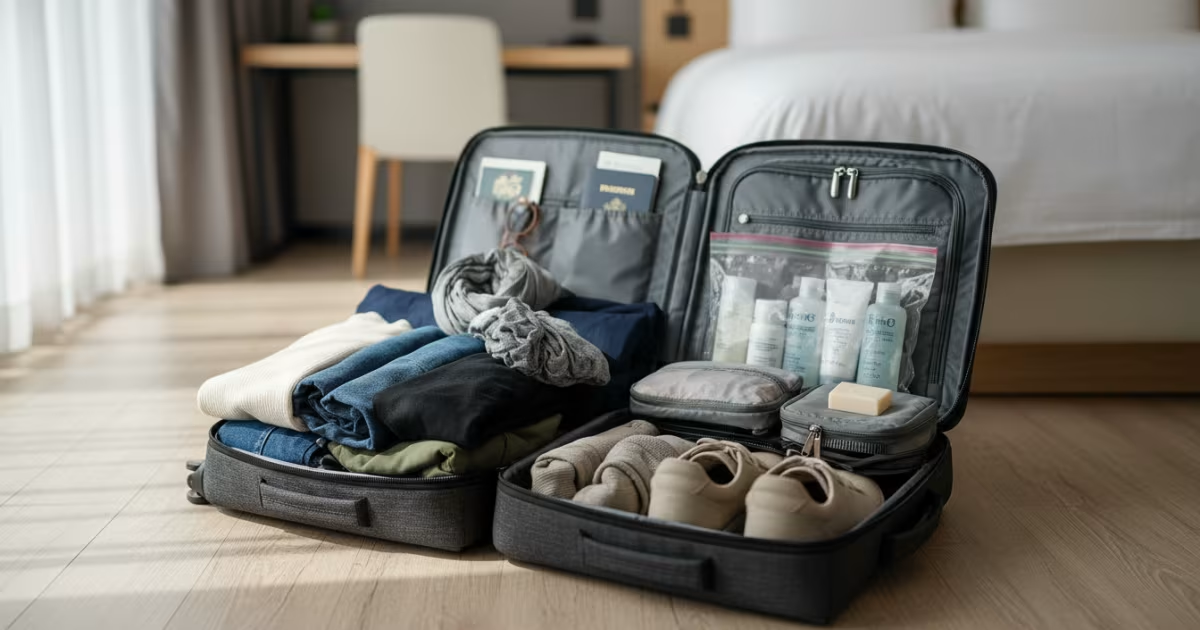
Carry-on only is not a sacrifice: it's a small set of skills. Two weeks fits inside a 40-liter bag without anyone in your group going hungry, cold, or unphotographed, as long as you stop packing what you'll never wear and start packing what actually multiplies.
This guide is built for trips of 10–14 days across one or two climate zones (a city plus a beach, or a mix of cool spring and warmer days). It works for any major airline that operates in 2026 and assumes you're flying economy on a long-haul or multi-leg journey.
Why Carry-On Only is Worth the Effort
Money: Most major airlines now charge €40–80 per checked bag each way. Two weeks, two flights, two people: €160–320 saved.
Time: Skip the bag drop, walk straight to the gate on arrival.
Lost-luggage risk: Around 6.6 bags per 1,000 are mishandled in 2026 (SITA Baggage Report). Your odds drop to zero if you don't check anything.
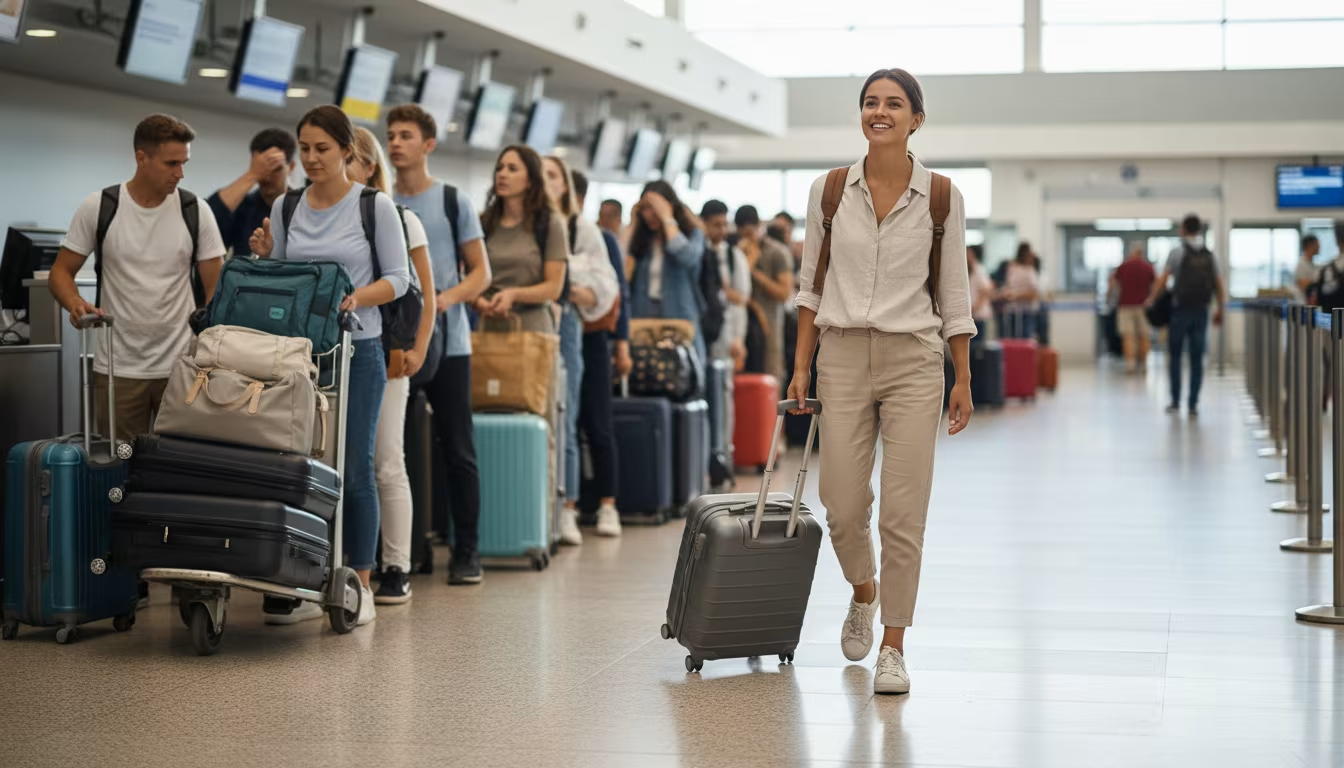
Mobility: A 7–10 kg bag on your back means you can walk from the train station to the hotel without negotiating cobblestones with wheels.
Decision fatigue: A constrained wardrobe is a relief, not a limit. You stop standing in front of the mirror.
The Bag Itself
For a true two-week trip, look for 38–42 liters in a backpack or hybrid soft case. Smaller and you'll struggle with a coat in winter. Larger and you'll exceed European budget airline rules.
Real 2026 size limits (cabin baggage you do NOT pay extra for):
Airline | Carry-on size (cm) | Weight limit |
|---|---|---|
Lufthansa, Swiss, Austrian | 55 × 40 × 23 | 8 kg |
British Airways | 56 × 45 × 25 | 23 kg (generous) |
Air France, KLM | 55 × 35 × 25 | 12 kg |
Ryanair (free small bag) | 40 × 25 × 20 | 10 kg |
Ryanair (priority) | 55 × 40 × 20 | 10 kg |
Wizz Air (free small) | 40 × 30 × 20 | 10 kg |
easyJet (free small) | 45 × 36 × 20 | 15 kg |
Turkish Airlines | 55 × 40 × 23 | 8 kg |
Delta, United, American (US domestic) | 56 × 36 × 23 | No specific weight |
Emirates, Qatar | 55 × 38 × 20 | 7 kg |
The smallest of those numbers (Ryanair priority and Wizz Air) is the one to design around if you fly budget within Europe. A 40 × 30 × 20 bag clears every other airline you're likely to meet.
Look for: clamshell opening (lay-flat, like a suitcase), padded laptop sleeve, water-bottle pocket, sternum and waist straps if it's a backpack. Skip wheels if you'll do any walking on stairs or cobblestones.
The 5-7 Clothing Rule
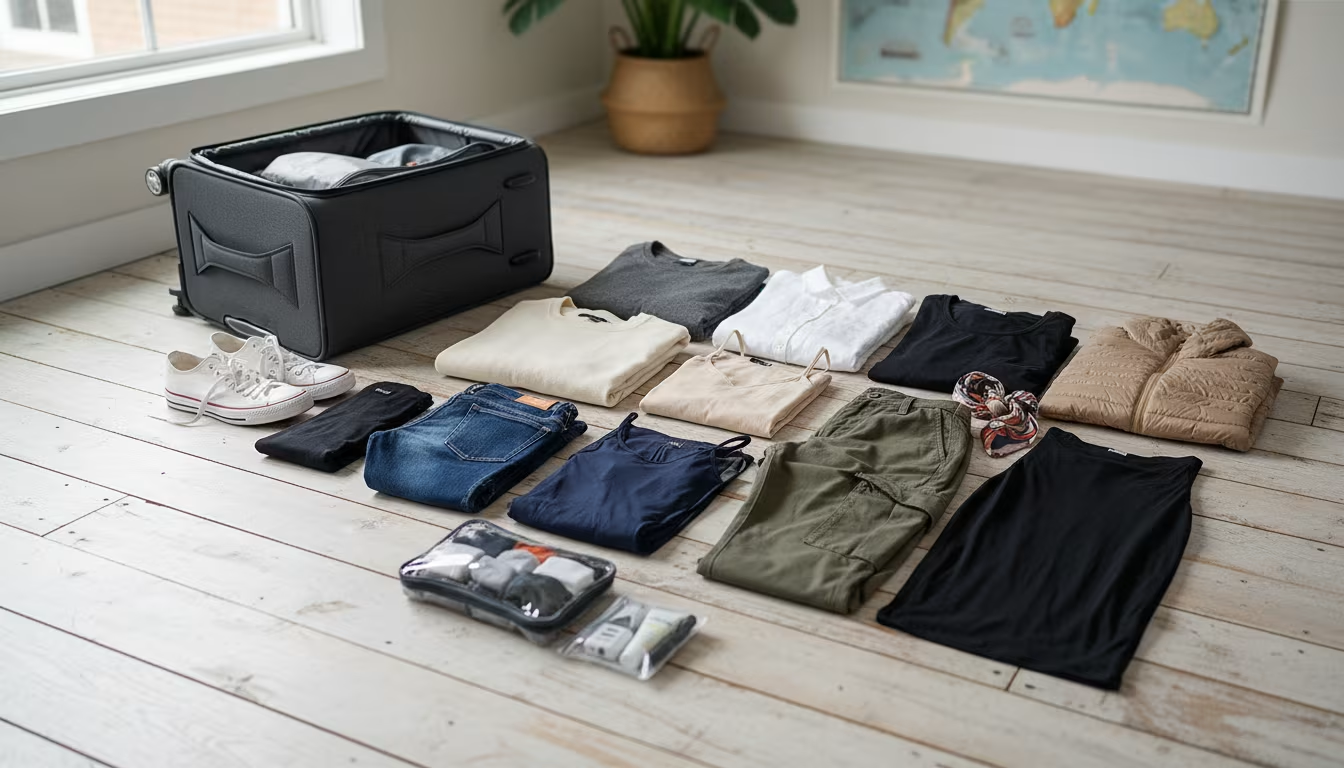
The rule of thumb: enough clothes for one week, doubled with a wash mid-trip. For 14 days that means:
5 tops (3 t-shirts/short-sleeve, 2 long-sleeve)
2 bottoms (1 versatile pant, 1 shorts or skirt depending on climate)
1 sweater or light jacket
5–7 pairs of underwear and socks
1 pair of pajamas / sleepwear
1 pair walking shoes (worn on the plane), 1 pair sandals or dressier
That's it. Twelve items of outerwear, plus base layers. Resist the urge to add "just in case" pieces. The math works because you'll wash mid-trip, not because you're suffering.
Why Neutral Colors
Every top should work with every bottom. Black, navy, olive, gray, cream, denim. One accent color if you want it (a single bright tee or scarf). The minute you add a third color family the matching math breaks and you'll skip wearing things.
Layering Strategy
Clothes that handle a 15°C swing are more useful than clothes that handle one specific temperature.
Base: merino wool t-shirts. Stay fresh for 3–5 wears, dry overnight after a sink wash, lightweight. Yes they're €60 each, but two of them replace five cotton tees.
Middle: a thin merino long-sleeve or fleece. Adds 10°C of warmth without adding bulk.
Outer: a packable down jacket or a hardshell, depending on climate. Both compress to the size of a Nalgene bottle.
This stack works from a chilly Lisbon morning to an Edinburgh evening. If your trip stays warm, drop the outer layer.
Toiletries and the 3-1-1 Rule
Liquids in carry-on are still capped at 100 ml per container, all containers in a single 1-liter clear bag in 2026. Many European airports have rolled out new CT scanners that lift this restriction (no separating liquids, no size limit), but until every airport on your route has them, plan around 100 ml.
The minimum kit:
Item | Tip |
|---|---|
Solid shampoo bar | Lush, Ethique, or HiBAR. No liquid limit applies. |
Conditioner bar or 100 ml | Same logic. |
Solid bar soap | Doubles as body wash. |
Toothpaste tablets | Bite, Hello. Or 100 ml tube. |
Toothbrush | Skip electric unless you really need it. |
Deodorant | Stick form, not aerosol. Aerosols capped at 500 ml total. |
Sunscreen | 100 ml face stick, buy local for body. |
Razor | Safety razor goes in checked only; cartridge razors fine in carry-on. |
Medication | Original packaging, prescription if controlled. |
Buy the rest at your destination. A €4 stop at a pharmacy in Lisbon or Athens is cheaper than dragging a full-size bottle for 14 days.
Tech and Documents
Keep these in your personal item (laptop bag, smaller backpack), not the main bag. They go under the seat in front of you and stay accessible.
Phone + charger
Laptop + charger (only if you need it; otherwise leave it home)
Universal travel adapter
1 power bank (under 100 Wh, airline-allowed)
Headphones
E-reader (replaces every book you'd otherwise pack)
Passport
Backup credit card (separate from main wallet)
Printed copy of accommodation address (for some immigration officers)
Skip: laptop docks, secondary devices, cables you won't use. A USB-C and a Lightning cable, plus the multi-port adapter, covers almost everything.
Packing Cubes — the One Tool Worth Buying
A set of three packing cubes (large, medium, small) is the difference between a thrown-together bag and a working system. The most useful split:
Large cube: tops + base layers
Medium cube: bottoms + sweater
Small cube: underwear, socks, sleepwear
A fourth small cube for laundry (dirty clothes go straight in there as you wear them) keeps the bag organized for the full trip.
Compression cubes shave another 20–30% volume off if you're really tight on space, but for most people standard cubes are enough.
Roll Vs. Fold
This question is overrated. The honest answer:
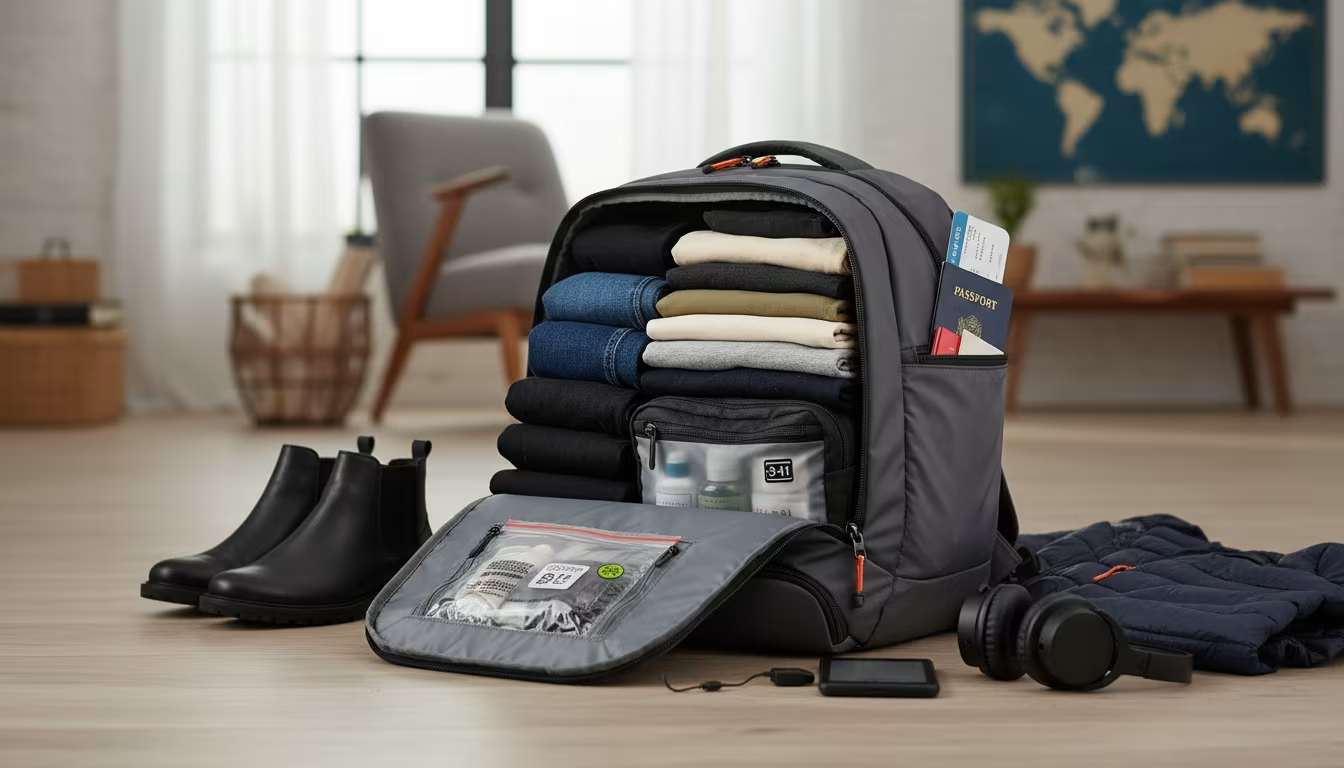
Roll synthetic and casual items (t-shirts, gym wear, base layers). Saves space, fewer creases.
Fold and stack dressier items (button-downs, structured pants). Less wrinkling.
Bundle wrap (folding everything around a central core) works but slows down the unpack/repack cycle.
The single biggest space win is removing items, not folding them better.
What NOT to Pack
Things you almost certainly won't use:
A second pair of jeans
More than one "nice outfit"
A full-size towel (microfiber travel towel if needed)
A hairdryer (every hotel has one, every Airbnb has one)
Beach towels
Books (use the e-reader)
Backup shoes "in case"
Workout gear unless you'll actually use it
Full bottles of anything
Souvenirs you bought to give people. Pack flat ones at the end of the trip.
Wear the Bulky Stuff
The single oldest carry-on trick still works: wear your heaviest items on the plane. Boots, jacket, sweater. Once you board, the jacket is a pillow and the sweater is a blanket.
Mid-Trip Laundry
The whole system fails without one wash around day 6–8. Three options:
Hotel/Airbnb sink wash. A small bottle of travel detergent (under 100 ml). Wash, roll in a towel to squeeze out water, hang overnight. Merino dries by morning, cotton needs 24 hours.
Laundromat. Self-serve washes run €4–8 in most European cities, takes 90 minutes. Plenty of time for a coffee and a walk.
Wash and fold service. €15–25 to drop off in the morning, pick up the next day. Available in most tourist neighborhoods.
Plan one laundry day into the itinerary. Without it, you're packing 14 days of clothes, not 7.
Climate-Specific Adjustments
Hot Weather (above 25°C Average)
Drop the down jacket
Two pairs of shorts instead of one
Add a sun hat (worn on the plane or clipped to bag)
Lighter merino base layers
Cold Weather (below 10°C Average)
Wear the heaviest jacket on the plane
Add thermal leggings as base layer
Wool hat, gloves, scarf, all in pockets, not the bag
Boots worn on the plane
Mixed (city + Beach)
One swimsuit (men: doubles as gym shorts; women: bikini packs flat)
One pair flip-flops or slides, sandals double for both
Quick-dry travel towel if accommodation doesn't provide
Common Mistakes
Packing for the worst-case weather. You'll never need a down jacket and sandals. Pick the trip you're actually taking.
Buying a brand-new bag the week before. You don't know how it carries until you've worn it loaded for an hour.
Ignoring weight limits. The size restriction stops you at the gate, but the weight limit gets you at check-in.
One-trick clothes. Anything that only works with one other piece is wasted space.
No mid-trip wash plan. This is the difference between a 7-day load and a 14-day one.
Hard luggage with no give. Fits the sizer empty; bulges past the sizer when full.
Final Notes
The first carry-on-only trip is the hardest because you're dropping habits, not items. By trip three the kit reduces itself: you stop packing the second pair of jeans because you remember not wearing them last time, and you stop packing the spare charger because the one in your bag has worked twice already.
Two weeks in 40 liters is not minimalism. It's just packing the things you actually use.
0 Comments
No comments yet — start the conversation.