

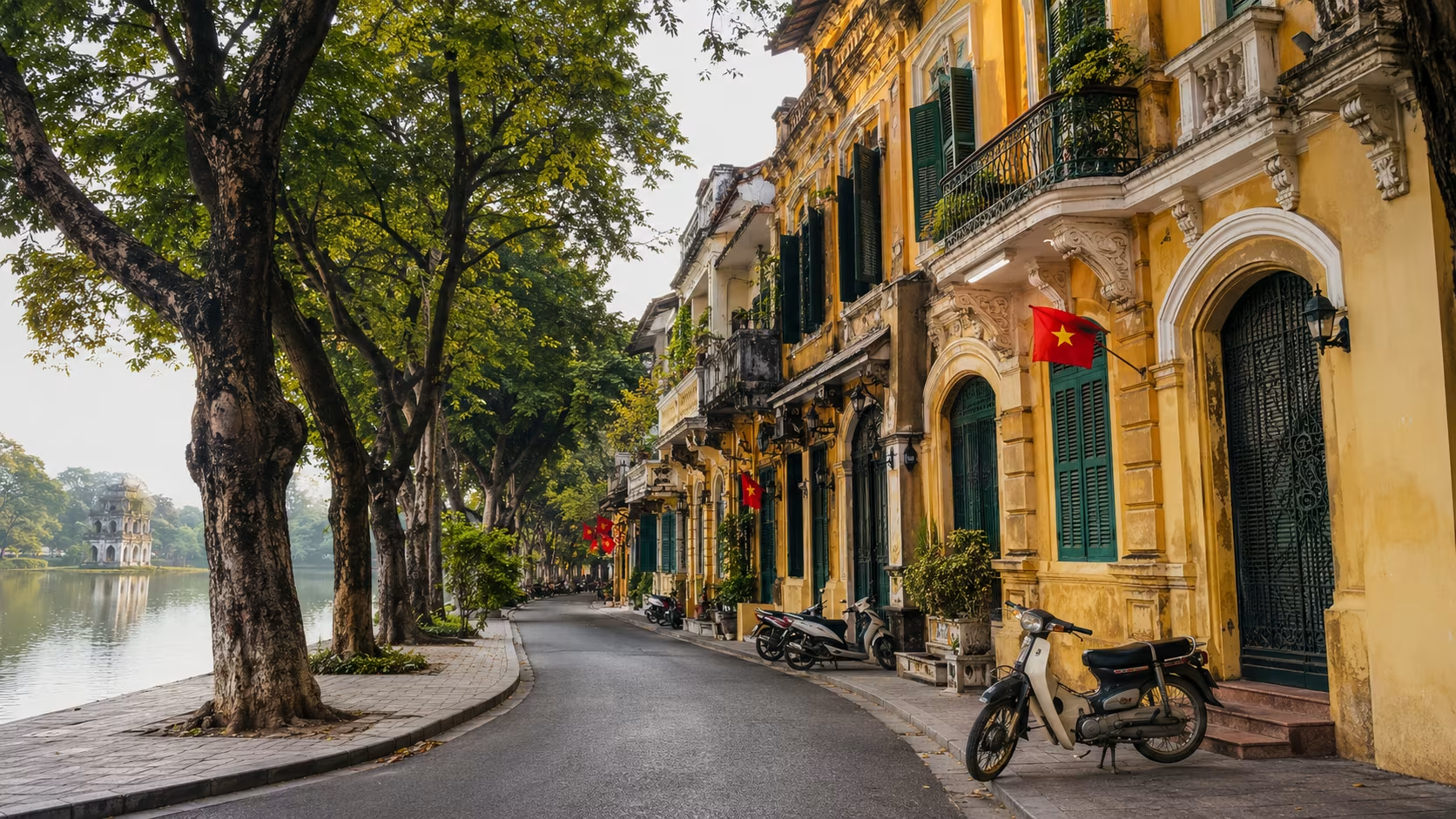
Hanoi is the most atmospheric major city in Southeast Asia. The Old Quarter (Hoàn Kiếm district), built around a 1,000-year-old urban grid, packs more activity per square kilometer than almost any city on earth. Motorbikes flow in continuous rivers; sidewalk vendors cook on charcoal stoves; lakes appear unexpectedly between blocks; the colonial-era French architecture sits next to communist-era municipal buildings sits next to glass towers built in the 2010s. The city is loud, dense, and intensely alive.
For first-time visitors, the challenge is the sensory overload. Hanoi rewards travelers who slow down to its rhythm — long mornings at cà phê shops, leisurely phở breakfasts, evening walks around Hoàn Kiếm Lake, and willingness to sit on plastic stools while the world moves around you. Travelers who try to optimize the city — checking off temples and museums in a tight schedule — usually leave overwhelmed and underwhelmed.
This is a 4-day guide for first-time visitors who want to actually feel the city.
Quick Facts
| Item | Detail |
|---|---|
| Country | Vietnam |
| Currency | Vietnamese dong (VND), ~25,000 VND/USD in 2026 |
| Language | Vietnamese; English in tourist areas |
| Time zone | ICT (UTC+7, no DST) |
| Tourist tax | None |
| Best time | October–December, March–April |
| Visa | E-visa available for most countries; 90-day options since 2023 |
| Trip length | 3–4 days |
When to Go
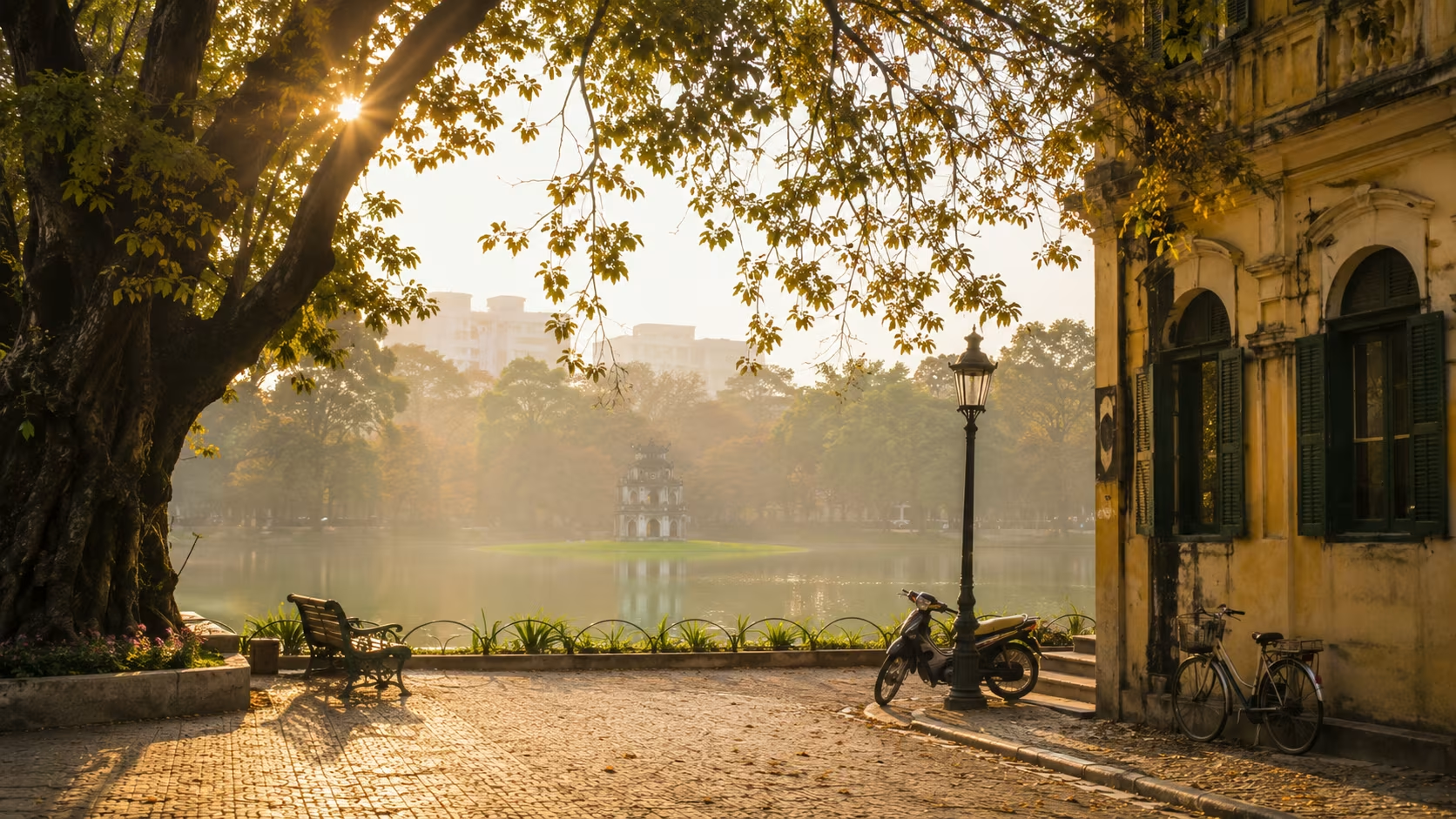
October to December. The sweet spot. Cool dry weather (18–26°C), low humidity, clear skies. October has autumn light; December occasionally cool enough for a light jacket evenings.
March to April. The other prime window. Spring; warm but not yet hot (20–28°C); flowering trees in some streets.
May to August. Hot (30–36°C+) and very humid; afternoon thunderstorms common. Tourist density lower; hotels cheaper.
Late January / Early February (Tết). Vietnamese Lunar New Year. Most shops and restaurants close for 3–5 days; transit is packed; family events dominate. The city has a different atmosphere — quieter on the streets but louder at temples. Either embrace it or avoid it.
Avoid:
- Tết week unless you specifically want to experience it.
- National holidays (April 30 Reunification Day, May 1 Labor Day) for crowded transit.
- Late June when humidity peaks before the worst monsoon storms.
Getting In
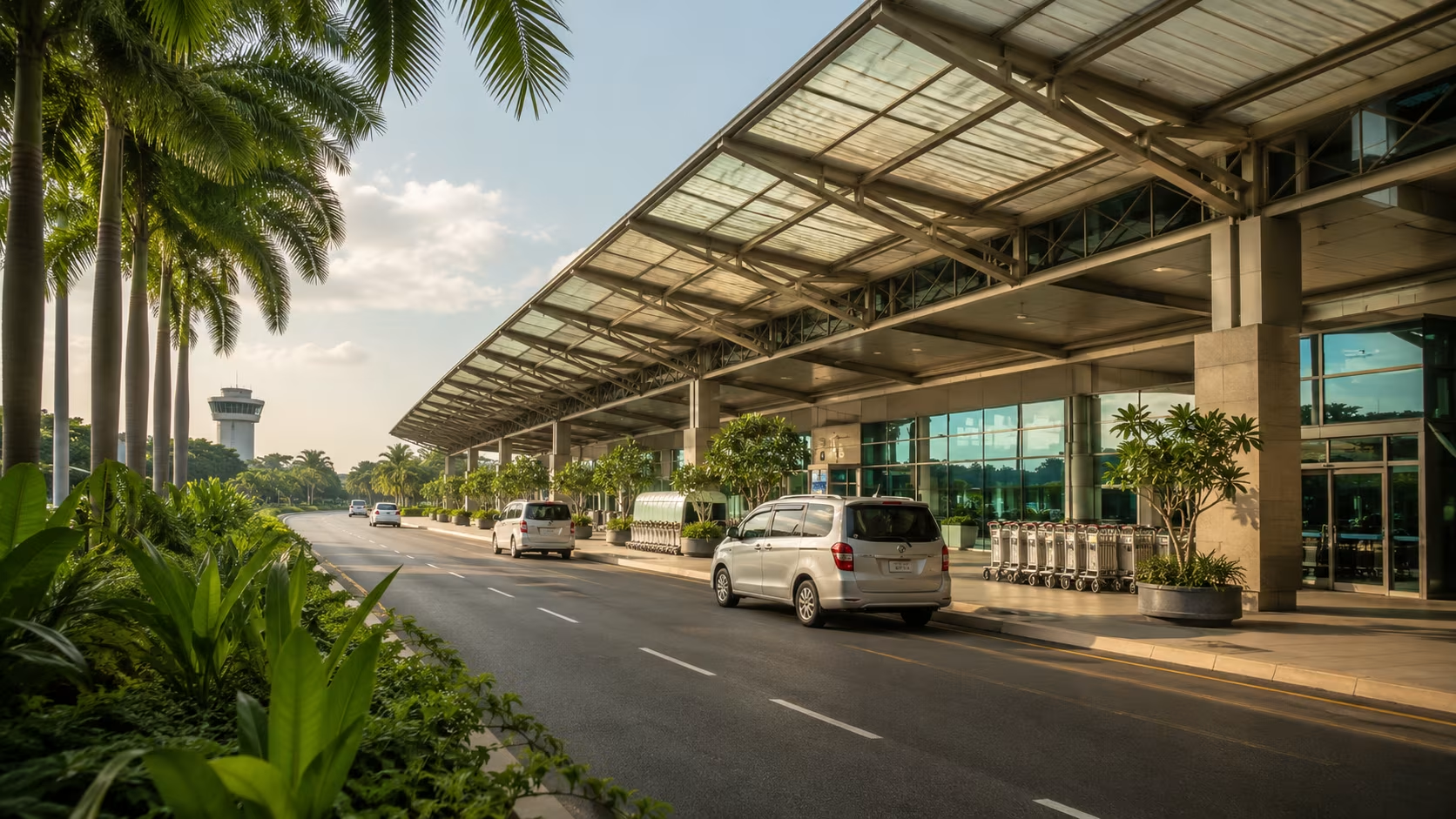
Noi Bai International Airport (HAN). 30 km north of central Hanoi.
From HAN:
- Bus 86: 45,000 VND ($1.80), 60–75 min to central. Cheapest.
- Vietnam Airlines minibus: 50,000 VND, 60 min. Drops at Vietnamese Airlines office near Old Quarter.
- Taxi (Mai Linh, Vinasun): 350,000–450,000 VND ($14–18) flat fare. Insist on the meter or agree on a flat rate.
- Grab: 280,000–380,000 VND ($11–15). Reliable, English-speaking app.
- Hotel transfer: 350,000–550,000 VND.
Getting Around
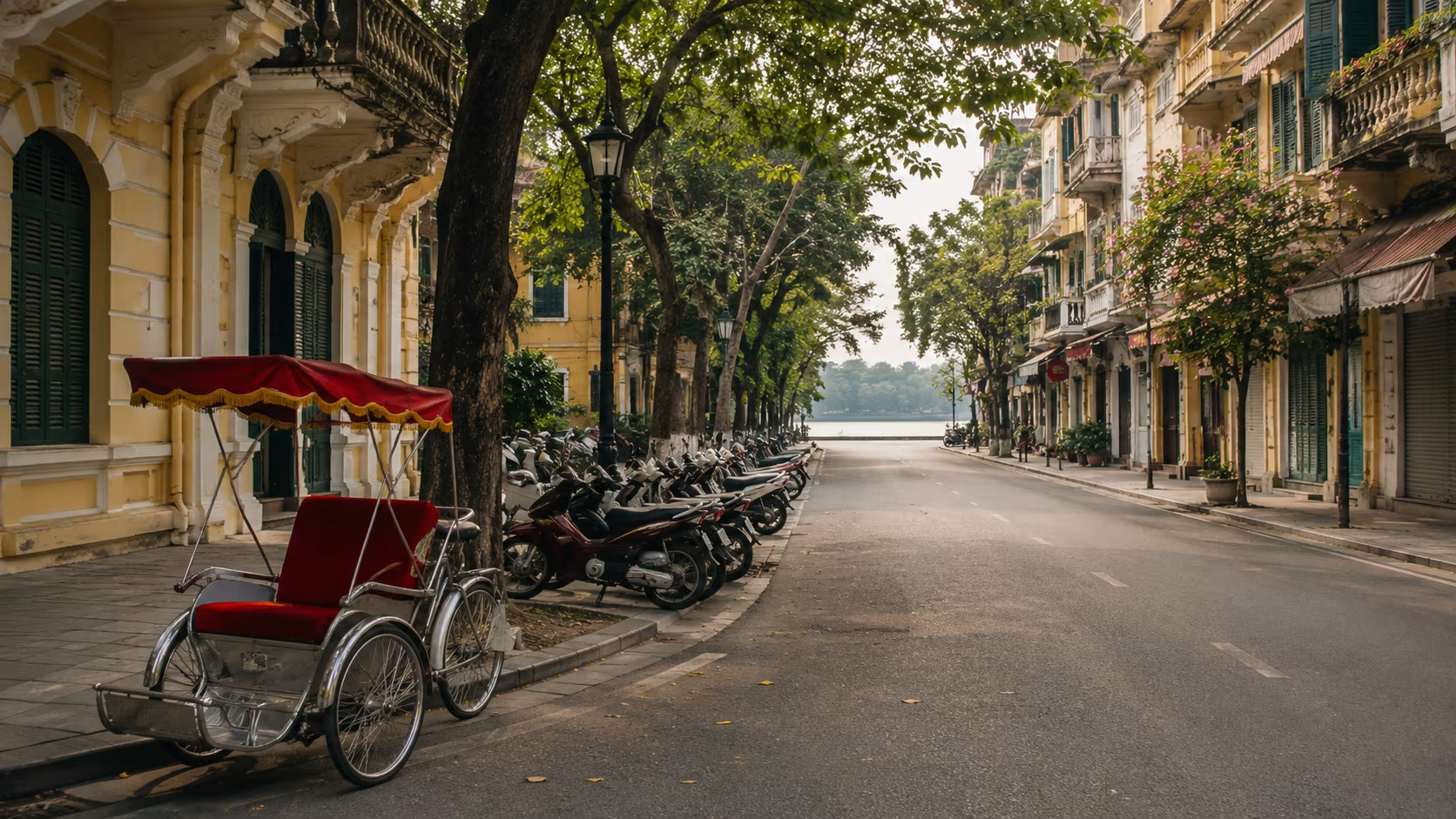
Hanoi has no metro running yet through 2026 (Line 2A and Line 3 partially operational on outer routes; Old Quarter not connected). Most central transport is on foot, motorbike, or by Grab.
Walking
The Old Quarter is dense and walkable. Distances are short but the navigation is challenging — streets are narrow, often unmarked or with multiple names per block. Use Google Maps and accept that you'll get lost.
Crossing Streets
The defining Hanoi tourist experience: crossing a street with constant motorbike traffic. The technique:
- Step out steadily and predictably. Motorbikes will flow around you.
- Don't stop suddenly or change pace. Both are dangerous because riders calculate based on your trajectory.
- Don't run. Predictability is safer than speed.
- Avoid jumping back at the last second. A rider who calculated to flow behind you will hit you.
The traffic is chaotic but it's organized chaos with rules. Locals do this thousands of times daily without incident.
Grab
The Southeast Asian Uber. Operational throughout Hanoi. Both GrabCar (4-wheel) and GrabBike (motorbike taxi) available. GrabBike is half the price of GrabCar and faster in traffic.
Cyclo
The traditional pedicab. Touristy but worth doing once for the experience. 30–60 minutes around the Old Quarter: 200,000–300,000 VND. Negotiate before getting in.
Renting a Motorbike
Not recommended for first-time visitors. The traffic logic requires familiarity. Tourist rental shops will rent without verifying a license; the risk is real.
Where to Stay
Hanoi's neighborhoods feel different from each other.
Old Quarter (Hoàn Kiếm District)
The historical core. 36 streets named for the trade traditionally practiced on each (Hàng Bạc — silver street, Hàng Gai — silk street, etc.). Tourist density at peak. Boutique hotels in restored colonial-era buildings.
Around Hoàn Kiếm Lake
The lake at the southern edge of the Old Quarter. Walking distance to everything central. Mid-range to high-end hotels.
French Quarter (Hoàn Kiếm and Ba Đình districts)
Wide boulevards from the colonial era. The Opera House. Premium hotels.
West Lake (Tây Hồ)
The city's largest lake, north of central. Expat-friendly residential, less tourist-dense, more upscale apartments. Less convenient for sightseeing but quieter.
Ba Đình District
Government quarter. The Mausoleum, Presidential Palace, Temple of Literature. Mostly residential character; some boutique hotels.
Avoid as a base
- Far suburbs (Long Bien, Gia Lam) — too far for a 4-day trip.
- Around the airport — convenient for early flights only.
Realistic 2026 nightly prices (4-star, weekday, shoulder, USD):
| Neighborhood | Mid-range | Higher-end |
|---|---|---|
| Old Quarter | $50–110 | $180–400 |
| Hoàn Kiếm Lake | $80–160 | $250–500 |
| French Quarter | $90–180 | $300–600 |
| West Lake | $70–140 | $200–400 |
Hanoi is dramatically cheaper than most other Asian capitals. A $100 4-star hotel in Hanoi is genuinely 4-star quality.
What to Book in Advance
Halong Bay Cruise
The day or overnight cruise to Halong Bay (or Lan Ha Bay, the alternative). 170 km east. Most travelers do this from Hanoi.
- Day cruise: $40–80 USD per person + bus pickup. 4-hour drive each way.
- Overnight cruise: $90–250 per person, includes night on boat. Far better experience.
- Lan Ha Bay (the less-touristy alternative) for travelers who want fewer cruise ships.
Book 1–2 weeks ahead for premium cruises.
Hỏa Lò Prison ("Hanoi Hilton")
The French colonial prison + Vietnam War era POW facility. 50,000 VND. Walk-up.
Temple of Literature
Vietnam's first university (1070). 70,000 VND. Walk-up.
Water Puppet Show
The traditional Hanoi puppet theater performed on water. Thang Long Water Puppet Theatre. 100,000–200,000 VND. Books out same-day; reserve online or via hotel concierge.
Cooking Class
Multiple operators. Half-day with market shopping and lunch: 800,000–1,800,000 VND ($32–72). Hanoi Cooking Centre is the institution.
Day 1 — The Old Quarter
07:00. Phở breakfast. Phở Bát Đàn (the institution since 1966; queue, point at what others are eating, eat at communal tables). Phở Sướng for less tourist density. Phở Thìn for the modern beef-stir-fry-on-top variant.
08:30. Coffee at a Vietnamese café. Cộng Cà Phê (multiple locations, the famous coconut coffee). Note Coffee for upscale specialty. Loading T Cafe for atmospheric.
Cà phê sữa đá (iced coffee with sweetened condensed milk) is the standard order. Cà phê trứng (egg coffee) is the Hanoi specialty. Cà phê dừa (coconut coffee) is the modern variant.
09:30. Walk Hoàn Kiếm Lake. The 12-hectare lake at the southern edge of the Old Quarter. Ngọc Sơn Temple (30,000 VND) on the small island in the lake — accessed via the iconic red-painted Huc Bridge. Allow 60 minutes.
10:30. Walk into the Old Quarter (Hoàn Kiếm District). The grid of 36 streets, each historically named for a trade. Pick 4–6 streets and walk slowly:
- Hàng Mã (votive paper goods + traditional decorations).
- Hàng Bạc (silver shops).
- Hàng Gai (silk).
- Lò Sũ (coffin makers turned coffee shops).
- Lò Đúc (cast metalwork; now mostly cafés and shops).
- Tạ Hiện (the tourist beer street; touristy but worth a quick walk-through).
12:30. Lunch. Bún chả Hương Liên (the Obama-Bourdain pork-and-noodle place from 2016). Quán Bún Đậu Đỉnh for tofu-and-noodle salad. Cha Ca Thang Long for the famous turmeric-fish dish.
14:00. Slow afternoon. Visit a smaller temple — Chua Ba Da (Stone Lady Pagoda, 12th century, free). Walk a residential alley.
15:30. Coffee at a balcony café overlooking the Old Quarter. The Note Coffee (with thousands of post-it notes from visitors). Cong Caphe Hang Bai.
17:00. Sunset by Hoàn Kiếm Lake. Around the lake; locals exercising; tai chi groups.
18:30. Walk the Beer Street (Tạ Hiện). 200 meters of plastic stools, charcoal grills, cheap beer. Order bia hơi (the Hanoi street beer, draft, 8,000–12,000 VND for a glass — under $0.50). Sit on a plastic stool. Watch.
20:00. Dinner. Cha Ca La Vong (the historical institution since 1871, fish dish only on the menu — 200,000 VND per person). Don Cha Ca Thanh Long for the alternative. Bun Cha Hang Manh for working-class.
21:30. Water Puppet Show if booked. Thang Long Theatre, 1 hour, traditional Vietnamese puppet theater performed in water. Touristy but distinctively Vietnamese.
Day 2 — Ba Đình + Temple of Literature + French Quarter
08:00. Coffee.
09:00. Hồ Chí Minh Mausoleum. Free entry to view Hồ Chí Minh's preserved body. Closed Mondays + Fridays + September-October during preservation work. Strict dress code (shoulders covered, knees covered, no shorts). Crowds heavy; arrive at opening 07:30. Allow 60 minutes.
10:00. Ho Chi Minh's Stilt House + Presidential Palace (40,000 VND combined). The simple house Ho Chi Minh chose to live in instead of the colonial-era palace.
11:00. One Pillar Pagoda (next to the mausoleum). Free. Small wooden temple on a single stone column, dating to the 11th century.
12:00. Lunch in the area or back toward central. Quán An Ngon (multiple Vietnamese specialties under one roof). Madame Hien for upscale colonial-era ambiance.
13:30. Temple of Literature (Văn Miếu). Vietnam's first university, founded 1070. Now a Confucian temple complex with five courtyards. 70,000 VND. Allow 90 minutes.
15:30. Vietnam Museum of Ethnology. 40,000 VND. The country's most comprehensive museum about Vietnam's 54 ethnic groups. Outdoor section has reconstructed traditional houses. Allow 2 hours.
18:00. Walk the French Quarter. Wide boulevards from the colonial era (the Opera House, the State Bank, the Government Guest House). Different from the Old Quarter's chaotic density. The Sofitel Metropole Hotel (since 1901) is the colonial-era institution; Hemingway, Charlie Chaplin, and Graham Greene all stayed here.
19:30. Dinner. Madame Hien for upscale Vietnamese in a colonial setting. The French Grill at Metropole. La Verticale (modern French-Vietnamese, 1-Michelin-star).
Day 3 — Halong Bay Day Trip or Choose-Your-Own
Path A — Halong Bay Day Trip
170 km east. The famous limestone-karst seascape. UNESCO World Heritage.
07:30. Pickup at hotel.
11:30. Arrive Halong / Tuan Chau Marina. Board cruise.
12:30. Lunch on boat (typically multi-course Vietnamese seafood).
13:00–17:00. Cruise through the karst landscape. Stops at limestone caves (often Surprise Cave, Sung Sot), kayaking, swimming opportunity.
17:30. Return to dock. Drive back to Hanoi.
21:30–22:30. Arrive Hanoi.
Real talk: the day cruise is exhausting (12 hours total). The 2-day overnight cruise is dramatically better — you sleep on the boat, watch sunrise on the karst, do a tai chi class at dawn, and spend more total time on the water than the bus ride.
For a 4-day Hanoi visit, the overnight Halong cruise eats Day 3 + Day 4 morning.
Path B — Tam Coc / Ninh Binh Day Trip
The "Halong Bay on Land." 100 km south. Limestone karsts rising from rice paddies. Boat ride through caves on rice fields. UNESCO World Heritage Trang An ecosystem.
Full-day tour (~$45 USD per person). Less dramatic than Halong Bay; far less crowded.
Path C — Cooking Class + Slow Hanoi Day
Morning cooking class with market shopping (4 hours).
Afternoon at a coffee shop or back in the Old Quarter at slow pace.
Path D — Day Trip to Bat Trang Pottery Village
13 km southeast. Working pottery village; can shop directly from craftsmen. Half-day excursion.
Day 4 — Slow Day or Departure Day
Morning. Final walk in the Old Quarter. Final phở breakfast. Final cà phê trứng (egg coffee) at Café Giảng (the place that invented egg coffee in 1946).
Lunch. Bún chả at a working-class shop. Or visit Phở 10 Lý Quốc Sư for famous phở.
Afternoon. Hỏa Lò Prison Museum (the "Hanoi Hilton"), if not done. The French colonial-era prison + Vietnam War POW facility (where John McCain was held). Heavy and historically essential.
Evening. Final dinner.
What to Eat
Hanoi food culture is dense and distinct. The headline dishes:
Headline Dishes
| Dish | What it is |
|---|---|
| Phở | The famous beef-noodle soup. Phở bò (beef) + phở gà (chicken). Hanoi version is clearer broth than the southern (Saigon) version. |
| Bún chả | Grilled pork patties + rice noodles + herbs + dipping broth. Hanoi specialty. |
| Bún bò Nam Bộ | Beef + rice noodles + herbs in a southern-style salad bowl. |
| Bún ốc | Snail-and-tomato noodle soup. Hanoi specialty. |
| Bún đậu mắm tôm | Tofu + noodles + shrimp paste sauce. Hanoi working-class specialty. |
| Cha ca | Turmeric-marinated fish, fried tableside with dill and onion. |
| Bánh cuốn | Steamed rice rolls with pork filling. Breakfast classic. |
| Bánh mì | The famous Vietnamese sandwich (different in Hanoi from Saigon). |
| Nem rán | Fried spring rolls. Standard side dish. |
| Goi cuon | Fresh spring rolls (rice paper, herbs, vegetables, sometimes shrimp/pork). |
| Nem chua | Fermented pork roll with pepper, garlic, chili. Acquired taste. |
| Cà phê sữa đá | Iced coffee with sweetened condensed milk. National drink. |
| Cà phê trứng | Egg coffee — invented 1946 at Café Giảng. |
| Cà phê dừa | Coconut coffee. Modern variant. |
| Bia hơi | Hanoi street beer. Light, draft, cheap. |
Where to Eat
Pho:
- Phở Bát Đàn (since 1966; the institution).
- Phở Sướng for less tourist density.
- Phở Thìn for stir-fried beef on top variant.
- Phở Gia Truyền at 49 Bát Đàn for authentic.
Bún chả:
- Bún Chả Hương Liên (the Obama-Bourdain spot from 2016).
- Bún Chả Đắc Kim for working-class neighborhood.
- Bún Chả Tuyết for less-tourist version.
Egg coffee:
- Cafe Giảng (the original since 1946).
- Cafe Pho Co (with Hoan Kiem Lake view, garden setting).
- Loading T Cafe for the more upscale version.
Modern Vietnamese:
- Madame Hien (modern Vietnamese in colonial setting).
- La Verticale (1-Michelin-star, French-Vietnamese).
- The French Grill at Metropole.
- Quán Ăn Ngon (multiple specialties under one roof).
Working-class street food:
- Anywhere with plastic stools + locals + charcoal grill.
- Tạ Hiện Beer Street for bia hơi + grilled snacks.
- Đồng Xuân Market for traditional market food.
Costs and Budget
2026 daily budgets per person, excluding flights and hotel (USD):
| Style | Per day | Notes |
|---|---|---|
| Backpacker | $15–30 | Hostel, street food, walking, occasional Grab |
| Mid-range | $40–80 | Mix of street and proper restaurants, Halong day, tours |
| Comfortable | $100–180 | Better restaurants, premium hotel, taxi over Grab |
| Higher-end | $250+ | Tasting menus, luxury hotel, private guide |
Hanoi is among the most cost-effective major Asian capitals. A street-food breakfast: 35,000–60,000 VND ($1.40–2.40). A working-class lunch: 80,000–150,000 VND ($3.20–6). A sit-down dinner mid-range: 250,000–500,000 VND ($10–20).
Practical Info
- Cards. Accepted at hotels and mid-tier and higher restaurants. Cash for street food, taxis, small shops. Always carry 500,000+ VND.
- Tipping. Not standard in Vietnam. 5–10% appreciated at sit-down restaurants. Round up Grab.
- English. Common in tourist areas. Less in residential neighborhoods. Younger Vietnamese speak more English than older.
- Pickpocketing. Real around tourist sites. Standard precautions.
- Heat / humidity. Real in summer (May-September). Schedule heat breaks; AC in afternoon.
- Sundays. Most things open. Markets active.
- Smoking. Restrictions exist but enforcement is uneven. Many bars and outdoor restaurants tolerate smoking.
- Crime. Low. Standard precautions.
- Politeness. Vietnamese culture values quiet politeness; loud public arguments are unusual.
- The phrase "có" / "không." "Có" = yes; "không" = no. Useful basics. "Cảm ơn" = thank you.
Common First-Timer Mistakes
- Trying to optimize the city. Hanoi rewards slowness, not optimization.
- Eating only at obvious tourist restaurants. The plastic-stool side-street places are usually the best.
- Skipping street food because of perceived hygiene risk. High-turnover stalls with locals are usually safer than half-empty tourist restaurants.
- Being intimidated by motorbike traffic. Cross steadily and predictably; locals do this fluently.
- Doing only the day Halong cruise. The overnight version is dramatically better.
- Visiting in late June. Heat and humidity peak.
- Negotiating taxi fares without confirming meter. Use Grab to skip the negotiation entirely.
- Trying to do Hanoi + Halong + Sapa in 4 days. Each deserves more time.
- Drinking tap water. Bottled only.
- Not booking the Water Puppet Show. Sells out same-day in tourist season.
- Visiting the Mausoleum on closed days. It's closed Monday and Friday and during preservation periods (often September-October).
- Missing egg coffee. A Hanoi specific tradition that doesn't translate elsewhere; try it.
Final Notes
Four days in Hanoi is the right length for a focused first visit. One Old Quarter day, one Ba Đình + French Quarter day, one Halong Bay or alternative excursion, one slow city day. A fifth day buys you the Tam Coc day trip or a longer Halong overnight cruise.
The quietest piece of advice: spend 90 minutes at one street-corner café watching the Old Quarter rush past. Order cà phê trứng. Sit on a plastic stool. The Hanoi that stays with you isn't the temple photograph or the boat ride; it's the way the city moves — the constant motorbike river, the charcoal smoke, the woman selling phở out of two large pots balanced on a bamboo pole, the school children riding home on the back of their parent's scooter, the old man playing chess on a card table set up on the sidewalk. The city happens at street level. Sit still and let it happen around you.
0 Comments
No comments yet — start the conversation.