

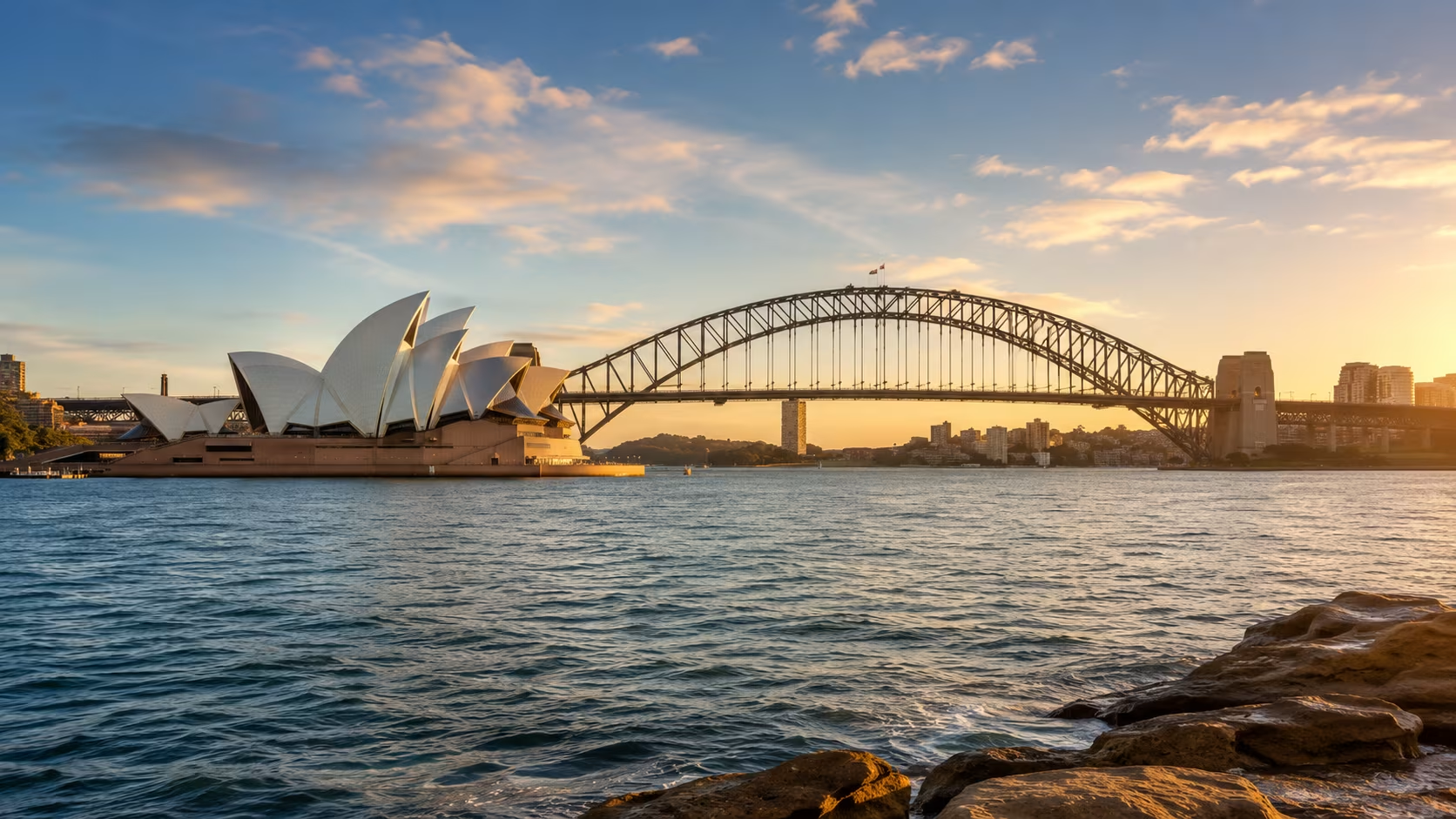
Sydney is one of the most beautifully sited major cities in the world. The harbor — Port Jackson — penetrates the urban fabric in dozens of bays, peninsulas, and inlets, surrounded by 100+ kilometers of coastline. The Opera House + Harbour Bridge frame the most-photographed urban skyline in the Southern Hemisphere. The temperate climate, the beach culture, the multicultural food scene, and the Australian directness make the city distinctive.
The 2026 city is in good shape. Tourism has fully recovered from the 2019-2022 pandemic disruption + Australia's strict border closures. The Western Sydney Airport opened in late 2024, easing some pressure on Kingsford Smith. The light rail extensions have made the city more walkable + transit-friendly than its sprawling reputation suggests.
For first-time visitors, Sydney works as a 4-5 day trip — enough for the headline harbor sights, multiple beaches, the Royal Botanic Gardens, and at least one Blue Mountains day trip.
Quick Facts
| Item | Detail |
|---|---|
| Country | Australia |
| Currency | Australian dollar (AUD), ~1.55 AUD/USD in 2026 |
| Language | English |
| Time zone | AEST (UTC+10) / AEDT (UTC+11) — DST observed October-April |
| Tourist tax | None |
| Best time | September–November, March–May |
| Visa | ETA / eVisitor visa for most countries (similar to ESTA); free or A$20 |
| Trip length | 4–5 days |
When to Go
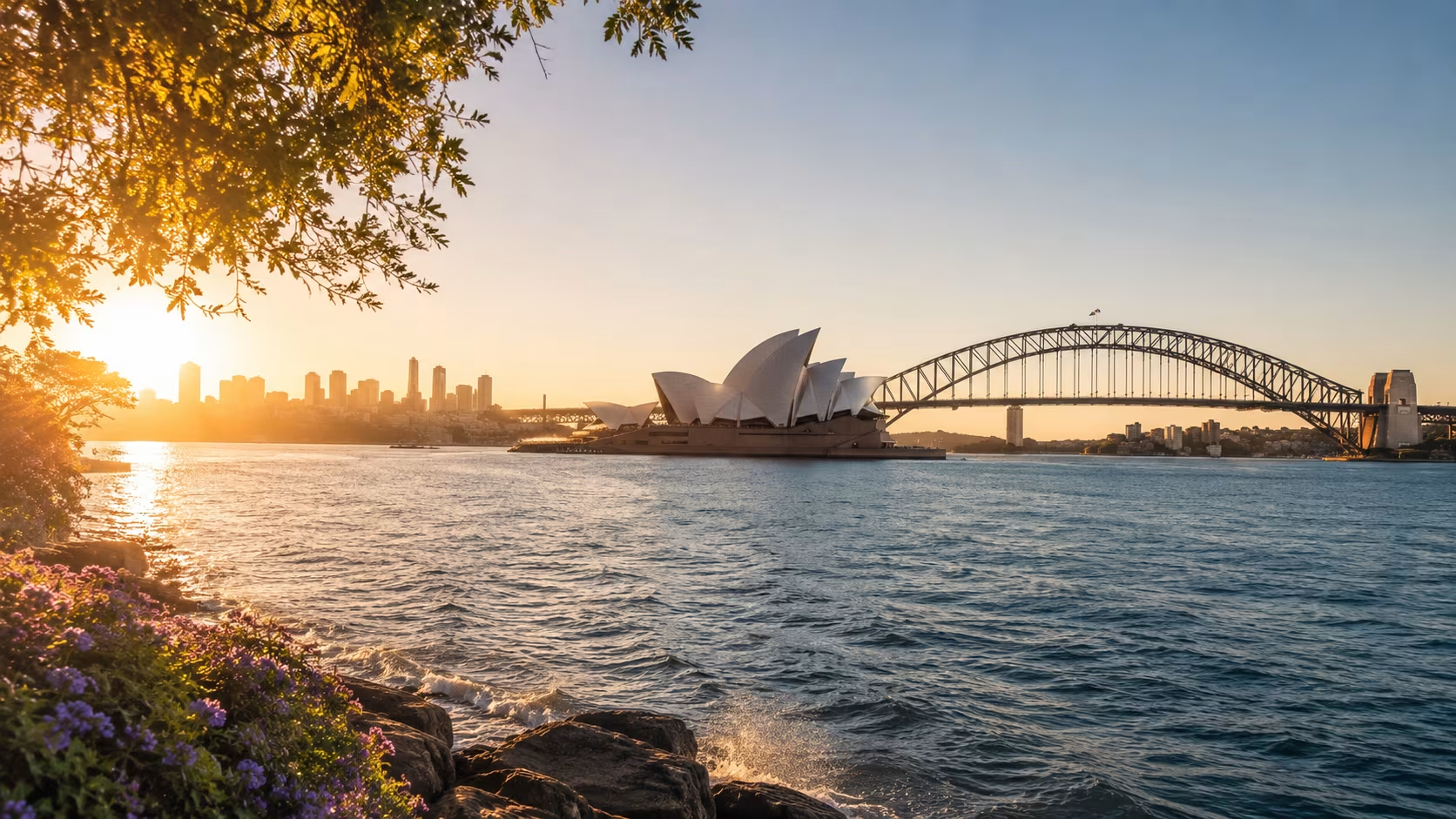
September to November (spring). The sweet spot. Highs 18-25°C, gardens flowering, jacaranda trees in bloom early November. Tourist density manageable.
March to May (autumn). The other prime window. Warm but cooling (15-25°C), water still warm enough for swimming through April.
December to February (summer). Hot (25-35°C), peak tourist season. Christmas + New Year's in Sydney is a major event — fireworks at the harbor. Hotel prices peak.
June to August (winter). Mild by global standards (8-18°C). The city's quieter season; whale-watching season starts mid-May.
Avoid:
- Sydney New Year's Eve unless you specifically want it (hotel prices triple; major crowd-control restrictions).
- Christmas + Boxing Day week for premium pricing.
- State of Origin matches for some hotel pricing spikes.
Getting In
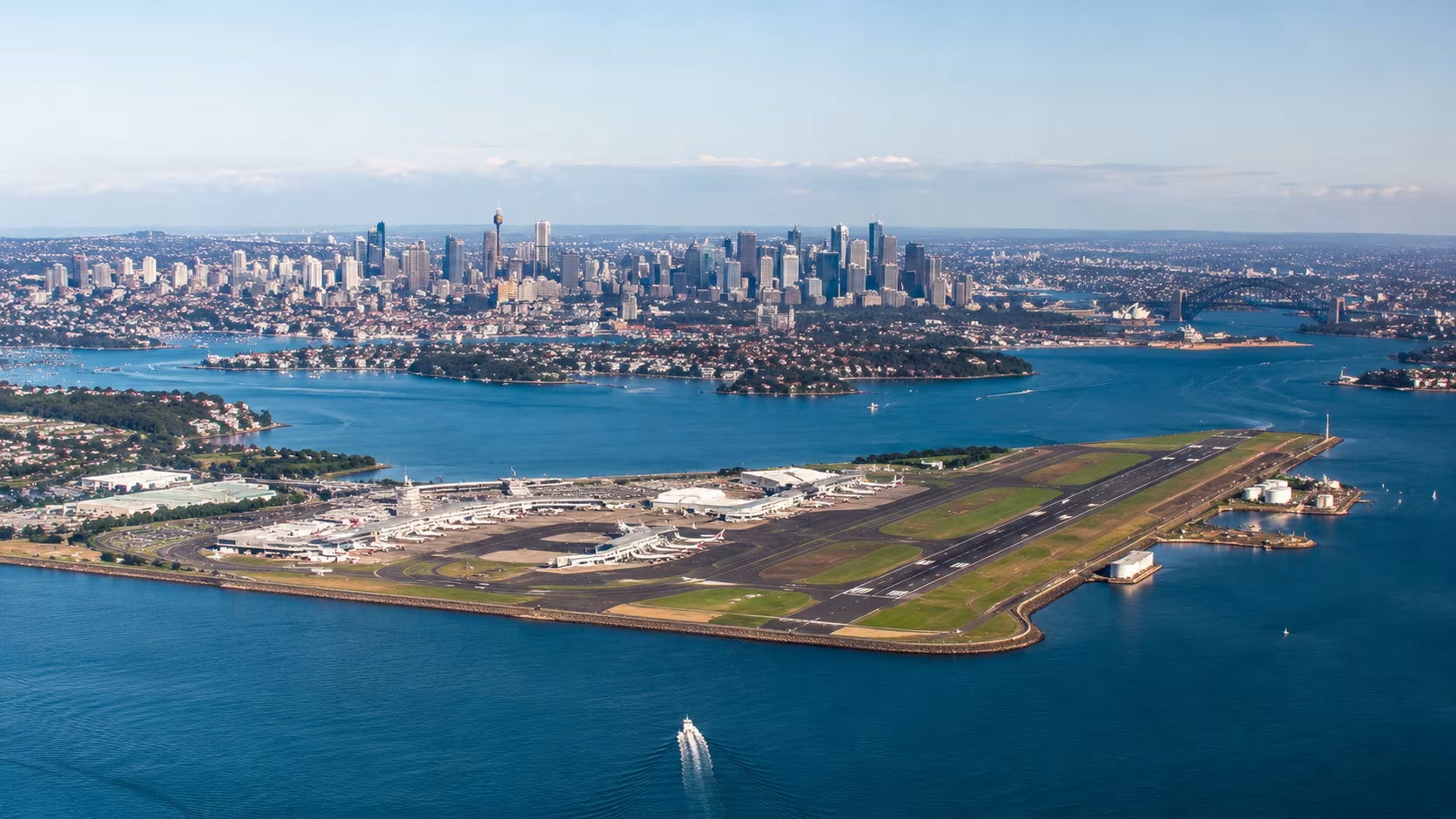
Sydney Kingsford Smith Airport (SYD). 8 km south of central.
From SYD:
- Train: A$22-25, 13 min to Central Station. Most expensive on per-km basis of any Australian city; book ahead for slightly cheaper fares.
- Bus 400: A$5-6, 35-50 min.
- Taxi: A$50-65 to most central destinations.
- Uber/Bolt: A$45-65.
Western Sydney International Airport (WSI). Opened late 2024. 50 km west. Currently regional + some international flights; expanding through 2026-2027.
Sydney is also a regional rail hub. Trains to Melbourne (10-11h), Brisbane (14h). Domestic flights are dramatically faster + competitively priced.
Getting Around
Trains
The Sydney Trains network covers the metropolitan area. Single trips A$3.20-7.50. Opal card is the rechargeable smart card; tap to pay. Apple Pay / Google Pay tap-in works as of 2024.
Light Rail
The expanding light rail covers central + inner suburbs. Useful for the airport-to-city run, Pyrmont, Star City, the eastern suburbs.
Buses
Comprehensive bus network. Same Opal payment.
Ferries
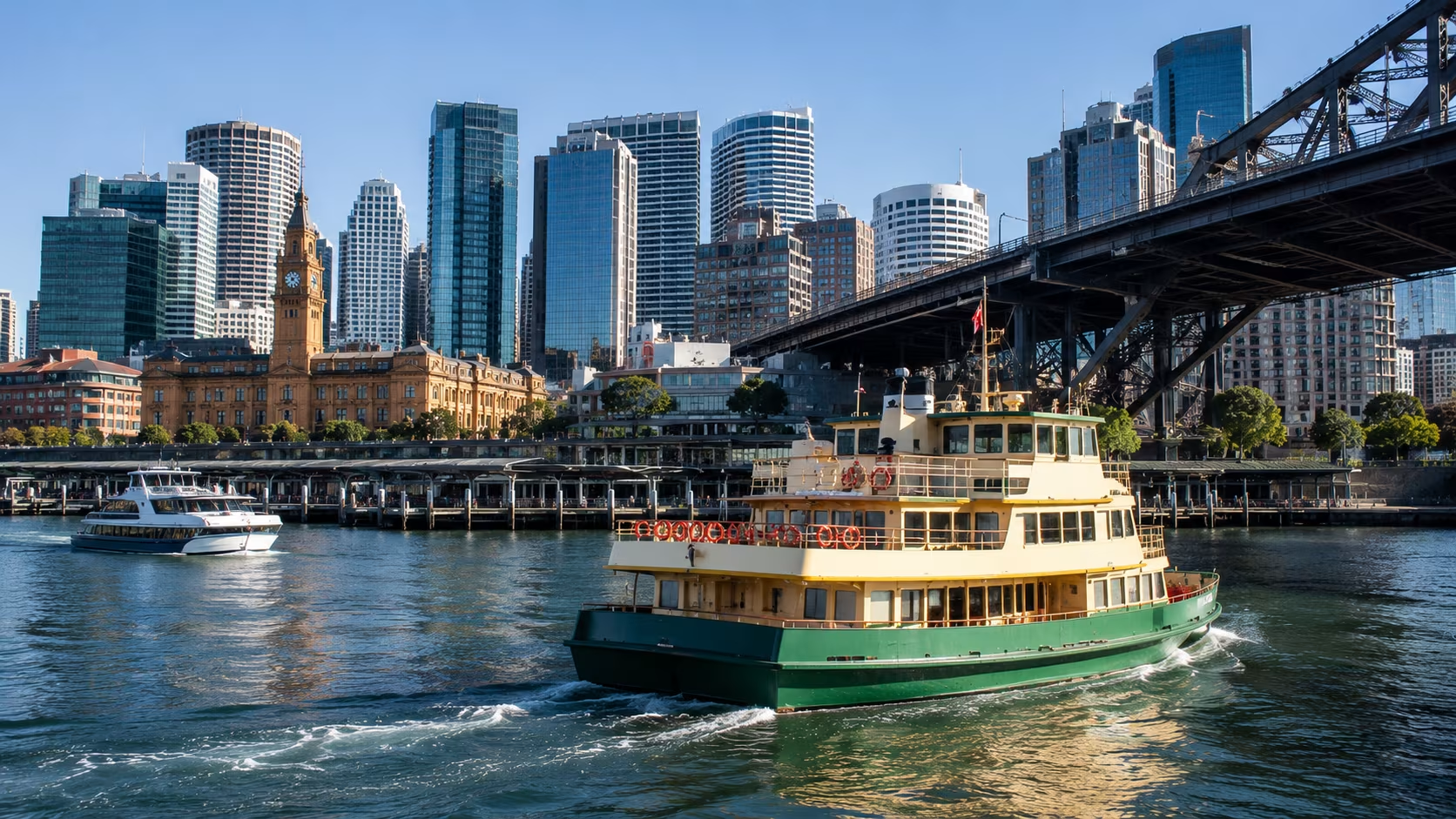
The iconic ferries from Circular Quay. The Manly Ferry is one of the world's great cheap urban experiences (30 minutes across the harbor for A$8 with Opal). Ferries also run to Watsons Bay, Taronga Zoo, Cremorne Point.
Walking
Central Sydney (CBD), the Rocks, Sydney Opera House precinct, Royal Botanic Gardens, Hyde Park are all walkable. Between districts: longer walks or transit.
Taxi / Uber / Bolt
Reliable but expensive. Most central trips: A$15-30.
Where to Stay
Sydney's neighborhoods feel different from each other.
Sydney CBD (Central Business District)
The central business district. Walking distance to Circular Quay, Opera House, Harbour Bridge, Botanic Gardens, Hyde Park. Premium hotels (Park Hyatt, Four Seasons, InterContinental). High-rise tourist core.
The Rocks
The historic colonial district at the foot of the Harbour Bridge. Sandstone buildings, working pubs since the 1800s, walking distance to everything central. Boutique hotels.
Darling Harbour
The redeveloped harbor entertainment district. Shopping, dining, the Aquarium, the Maritime Museum. Less character; more family-friendly. Mid-range to higher-end hotels.
Surry Hills + Paddington
The creative-class residential districts east of the CBD. Boutique cafés, design shops, terraced houses. Less central but real neighborhood feel. Boutique guesthouses + apartments.
Bondi Beach
The famous beach 7 km east of central. Walking distance to Bondi Icebergs (the iconic ocean pool), the Coastal Walk. Mid-tier and luxury beach hotels.
Manly
The northern beach 15 minutes by ferry from Circular Quay. Quieter than Bondi; ferry connection is part of the trip. Mid-range hotels.
Avoid as a base
- Far suburbs (Parramatta, Bankstown) — too far for a 4-day trip.
- Around airport for sightseeing.
- Kings Cross + parts of Darlinghurst at night (recovering nightlife district; mostly safe but noisy).
Realistic 2026 nightly prices (4-star, weekday, shoulder, USD equivalent):
| Neighborhood | Mid-range | Higher-end |
|---|---|---|
| Sydney CBD | $200-350 | $500-1,200 |
| The Rocks | $230-380 | $550-1,500 |
| Darling Harbour | $180-290 | $400-900 |
| Surry Hills | $150-260 | $350-700 |
| Bondi Beach | $230-380 | $500-1,200 |
| Manly | $200-340 | $450-1,000 |
Sydney is among the more expensive cities in Australia + globally — comparable to NYC or London.
What to Book in Advance
Sydney Opera House Tour
A$45 for 60-minute tour. Books 1-2 weeks ahead. The interior is more architecturally interesting than visitors expect.
Opera House Performance
Opera, ballet, theater, contemporary music. Tickets A$80-300+ depending on performance. Books months ahead for major productions.
Harbour Bridge Climb (BridgeClimb Sydney)
The iconic climb to the top of the bridge. A$220-380 depending on time slot. Sunset slots are most popular and most expensive. Books 1-2 weeks ahead. Allow 3.5 hours.
Taronga Zoo
The ferry-accessible zoo on the harbor's north shore. A$48 entry. Walk-up usually fine.
Premium Restaurants
- Quay (Peter Gilmore's flagship at the Overseas Passenger Terminal, modern Australian).
- Bennelong (in the Opera House, Peter Gilmore's harbor-view restaurant).
- Sepia (modern Australian).
- Tetsuya's (institution since 1989, Japanese-Australian fusion, books months ahead).
Blue Mountains Day Trip
The sandstone mountain region 100 km west of Sydney. Day tour packages: A$150-250 per person.
Day 1 — Harbor + Opera House
08:30. Coffee. Single Origin Roasters (multiple locations). Reuben Hills in Surry Hills. Bourke Street Bakery for café + breakfast.
09:30. Sydney Opera House. The 1973 Jørn Utzon-designed performance complex. The exterior photographs are the headline; the interior is even more architecturally significant if you take the tour. Walk around the entire building. The new Joan Sutherland Theatre lobby is open to public.
10:30. Take the Sydney Opera House tour (booked, A$45) or skip and walk around exterior.
12:00. Lunch at Opera Bar (the casual harborside restaurant) or Bennelong (the upscale option inside).
13:30. Walk through the Royal Botanic Gardens (free). The 30-hectare gardens with multiple specialty sections + the famous Mrs. Macquarie's Chair viewpoint. Allow 90 minutes.
15:30. The Rocks. The colonial-era district at the foot of the Harbour Bridge. Walk through the cobbled streets. Visit the Susannah Place Museum (A$10) or just walk the historic pubs (Hero of Waterloo since 1843; Lord Nelson Brewery since 1831).
17:00. Walk across Sydney Harbour Bridge (free) — the 1932 steel arch bridge. The pedestrian path is on the eastern side. Or do the Pylon Lookout climb (A$24, less expensive than BridgeClimb). Allow 60 minutes.
18:30. Sunset at the bridge or back at Mrs. Macquarie's Chair.
20:00. Dinner. Quay (premium modern Australian, books months ahead). Aria (modern Australian with Opera House view). Cafe Sydney (modern Australian). Mr. Wong (modern Chinese, casual).
Day 2 — Beaches + Bondi to Coogee Walk
08:30. Coffee in the eastern suburbs. Speedos Cafe at Bondi or Single Origin (Surry Hills branch).
09:30. Take Bus 333 from CBD to Bondi Beach (15-30 min). Walking the famous beach.
10:30. Bondi Coastal Walk to Coogee. The 6 km coastal path with cliffs, multiple beaches, the famous Bondi Icebergs ocean pool. Allow 2.5-3 hours including stops.
13:30. Lunch at Bronte Beach (mid-walk) or at Coogee at the end. Three Blue Ducks at Bronte for upscale modern. Coogee Pavilion for casual dining.
15:30. Stay at Coogee for beach time + swimming, or take Bus 372 back to central.
17:00. Walk through Surry Hills + Paddington for shopping + cafés.
19:30. Dinner. Restaurant Hubert (French-influenced, modern). Yoshii's Omakase (high-end Japanese). Ester (Surry Hills, modern Australian wood-fired). Porteño (Argentinian).
Day 3 — Manly Ferry + Northern Beaches
09:00. Coffee at Circular Quay. Reuben Hills has a Quay location.
10:00. Ferry from Circular Quay to Manly (30 min, A$8 with Opal). One of the world's great cheap urban experiences. Stand at the back for views of Sydney skyline + bridge + Opera House as you depart.
10:30. Arrive Manly Wharf. Walk to Manly Beach (5 min via The Corso pedestrian street).
11:00. North Steyne to Shelly Beach walk. The 30-min coastal walk to the smaller, calmer Shelly Beach. Snorkeling at Shelly Beach often features rays and small sharks.
13:00. Lunch in Manly. The Pantry for casual modern. Hugos Manly for upscale.
14:30. Optional Manly Sea Life Sanctuary (A$30) or beach time.
16:30. Ferry back to Circular Quay.
18:00. Walk through Darling Harbour for the modern harbor district. The aquarium + maritime museum if you want.
19:30. Dinner. The Stone & Brennan for steakhouse. NoMad Sydney at the InterContinental (modern American). Chin Chin (modern Asian).
Day 4 — Choose: Blue Mountains Day Trip, Taronga Zoo, or Slow Day
Path A — Blue Mountains Day Trip
The sandstone mountain range 100 km west.
08:00. Tour pickup or drive yourself.
10:00. Echo Point + Three Sisters (Katoomba). The famous rock formations. Allow 60 minutes.
11:30. Scenic World (A$60). Cable car + tram + walking tracks through the rainforest valley below.
13:30. Lunch in Katoomba or Leura. The Carrington Hotel (since 1880).
15:00. Wentworth Falls + Bridal Veil Falls walks (multiple short hikes available).
17:30. Drive back to Sydney.
Path B — Taronga Zoo Day
The ferry-accessible zoo. A$48 entry. Australian wildlife focus + global. Allow 5-6 hours including ferry. Sky Safari cable car within the zoo.
Path C — Royal National Park + Cronulla Day
The coastal park 35 km south. Beaches + bushland + coastal cliffs. Bus + ferry combination from central. Day excursion with surfing or hiking.
Path D — Slow Sydney Day
Morning at the Art Gallery of New South Wales (free). The state's main art museum, featuring strong Indigenous Australian collection.
Lunch in central or Surry Hills.
Afternoon at the Powerhouse Museum (A$23) or Australian Museum (A$15).
Sunset ferry from Circular Quay (any route + return) for harbor views.
Final dinner in Surry Hills or eastern suburbs.
What to Eat
Australian cuisine is multicultural by nature. The British colonial heritage + post-1950s European immigration + 1990s onward Asian + Middle Eastern + Indigenous-inspired modern Australian cuisine combine into a distinctive scene.
Headline Dishes
| Dish | What it is |
|---|---|
| Modern Australian | The cuisine category — fusion of European technique + Asian influences + native ingredients (kangaroo, emu, native herbs, native pepperberry, etc.). |
| Meat pies | Working-class lunch staple. Harry's Café de Wheels is the institution since 1945. |
| Sausage roll | Pastry-wrapped sausage. Bakery standard. |
| Pavlova | Meringue-based dessert with cream + fruit. National dessert (also claimed by NZ). |
| Lamingtons | Sponge cake squares dipped in chocolate + coconut. |
| Vegemite | Salty yeast spread on toast. National peculiarity. |
| Tim Tams | Chocolate-covered biscuits. The classic snack. |
| Avocado toast | Sydney + Melbourne brunch standards. |
| Flat white coffee | The Australian invention. Standard café order. |
| Surf and turf | Steak + lobster/prawns. Working-class luxury. |
| Barramundi | The native white fish. Australian seafood classic. |
| Native ingredients | Kangaroo, crocodile, native herbs, lemon myrtle, Davidson's plum, finger lime — featured in modern Australian fine dining. |
Where to Eat
Modern Australian:
- Quay (Peter Gilmore, premium modern Australian).
- Bennelong (in the Opera House, Peter Gilmore's casual variant).
- Sepia (modern Australian, multi-Michelin recommended).
- Tetsuya's (Japanese-Australian, since 1989).
- Ester (Surry Hills, wood-fired modern).
- Aria (modern Australian with harbor view).
- Yoshii's Omakase (high-end Japanese).
- Restaurant Hubert (modern French-Australian).
Casual:
- Mr. Wong (modern Chinese).
- Mary's Burger Newtown (working-class, much-loved).
- Three Blue Ducks (multiple locations, modern Australian casual).
- Bourke Street Bakery (the institution).
- Three Williams (Surry Hills brunch).
Working-Class:
- Harry's Café de Wheels (since 1945, the famous meat pie at Woolloomooloo).
- Pancakes on the Rocks (since 1975).
- Adriano Zumbo for sweets.
- Belles Hot Chicken for casual fried chicken.
Costs and Budget
2026 daily budgets per person, excluding flights and hotel (USD equivalent):
| Style | Per day | Notes |
|---|---|---|
| Backpacker | $50-90 | Hostel, working-class meals, walking, transit |
| Mid-range | $100-180 | Mix of casual and proper restaurants, museums, transit |
| Comfortable | $230-380 | Better restaurants, premium tour, taxis |
| Higher-end | $600+ | Tasting menus, premium hotels, private guide |
Sydney prices are similar to NYC + London. Coffee + flat white: A$5-7. Sit-down lunch: A$25-50. Mid-tier dinner: A$60-120. Premium tasting menu: A$200-400+.
Practical Info
- Cards. Universal. Tap-to-pay everywhere.
- Tipping. Not standard at most restaurants. Round up at premium restaurants for very good service. Australian wages mean servers are well-paid.
- English. Universal.
- Sundays. Most things open. Some shops close at 18:00.
- Pickpocketing. Real around tourist sites. Standard precautions.
- Sun. Australian UV is intense. SPF 50+ is mandatory. "Slip, slop, slap" (slip on a shirt, slop on sunscreen, slap on a hat) is the national health campaign. Real risk.
- Beach safety. Swim only between the red + yellow lifeguard flags. Rip currents are real + powerful.
- Daylight. Mid-December: 14 hours. Mid-June: 10 hours.
- Distances. Australia is large; even within Sydney, transit times can be 60+ minutes between distant points.
- Crime. Generally low. Standard urban precautions.
- Smoking. Banned indoors at restaurants. Outdoor restrictions in many areas.
Common First-Timer Mistakes
- Trying to do Sydney + Melbourne + Cairns + Uluru in 7 days. Australia is enormous. 4-7 days for Sydney alone; add at least 5+ days for any major secondary destination.
- Skipping the ferries. Sydney harbor ferries are the city's best cheap experience.
- Eating only at chain restaurants. Sydney's modern-Australian scene is excellent.
- Visiting Bondi without sunscreen. UV is brutal; sunburn ruins beach days.
- Skipping the Coastal Walk thinking 6 km is too long. It's the city's best free experience.
- Spending all your time in CBD. Surry Hills, Paddington, Manly all reveal the city beyond the central tourist core.
- Underestimating distances + transit times. Plan for 30-60 minute trips between districts.
- Drinking heavily at beach clubs in summer heat. Real dehydration risk.
- Trying to do Blue Mountains in 4 hours. It's a 12-14 hour day with travel.
- Booking premium dinner experiences without 1-3 month advance reservations (Quay, Tetsuya's).
Final Notes
Four days in Sydney is the right length for a focused first visit. One harbor + Opera House day, one Bondi + Coastal Walk + eastern suburbs day, one Manly + ferries day, one Blue Mountains or slow day.
The quietest piece of advice: take the Manly Ferry at 17:30. The 30-minute crossing as the sun sets behind the bridge + Opera House on the right + the Heads on the left + the city skyline behind. Drink a beer or coffee from the ferry kiosk; sit at the back. The Sydney that stays with you isn't the Opera House selfie; it's the realization that the city's geography is its character — the harbor everywhere, the boats moving constantly, the cliffs rising from the water, and the fact that 5 million people built a major city around all this and still spend their weekends at the beach.
0 Comments
No comments yet — start the conversation.