

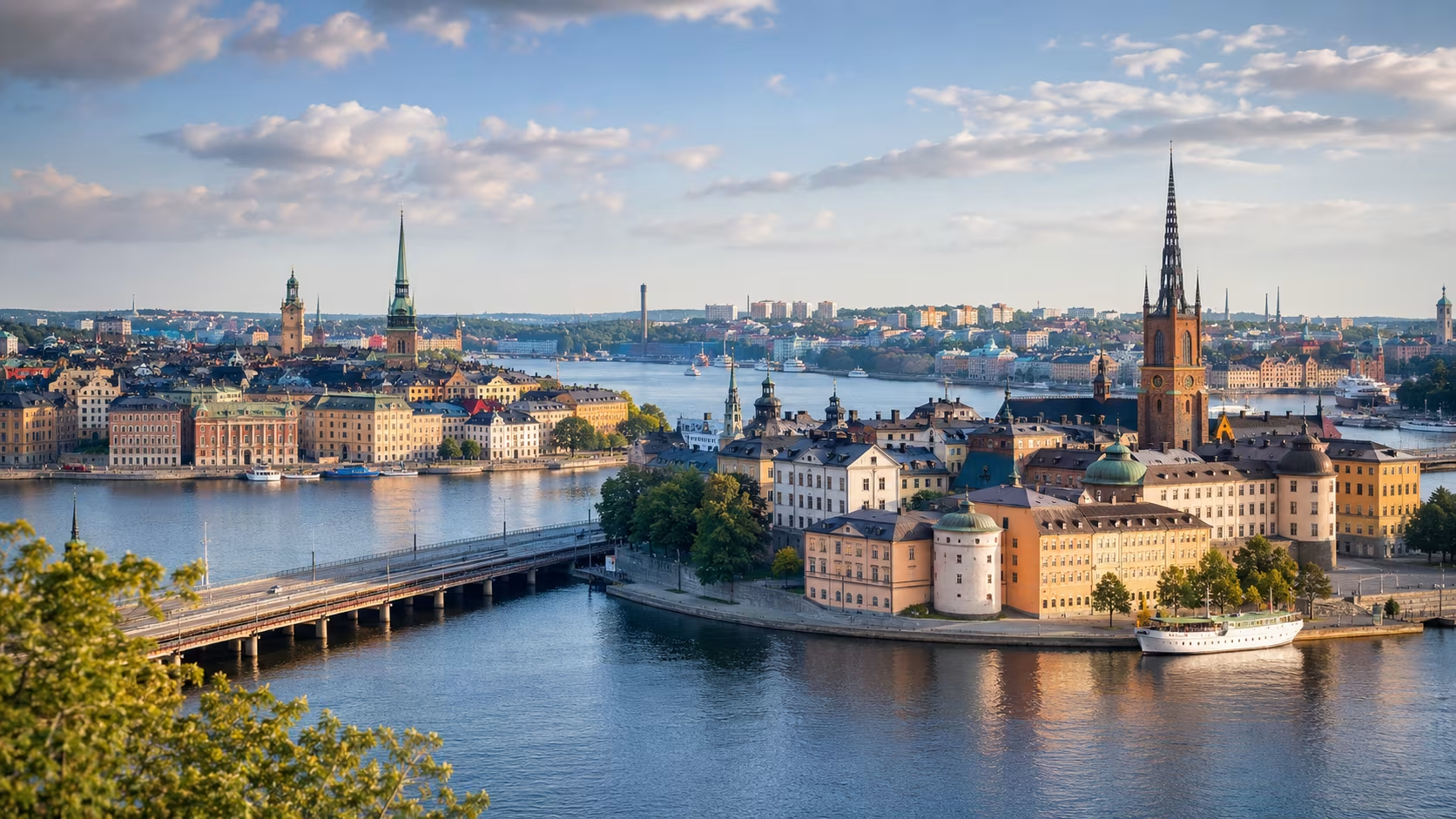
Stockholm is the most-photographed Scandinavian capital and one of the most coherently beautiful cities in Europe. Built across 14 islands connected by 57 bridges, the city has water visible from almost every angle, dramatic seasonal light (summer evenings in light until 22:30; winter days that finish at 14:30), and a design culture that has shaped global aesthetics for generations.
The 2026 city is more international than the Stockholm of 2010. The startup scene that produced Spotify, Klarna, and dozens of others has internationalized the food and café culture. The royal-and-Nordic-history side remains intact: Gamla Stan (the Old Town) is unchanged in its essentials since the 17th century. The two layers (historical density and modern startup energy) coexist.
This is a 4-day guide for first-time visitors who want both versions.
Quick Facts
| Item | Detail |
|---|---|
| Country | Sweden |
| Currency | Swedish krona (SEK), ~10.5 SEK/USD or ~11.5 SEK/EUR in 2026 |
| Language | Swedish; English universal |
| Time zone | CET (UTC+1) / CEST (UTC+2) |
| Tourist tax | None (Sweden has no nationwide tourist tax) |
| Best time | May–August |
| Visa | Schengen, 90 days for most non-EU |
| Trip length | 3–4 days |
When to Go
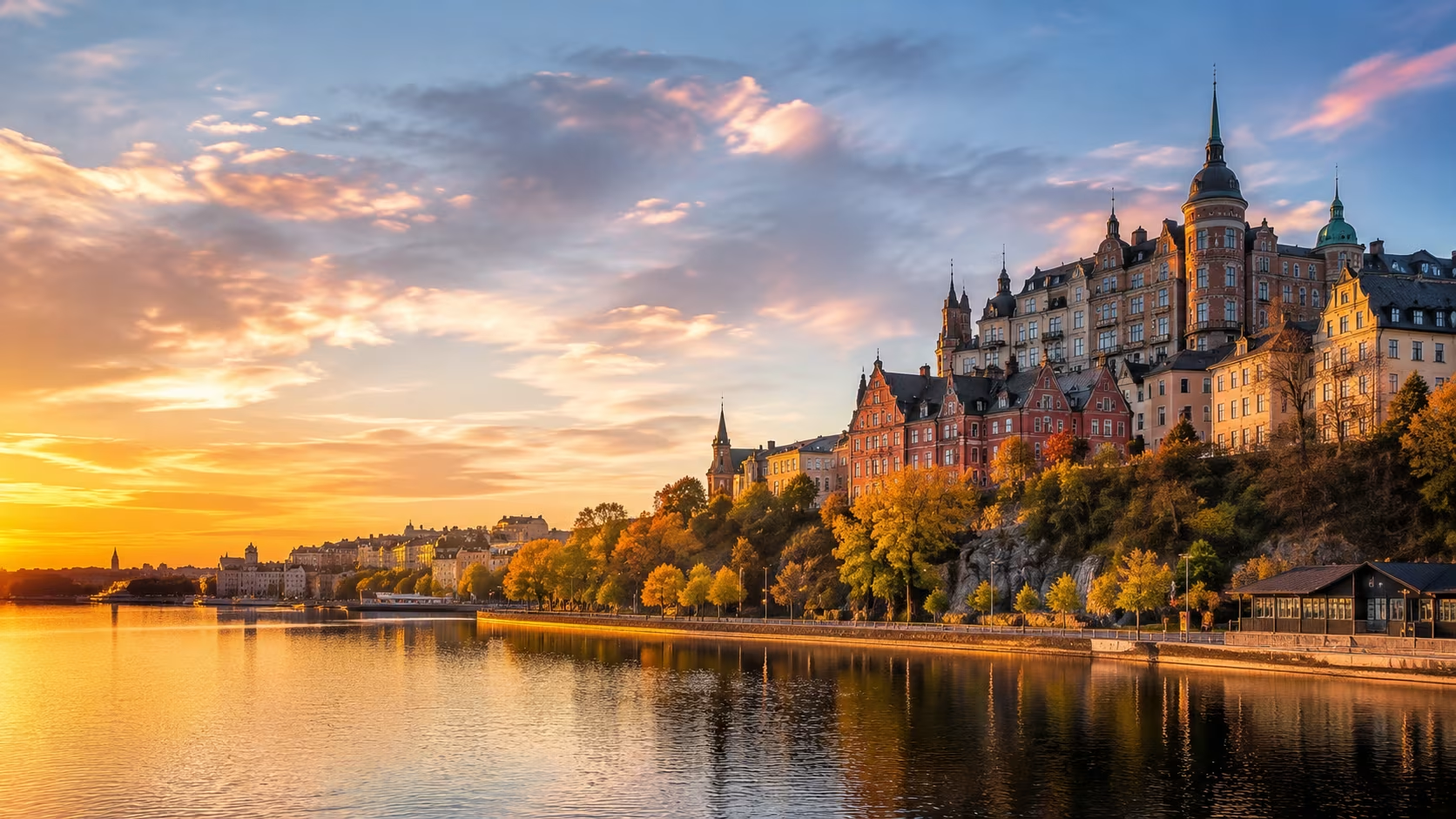
Late May to early August. The sweet spot. Long days (June 21 has 18.5 hours of daylight), pleasant weather (highs 18–25°C), the city in full outdoor terrace season.
Mid-August to early October. Shoulder. Schools resumed, weather still pleasant in early September, autumn colors arrive late September.
Mid-October to April. Cold (often below freezing for months), short days. Nordic winter atmosphere: cozy interiors, candles, holiday markets. December has the Old Town Christmas market.
Avoid
- Midsummer Eve (third Friday of June) and Midsummer Day weekend: many Swedes leave the city for the country; many restaurants closed; transit reduced. Beautiful in the countryside; less so in the city.
- Christmas / Easter / National Day for some closures.
- December 13 Saint Lucia Day for school events but not closures.
Getting in
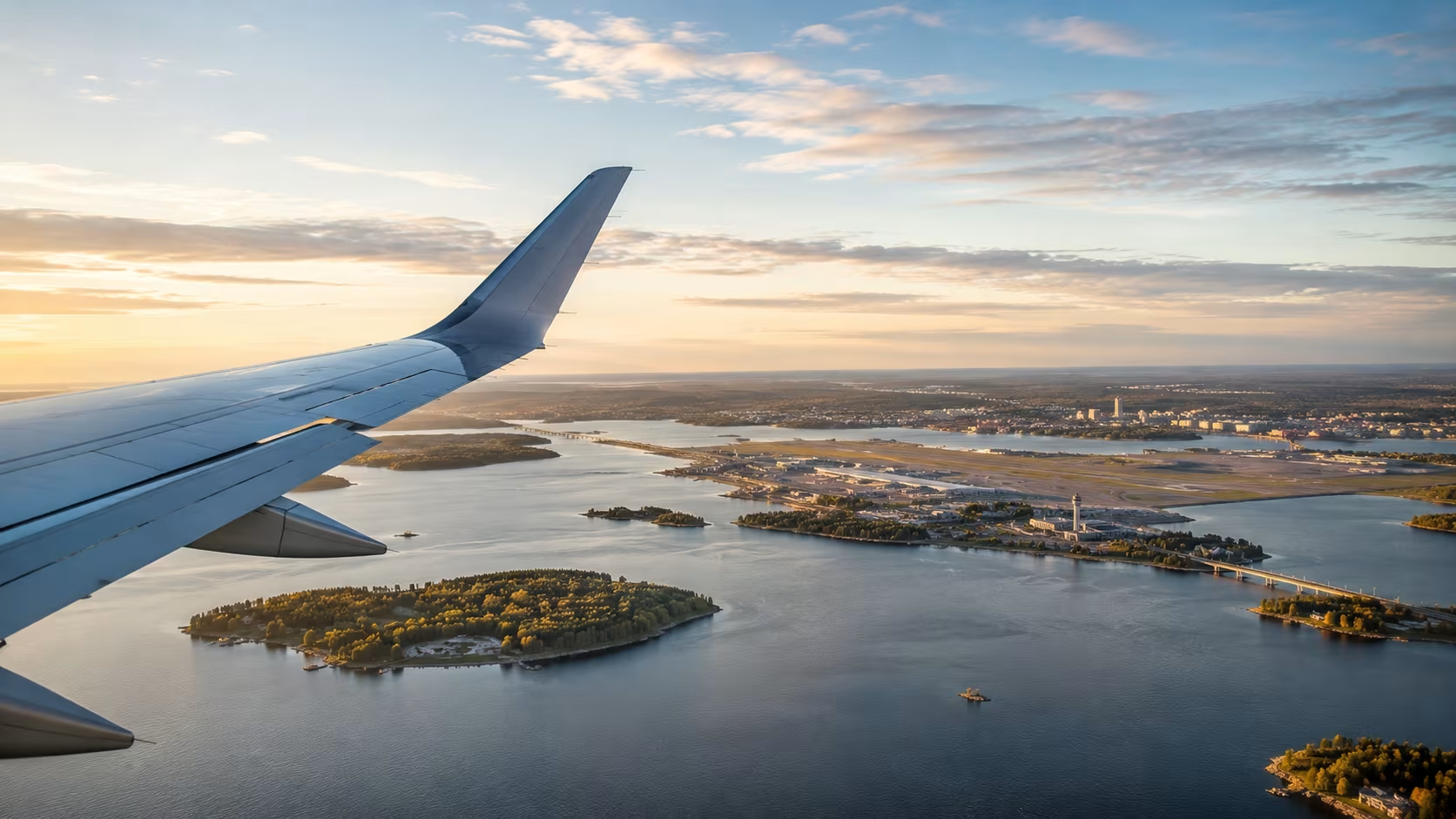
Stockholm-Arlanda Airport (ARN). 40 km north of central. Sweden's main international airport.
From ARN
- Arlanda Express: 320 SEK, 18 min to central station. Fastest.
- Commuter train: 178 SEK, 38 min.
- Flygbussarna airport bus: 119 SEK, 50 min.
- Taxi: 540–700 SEK flat fare.
- Uber/Bolt: 380–550 SEK.
Stockholm-Bromma Airport (BMA). Closer to central; smaller, mostly domestic. Closing in 2025–2026 for redevelopment per current plans, but verify status.
Stockholm is also a major rail hub. Trains to Gothenburg (3h 10m by X2000), Oslo (5 hours), Copenhagen via Malmö (5 hours).
Getting Around
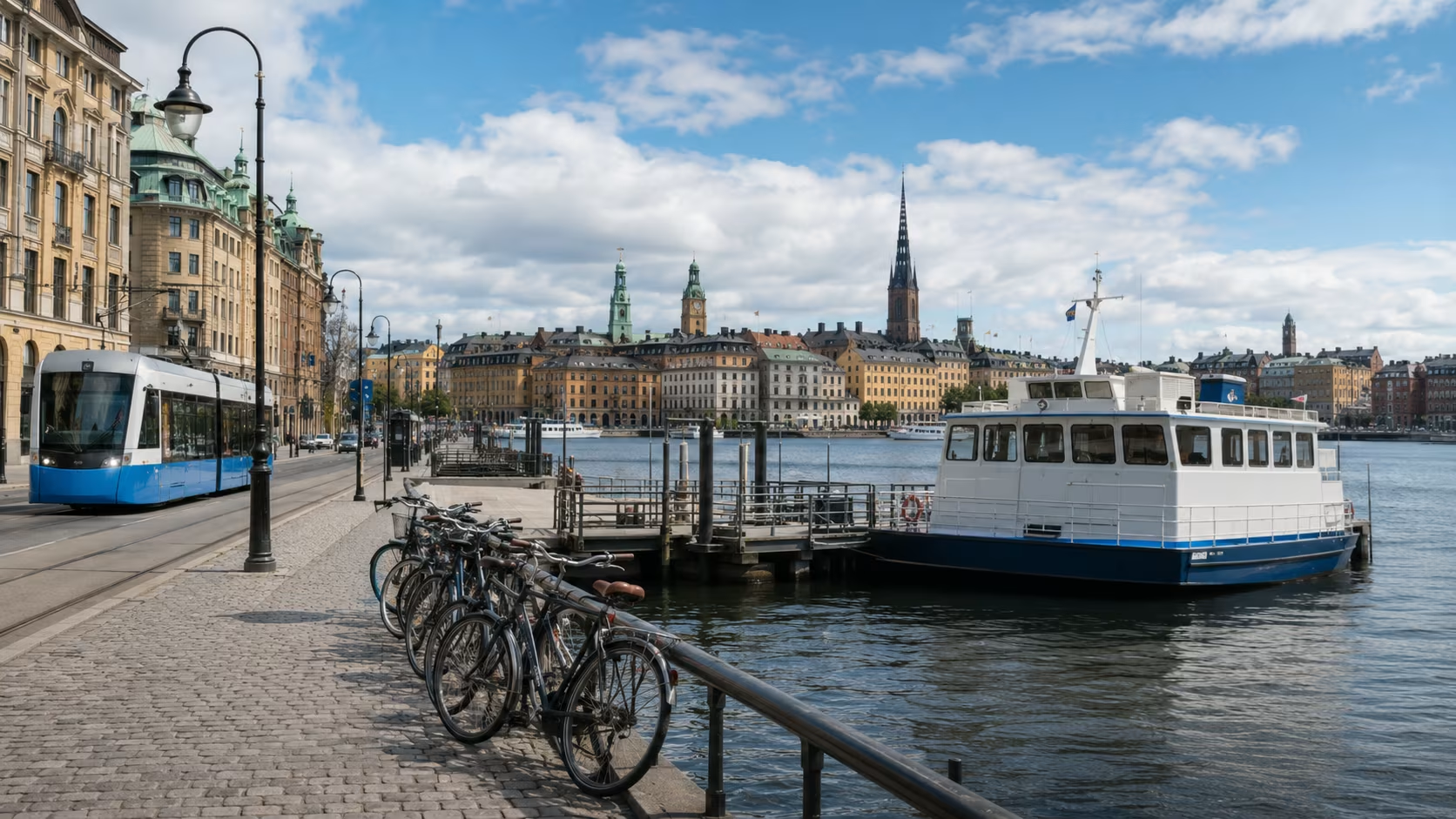
Tunnelbana (metro)
Three main lines (Red, Green, Blue). Fully driverless on some sections. Single ride: 39 SEK. 24-hour pass: 175 SEK. 72-hour pass: 350 SEK.
Buy at vending machines or use SL app (the Stockholm Public Transport mobile ticket app). Apple Pay tap-in works on metro/bus/train as of 2024.
Don't miss the Metro stations themselves. Stockholm's metro stations are nicknamed "the world's longest art gallery": 90+ stations have been turned into art installations. Famous: T-Centralen, Kungsträdgården, Solna Centrum.
Bus + Tram
SL operates buses and one historic tram line. Same payment system.
Walking
Gamla Stan, Norrmalm, Östermalm, and Södermalm are all walking distance from each other. The central area is roughly 3 km × 2 km.
Boat / Ferry
The public-transit boats are part of the SL system. Useful for visiting Djurgården (the museum island) and the Stockholm Archipelago.
Bicycle
Citybike Stockholm (the public bike share). 200 SEK for 3-day pass.
Taxi
Three main companies (Taxi Stockholm, Taxi Kurir, Taxi 020). Reliable but pricey: 50 SEK base + 12–15 SEK/km. Apps: Uber, Bolt, TaxiCaller.
Where to Stay
Stockholm's central neighborhoods feel different from each other.
Norrmalm
The central business district. Stockholm Central Station, the cluster of premium hotels. Convenient for transit; less character at night.
Gamla Stan
The medieval Old Town. Cobblestoned streets, the Royal Palace, the famous narrow Mårten Trotzigs Gränd alley. Tourist-dense; small boutique hotels in restored buildings.
Östermalm
The upscale residential district. Swedish luxury shops, the Östermalm Saluhall food market. Mid-range to higher-end hotels.
Södermalm
The creative-class southern island. Indie shops, cafés, restaurants. Walking distance to central via Gamla Stan. The most-loved neighborhood for repeat visitors.
Vasastan
North of Norrmalm. Residential, cafés, parks. Quieter base.
Avoid as a Base
- Far suburbs (Solna, Sollentuna).
- Around the Forex exchange windows on Sergels Torg: convenient but soulless.
Realistic 2026 nightly prices (4-star, weekday, shoulder, USD equivalent):
| Neighborhood | Mid-range | Higher-end |
|---|---|---|
| Norrmalm | $200–320 | $450–900 |
| Gamla Stan | $250–400 | $500–1,000 |
| Östermalm | $230–360 | $500–1,000 |
| Södermalm | $170–270 | $380–700 |
| Vasastan | $190–290 | $400–750 |
What to Book in Advance
Vasa Museum
The 17th-century warship that sank on its maiden voyage in 1628 + was salvaged 1961 + is now displayed in a purpose-built museum. The most-visited museum in Scandinavia. 230 SEK. Walk-up usually fine; book online to skip queue. Allow 2.5 hours.
Royal Palace
The official royal residence (the largest royal palace in the world by room count, 600+ rooms). 200 SEK. Walk-up usually fine. Allow 2 hours.
ABBA the Museum
The interactive ABBA museum on Djurgården. 295 SEK. Books ahead in summer; walk-up off-season. Allow 90 minutes.
Nobel Prize Museum
In the Stockholm Stock Exchange building in Gamla Stan. 180 SEK. Walk-up. Allow 90 minutes.
Skansen
The world's first open-air museum (1891): historic Swedish buildings + zoo + cultural displays. 245 SEK. Walk-up. Allow 4 hours.
Premium Restaurants
- Frantzén (Michelin three-star). Books 2–3 months ahead.
- Operakällaren (Michelin one-star). Books 2–4 weeks ahead.
- Aira (modern Nordic). Books 1–2 weeks ahead.
- Oaxen Krog (modern Nordic, Michelin one-star). Books 2 weeks ahead.
Day 1 — Gamla Stan
08:30. Coffee in Gamla Stan or Norrmalm. Drop Coffee (multiple locations). Café Cardellino. Mellqvist Kaffebar.
09:30. Royal Palace. Walk through the State Rooms, the Royal Apartments, the Royal Treasury (with the regalia). The Changing of the Guard at 12:15 (in summer) is the public-display headline. Allow 2 hours.
12:00. Walk Gamla Stan. The cobblestoned medieval Old Town. Stortorget (the main square, with the colorful 17th-century facades). Mårten Trotzigs Gränd (the city's narrowest alley, 90 cm wide). Allow 90 minutes for slow walking.
13:00. Lunch in Gamla Stan or near. Pelikan (working-class Swedish since 1899). Kryp In for traditional Swedish. Den Gyldene Freden (since 1722, the Swedish Academy meets here weekly).
14:30. Nobel Prize Museum. Allow 90 minutes.
16:00. Walk to Riddarholmen (the small island next to Gamla Stan) for views back at the Old Town. Riddarholm Church is the burial place of Swedish royalty.
17:30. Take the boat to Skeppsholmen (the small art island). The Moderna Museet (Modern Art Museum, 195 SEK) and the Architecture and Design Museum (free).
19:30. Dinner. Frantzén if booked 3 months ahead. Operakällaren for upscale traditional. Tradition (modern Swedish in Östermalm). Ekstedt (Michelin one-star).
Day 2 — Djurgården
The museum-and-nature island. Plan a full day.
09:00. Coffee. Take Tram 7 from Sergels Torg to Djurgården (or walk across the bridge from central, 25 min).
09:30. Vasa Museum. The 17th-century warship + 50-year reconstruction + dramatic museum building. Allow 2.5 hours.
12:00. Lunch on Djurgården. Rosendals Trädgård (the biodynamic garden + outdoor café). Hard Rock Café for tourist standby. Rosendals Slott for upscale lunch.
13:30. Skansen (the open-air museum). Walk through historic Swedish farms, churches, traditional craftsman shops. Real bears + wolves + Nordic animals in enclosures. Allow 3 hours.
16:30. ABBA The Museum (booked) or Junibacken (children's literature museum, ideal for families) or Nordic Museum (Swedish cultural history museum). Allow 90 minutes.
18:00. Walk along the waterfront back toward central.
19:30. Dinner. Aira for upscale modern Nordic. Husmans Deli for casual. Tradition (mentioned).
Day 3 — Södermalm and Östermalm
09:30. Coffee in Södermalm. Snickarbacken 7 for café. Mellqvist Kaffebar for Nordic café.
10:30. Fotografiska (the photography museum on Södermalm). 165 SEK. Excellent rotating exhibitions, good café with views back to Old Town. Allow 2.5 hours.
13:00. Lunch in Södermalm. Pelikan (mentioned). Lo Scudetto for Italian. Hermitage for Mediterranean.
14:30. Walk Södermalm. The boutique shopping streets (Bondegatan, Götgatan), the Tjurberget hill (panoramic views), Mariatorget square. Allow 2 hours.
16:30. Take the metro or walk to Östermalm.
17:00. Östermalms Saluhall (the historic indoor market). Recently renovated. Mid-tier food court inside; fresh produce, meat, cheese, fish at counter level. Allow 60 minutes.
18:30. Walk Östermalm's premium shopping streets: Birger Jarlsgatan, Östermalmstorg square, Stureplan.
19:30. Dinner. Operakällaren (mentioned). Riche (since 1893, classic Stockholm restaurant). Wedholms Fisk for upscale seafood. Sturehof for traditional fine dining.
Day 4 — Choose: Archipelago, Drottningholm Palace, or Slow City Day
Path a — Stockholm Archipelago Day Trip
The 30,000+ islands east of Stockholm. The city's signature day trip. Multiple ferry routes from Strömkajen pier:
- Vaxholm (the closest island, 90 min round-trip). Wooden houses, fortress, casual lunches.
- Sandhamn (further, 90 min one-way). Sailing village.
- Fjäderholmarna (closest archipelago island, 25 min). Casual lunch + walking.
SL day pass covers ferry travel (the central-archipelago boats). Premium Vaxholm cruise: 280 SEK round-trip.
Path B — Drottningholm Palace
The royal family's residence (since 1981; the original royal palace is the public-facing one in Stockholm). UNESCO World Heritage. 200 SEK + 50 SEK boat + bus. 60 min from central.
Path C — Slow Stockholm Day
Morning at Hallwylska Museet (a 19th-century house museum, fully preserved). 130 SEK.
Lunch in Vasastan.
Afternoon at Skogskyrkogården (the UNESCO-listed cemetery designed by Erik Gunnar Asplund). The trees + Modernist architecture create one of Northern Europe's most contemplative spaces.
What to Eat
Swedish cuisine has a distinct identity. The headline dishes:
Headline Dishes
| Dish | What it is |
|---|---|
| Köttbullar | Swedish meatballs, served with cream sauce, lingonberry jam, mashed potatoes, pickled cucumbers. The unofficial national dish. |
| Smörgåsbord | The Swedish buffet. Cold cuts, herring, smoked salmon, eggs, breads, then warm dishes. Christmas tradition ("julbord"). |
| Sill / Inlagd sill | Pickled herring. Multiple varieties: dill, mustard, tomato, curry. |
| Gravlax | Cured salmon with dill. Cold-smoked variety distinct from "lox" abroad. |
| Kanelbulle | Swedish cinnamon bun. Cardamom + cinnamon. National pastry. |
| Princesstårta | Princess cake: green-marzipan-covered sponge cake with raspberry jam, vanilla cream, whipped cream. |
| Kalops | Beef stew with allspice. Working-class. |
| Pyttipanna | Scrambled diced potatoes + ham + onion. Working-class breakfast/lunch. |
| Toast Skagen | Open-faced shrimp + dill mayonnaise on toasted bread. |
| Surströmming | Fermented herring. Notoriously pungent. Tourist novelty. |
| Glögg | Mulled wine, traditional in winter. |
| Snaps | Caraway-flavored aquavit. |
| Lingonberry jam | Tart red jam, served with meatballs and at breakfast. |
Modern Swedish
Stockholm has a serious modern Swedish/Nordic scene.
- Frantzén (3-Michelin-star, Björn Frantzén's flagship).
- Operakällaren (1-star traditional fine dining).
- Aira (modern Nordic).
- Ekstedt (1-star, Niklas Ekstedt's wood-fire-only cooking).
- Oaxen Krog (1-star, on Djurgården).
- Tradition (modern, accessible price).
- Bravissima (high-end Italian-Swedish).
Working-Class / Casual
- Pelikan (since 1899, the institution).
- Kvarnen (Södermalm, working-class beer-and-meatballs).
- Riche (1893, classic Stockholm).
- Sturehof (Östermalm, classic).
- Den Gyldene Freden (since 1722, central Stockholm tradition).
- Husmans Deli for casual sandwiches.
Coffee
Fika is Sweden's coffee-and-pastry tradition. Working-class spots: ICA bakery counters, every neighborhood café. Specialty: Drop Coffee (multiple locations, the city's best), Mellqvist Kaffebar, Snickarbacken 7.
Costs and Budget
2026 daily budgets per person, excluding flights and hotel (USD equivalent):
| Style | Per day | Notes |
|---|---|---|
| Backpacker | $80–130 | Hostel, ICA grocery + bakery, walking, transit |
| Mid-range | $160–240 | Mix of casual and proper restaurants, museums, transit |
| Comfortable | $300–450 | Better restaurants, archipelago tour, cocktails |
| Higher-end | $700+ | Tasting menus, premium hotel breakfasts, private guide |
Stockholm is among Europe's most expensive. A working-class lunch: 150–250 SEK. A sit-down dinner mid-range: 350–650 SEK per person. Hotel breakfast: 180–280 SEK.
Practical Info
- Cards. Universal. Sweden is one of the world's least cash-using economies; some establishments don't accept cash at all.
- Tipping. Service charge often included. Round up at restaurants for good service.
- English. Universal. Swedes don't generally appreciate tourists struggling through Swedish; English is welcomed.
- Sundays. Most museums open. Some shops close. Restaurants generally open.
- Pickpocketing. Lower than European average. Standard precautions.
- Daylight. Mid-June: 18.5 hours. Mid-December: 6 hours. Affects pace dramatically.
- Winter. Snow + ice + darkness. Pack accordingly.
- Drinking. Strict alcohol laws. Systembolaget is the state-run alcohol monopoly; the only place to buy beer/wine/spirits over 3.5% alcohol outside restaurants/bars. Closed Sundays. Cards-only.
- Smoking. Banned indoors at restaurants and most public spaces. Outdoor terraces sometimes allow.
- Crime. Low. Standard urban precautions.
Common First-Timer Mistakes
- Spending all day in Gamla Stan. It's beautiful and tourist-dense; one half-day is enough.
- Skipping Djurgården. It's where most major museums are concentrated.
- Eating only at chain restaurants. Swedish working-class restaurants are excellent.
- Visiting in midwinter expecting normal city. Daylight cuts your day in half.
- Not riding the metro to see the art. The metro stations are themselves the city's largest art gallery.
- Booking 1 day for Stockholm and rushing on. The city deserves 3–4 days.
- Visiting during Midsummer Eve unprepared. Many shops and restaurants close; the city is empty.
- Underestimating costs. Stockholm prices are similar to Oslo and Copenhagen: among Europe's highest.
- Trying to do Stockholm + Gothenburg + Malmö in 5 days. Each city deserves more time.
- Buying cash before arrival. Sweden is essentially cashless; cards work everywhere.
Final Notes
Four days in Stockholm is the right length for a focused first visit. One Old Town day, one Djurgården day, one Södermalm + Östermalm day, one archipelago or palace day.
The quietest piece of advice: take the boat to Vaxholm (or any of the closer archipelago islands) on a sunny morning. The 60-minute ride passes hundreds of small islands, summer houses, sailing boats. Have lunch on the island; ride back as the afternoon light slants. The Stockholm that stays with you isn't the Royal Palace photograph; it's the Stockholm + water + light combination: the way the city's geography produces a daily relationship with the natural world that most European capitals have lost.
0 Comments
No comments yet — start the conversation.