


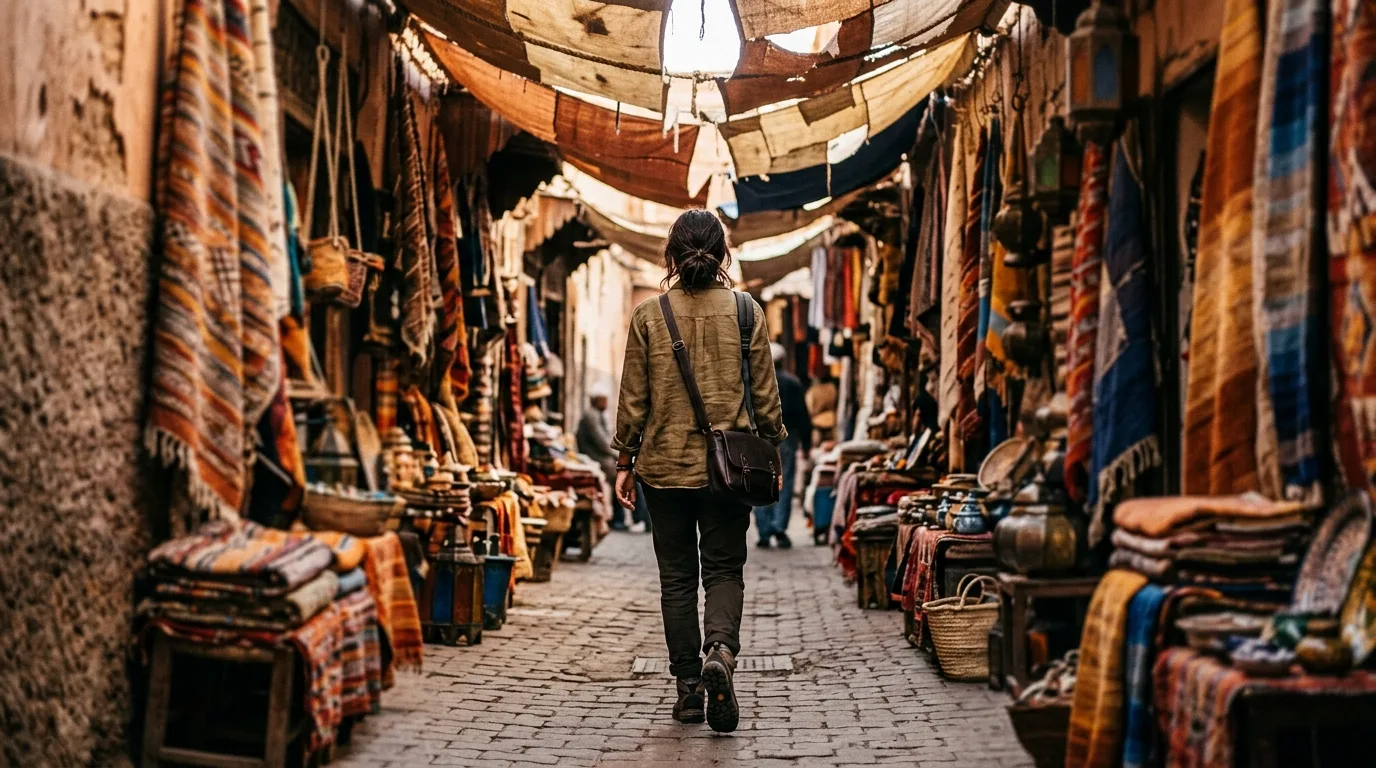
The first time I traveled alone, I read so many articles about safety that by the time I got to the airport I was convinced I was going to be robbed, scammed, drugged, and left in a ditch before I cleared immigration. None of those things happened. What happened instead was that I spent the first three days of a beautiful trip in Cartagena running internal threat assessments every time someone made eye contact on the street.
Overwhelm from travel safety advice produces two failure modes: paralysis (you don't go) or hypervigilance (you go, but you miss everything because you're scanning for threats). Neither is a good outcome. The goal is calibrated awareness: understanding which risks are real and common, which are rare and manageable, and which are essentially fabricated by people who haven't been to the places they're warning you about.
I've traveled solo in Colombia, Morocco, India, Georgia, Jordan, Mexico, and most of Europe. I've been pick-pocketed once (Prague, tourist-crowded tram, my own fault), scammed once (Cairo taxi, classic routine), and involved in zero incidents more serious than those. The habits I'm going to describe here are the ones that have actually made a difference: not security theater, not anxiety management, but practical risk reduction.
Opportunistic, not targeted — and why that changes everything
Most travel crime against tourists is opportunistic, not targeted. This distinction matters because it means that the primary variable within your control is not how well you can fight or run: it's how easy a target you appear to be.
Opportunistic crime follows the path of least resistance. A pickpocket on a crowded metro doesn't select a victim through careful reconnaissance; they select whoever is least aware, carrying their bag in the least protected way, or distracted by a phone or map. A rental car break-in isn't targeted; it's whichever car has something visible in the back seat. A taxi scam isn't designed for you specifically; it's a routine that gets run on every visibly disoriented arrival at the airport.
This means the most effective safety measures are the ones that make you a worse target than whoever is standing next to you. Not invisible, not intimidating, just more aware, more organized, and less easily distracted than the average tourist. This is both achievable and considerably less stressful than trying to be constantly vigilant.
The second principle: most dangerous situations develop gradually and can be exited before they become dangerous, if you pay attention to early signals. The feeling that something is wrong is almost always correct. Social pressure, politeness, and the fear of being rude are what keep people in situations they should leave. Practice leaving. You don't owe anyone an explanation.
Splitting your money, documents and attention
1. Separate your money and cards before you arrive.
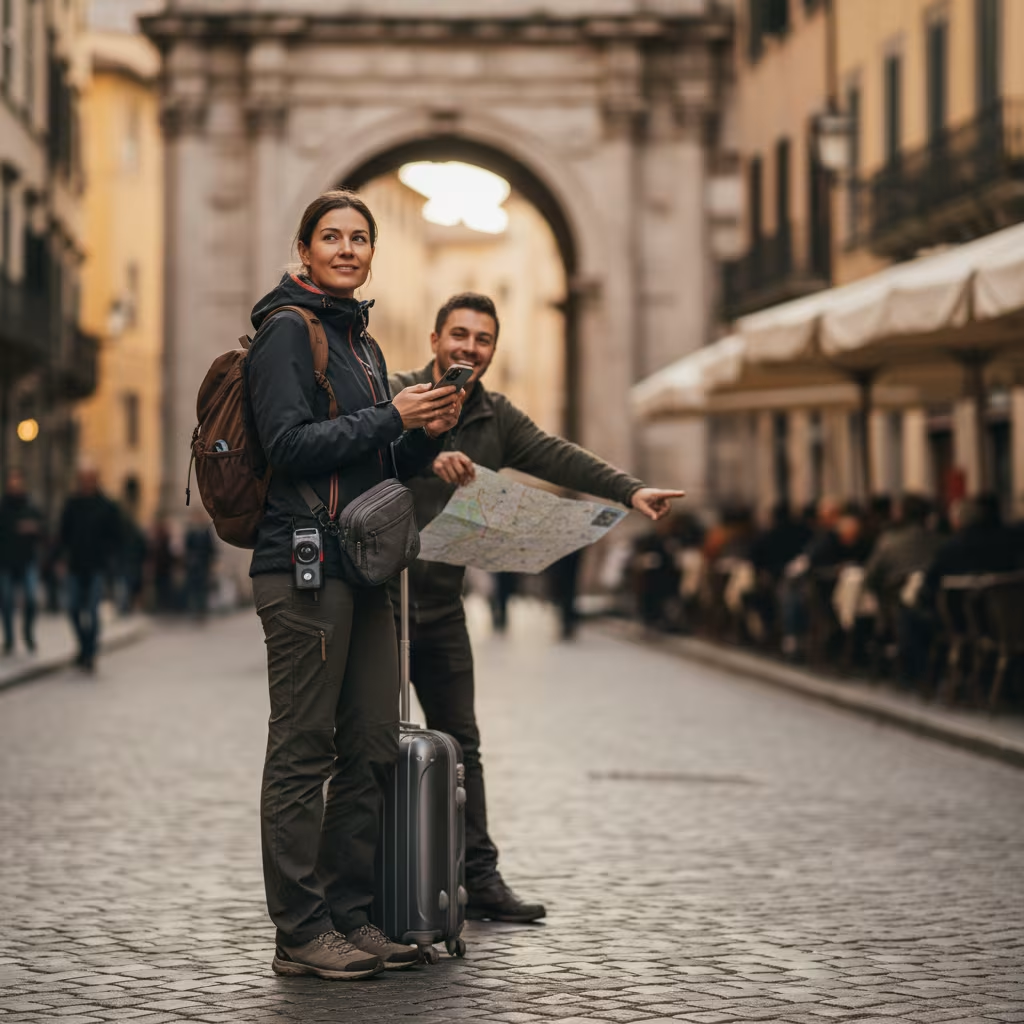
Carry your daily spending money in one pocket, a backup card in a different location (hotel safe or hidden wallet), and keep your passport either in a concealed travel wallet under your clothing or in the hotel safe, depending on local requirements. The goal is that if one thing is lost or stolen, you are not completely stranded. A money belt worn under clothing is tedious but effective for high-pickpocket-risk environments (major tourist sites in Western Europe, crowded markets in North Africa, busy bus terminals anywhere). Carry only what you can afford to lose.
2. Research the local scams before you arrive.
Every city has two or three standard tourist scams, and they are documented in excruciating detail online. "Friendship bracelet" scams in Paris. "Closed temple, come to my shop" in Southeast Asia. Taxi meters that mysteriously malfunction at the airport. The "dropped wallet" setup in several Central American cities. Knowing these in advance defuses them instantly: you recognize the opening line of the routine and you can disengage calmly, without confrontation, without having been deceived.
3. Use licensed taxis or ride-hailing apps from the airport.
The airport taxi queue is where new arrivals are most vulnerable: tired, carrying luggage, unfamiliar with local prices, anxious to get to the hotel. In most cities, the correct behavior is: use the official prepaid taxi desk inside the terminal, or open Uber / Grab / Bolt / Yandex Go (depending on the country) while you're still in the arrivals hall and look at price before you get in anything. Never accept a ride from someone who approaches you in the arrivals hall.
4. Tell someone your itinerary.
Sharing your general plan with one person at home (not a daily check-in, just a rough itinerary) provides a meaningful safety net if something does go seriously wrong. Send them your hotel names, the cities you'll be in each week, and an agreement about how often you'll make contact. Apps like Life360 and TripIt have itinerary-sharing features; a WhatsApp message with your hotel list works equally well.
5. Learn three phrases in the local language.
"No thank you," "Where is the police station," and "I need a doctor." These are not tourist-book phrases. They are the functional vocabulary for disengaging from harassment and getting help in an emergency. Knowing them, and knowing you can deploy them, is a practical confidence builder.
6. Trust the uncomfortable feeling.
If a situation feels wrong (a person is too interested in where you're staying, a taxi route doesn't match the map, a "helpful" stranger is steering you somewhere you didn't ask to go), leave. Make an excuse, don't make one, whatever you need. The instinct that flags danger is a real cognitive function, not social anxiety. Solo travelers, particularly solo women travelers, are trained by social convention to override this instinct in favor of politeness. Don't.
How I got pickpocketed on a Prague tram
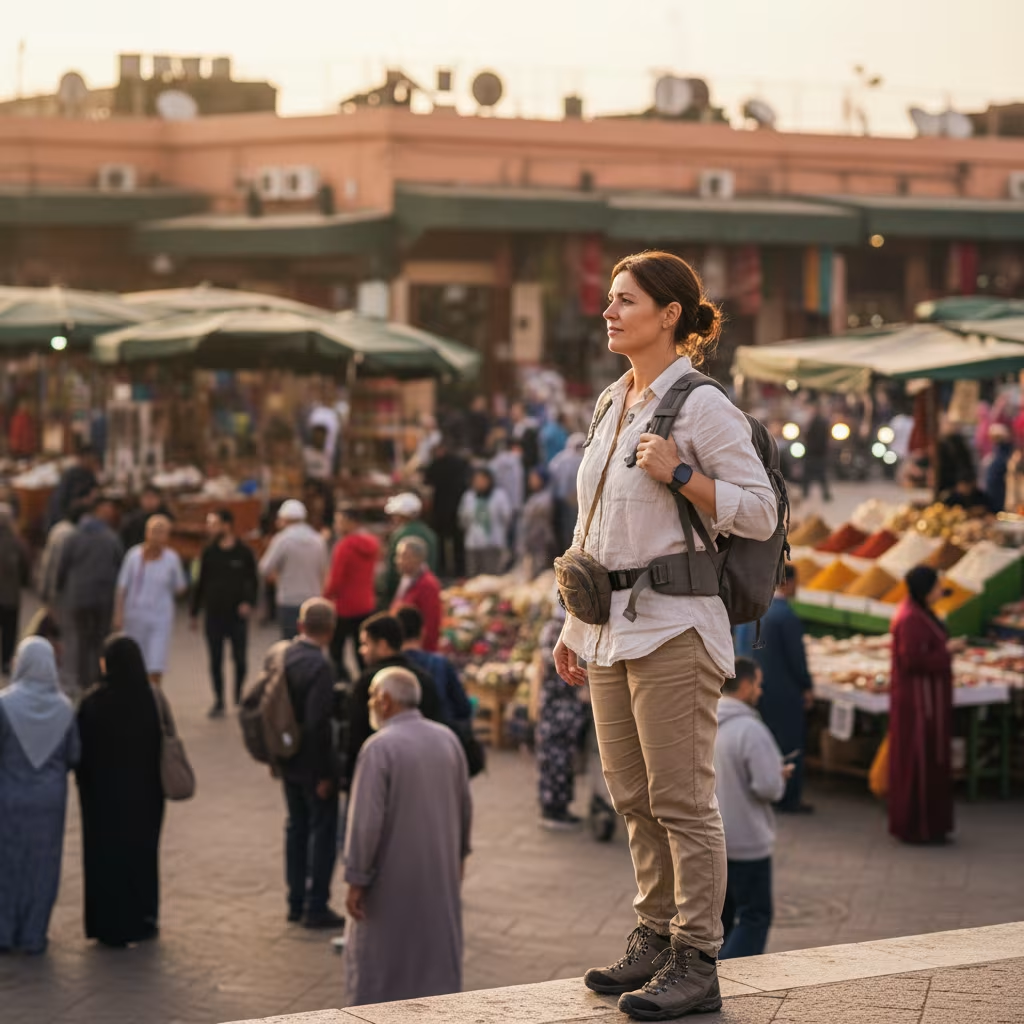
Prague, tourist tram. I know exactly how I got pickpocketed: I was standing in an overcrowded tram holding a large backpack on my front (good instinct) but with a jacket pocket outside the backpack that contained my phone. A collective movement of the crowd at a stop, which I now recognize as a technique, moved several bodies against mine at once. The phone was gone before the doors closed. The lesson I took from it: valuables belong inside a bag or inside a garment, not in accessible external pockets, regardless of how confident I felt.
A friend traveling solo in Morocco. She was followed insistently through the Fez medina by a man claiming to be a "free guide" and steering her progressively away from the main tourist paths. She didn't argue; she simply walked into the nearest tourist-facing shop (a carpet stall), explained to the owner that she was being followed, and waited there for ten minutes while the situation resolved itself. Shopkeepers in tourist areas deal with this dynamic every day and are generally helpful.
Night buses in Peru. I've taken overnight buses through the Andes twice. The practical safety measure that matters most: use the major licensed bus companies (Cruz del Sur, Oltursa), not the cheapest option at the terminal. The cost difference is $10–15 and the safety difference is significant, not primarily from crime, but from driving practices and vehicle maintenance, which are the actual risk on Andean road routes.
The daypack on your back, and other habits
Carrying everything in a daypack on your back. A backpack worn on your back in a crowded environment is accessible to anyone behind you. In high-risk pickpocket environments, wear it on your front or use a cross-body bag with the bag against your body.
Displaying electronics publicly in transit hubs. Phone out, headphones on, unaware of surroundings in a bus terminal or train station: this is the highest-risk configuration. Stay aware in transit environments.
Trusting unsolicited offers of help. People who approach you first in tourist environments sometimes have helpful intentions. They also sometimes have other ones. The rule of thumb: if someone approaches you rather than you approaching them, maintain a baseline skepticism until they've demonstrated what they actually want.
Over-sharing your itinerary with new acquaintances. Knowing which hotel you're staying at and when you'll be alone is information. You don't have to be paranoid about this (fellow travelers in hostels are usually just fellow travelers), but giving detailed movements to people you met two hours ago is worth pausing on.
Assuming your home-country safety frameworks translate. A neighborhood that looks quiet might be risky; a neighborhood that looks chaotic might be entirely safe. Local knowledge is more valuable than appearances. Ask your hotel or guesthouse, not the internet, which is both outdated and geographically imprecise.
Separating real risk from anxiety
Safety questions from solo travelers often mix genuine risk assessment with anxiety. These answers try to separate them.
Is solo travel as a woman significantly more dangerous than as a man?
Solo women travelers face additional categories of harassment (street harassment, unwanted attention, certain kinds of scams) that solo men face less frequently. The risk is real and varies significantly by destination. That said, the vast majority of solo women travelers complete trips without serious incident, and the safety measures described here apply across genders.
What should I do if I'm robbed?
Don't resist a mugging: no possession is worth physical injury. Afterward: file a police report (required for insurance claims), contact your bank and card issuers immediately, contact your country's embassy if your passport is taken. Keep copies of all important documents in a cloud folder accessible from any device.
How do I find out if a neighborhood is actually safe?
Ask at your accommodation: the person checking you in has local, current knowledge that no travel forum can match. Check recent reports on travel forums (Lonely Planet Thorn Tree, TripAdvisor forums) filtering for posts from the past three to six months. Government travel advisories give regional-level warnings but are often too broad to be operationally useful.
Is travel insurance worth it for safety reasons?
Yes, specifically for medical evacuation coverage. A medical emergency requiring airlift from a remote location can cost $50,000–200,000 without insurance. The insurance itself costs $80–200 for a month of coverage. This is the clearest cost-benefit calculation in all of travel.
Sources and verification
Check current details with these primary or subject-authority sources before acting on the information.
Safety spend that pays:
| Item | Figure |
|---|---|
| Reputable intercity transport | +$10–15 vs. cheapest — the real risk is driving, not crime |
| Medical evacuation uninsured | $50,000–200,000 |
| A month of insurance | $80–200 |
| Itinerary sharing | TripIt/Life360 — or a WhatsApp hotel list |

0 Comments
No comments yet — start the conversation.