

London is too big for a weekend. The honest version: a Friday-evening to Sunday-evening trip covers maybe 15% of the city's surface area and 5% of what locals consider essential. The good news is that 15% is plenty for a satisfying first visit if you don't try to compress a 7-day itinerary into 48 hours. The mistake is the rushed checklist: Big Ben + Tower of London + Westminster Abbey + Buckingham Palace + Tate + Borough Market + Camden + Notting Hill all in one weekend ends with sore feet and zero memorable moments.
This is a 2-day London itinerary that picks the headlines you'd regret missing, leaves room for one slow afternoon, and accepts that you'll come back.
Quick Facts
| Item | Detail |
|---|---|
| Country | United Kingdom |
| Currency | British pound (£) |
| Language | English |
| Time zone | GMT (UTC+0) / BST (UTC+1) |
| Tourist tax | None |
| Best time | May–September (long daylight, pleasant weather) |
| Visa | UK rules: visa-free 6 months for most non-EU |
The Realistic Weekend Math
Most weekend visitors arrive Friday evening and leave Sunday evening. That's roughly:
- Friday evening: 17:00–22:00 (~5 hours awake)
- Saturday: 08:00–22:00 (~14 hours)
- Sunday: 08:00–17:00 (~9 hours)
Total useful hours: ~28. Subtract eating, transit between sights, and rest. Real "sightseeing time": ~16–18 hours.
At 1.5–2 hours per major sight (with transit), that's 8–10 sights maximum. Not 25.
Getting in
London has 6 airports. The most-used:
- Heathrow (LHR): main international. 24 km west. Express train to Paddington: 15 min, £25; or Elizabeth Line, 35 min, £12.
- Gatwick (LGW): second main, south. Gatwick Express: 30 min, £18; Thameslink: 30 min, £10.
- Stansted (STN): low-cost carriers, north. Stansted Express: 50 min, £20.
- Luton (LTN): low-cost, north. Train to St Pancras: 35 min, £14.
- City Airport (LCY): closest to central, 11 km east. DLR: 25 min, £4.
For a weekend trip, prioritize Heathrow or City for the shortest transit time.
Getting Around
Tube (london Underground)
The defining transit system. 11 lines. Tap any contactless card or your phone (Apple Pay, Google Pay) at the gate; the system charges automatically with daily/weekly cap:
- Single ride: £2.80–6.30 depending on zones.
- Daily cap: £8.50 (zones 1–2). Spend more than ~3 rides and it caps automatically.
Don't buy paper tickets; they're more expensive. Don't buy Oyster cards for short trips; tap-and-cap is the standard for tourists since 2014.
Bus
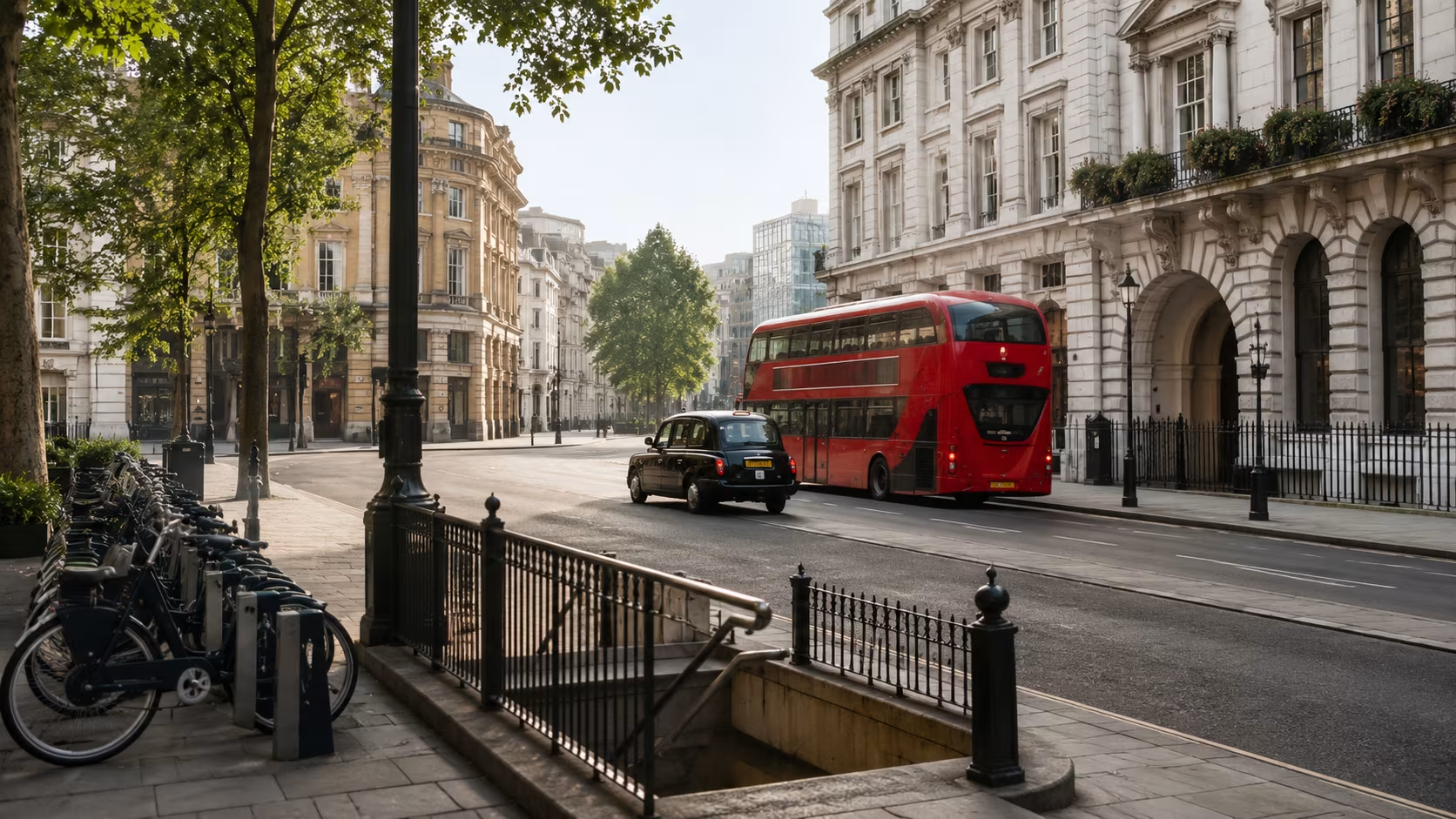
Iconic red double-deckers. Same payment system. £1.75 single fare, daily cap £5.25. Sitting on the upper deck of a Route 11 (or 9, or 15) is one of the best £1.75 city tours in Europe.
Walking
Central London is more walkable than first-time visitors expect. Westminster to Tower Bridge along the Thames is 5 km: a 70-minute walk that covers many headline sights along the way.
Taxi / Black Cab
The famous black cabs. Apps: Free Now for traditional cabs; Uber, Bolt for ride-hail (slightly cheaper). Standard London cab fares: £8–25 for typical central trips.
Where to Stay for a Weekend
A central area saves transit time.
Soho / Covent Garden
Most central. Walking distance to West End theaters, the British Museum, Trafalgar Square. Premium pricing but minimum transit.
South Bank / Waterloo
Across the Thames from Westminster. Walking distance to Tate Modern, Borough Market, the London Eye. Mid-range hotels.
Bloomsbury
Near British Museum. Quieter, university-adjacent character. Mid-range hotels.
Marylebone
North of Hyde Park, Oxford Street's quieter cousin. Walking distance to most West End sights. Boutique hotels.
Avoid for Short Trips
- Far East London (Stratford, Wapping), too far from sights.
- Far Wimbledon, Croydon: too far.
- Around Heathrow: convenient for flight-only stays; not for sightseeing.
Realistic 2026 Nightly Prices (4-star, Weekend, Shoulder Season)
| Neighborhood | Mid-range | Higher-end |
|---|---|---|
| Soho/Covent Garden | £280–420 | £600–1,200 |
| South Bank | £200–300 | £400–800 |
| Bloomsbury | £180–280 | £350–700 |
| Marylebone | £230–350 | £500–1,000 |
What to Book in Advance
Westminster Abbey
£29.50. Walk-up queues 30–60 min. Book online for a timed entry slot. Allow 2 hours.
Tower of London
£35.80. Walk-up queues 60+ min in summer. Book online for first-entry 09:00 slot. Allow 3 hours including the Crown Jewels.
British Museum
Free. Walk-up. Reserve timed entry online to skip security queue. Allow 3+ hours.
London Eye
£36 (£40 fast-track). Book online; sunset slots most popular and book ahead. 30-min ride.
Buckingham Palace State Rooms
Open July–September only. £33. Books months ahead.
Theatre Tickets
West End musicals book 2–8 weeks ahead. Standard tickets £45–120; premium £180+. TKTS booth in Leicester Square offers same-day discounted tickets (up to 50% off): physical queue or website.
Day 1 (saturday) — Westminster + Westminster + Westminster
08:30. Coffee in your neighborhood. Black Sheep Coffee (multiple locations). Workshop Coffee for serious specialty.
09:30. Westminster Abbey (booked). The 13th-century church + coronation site of British monarchs since 1066 + burial place of Newton, Darwin, Hawking. Allow 2 hours including the audio guide.
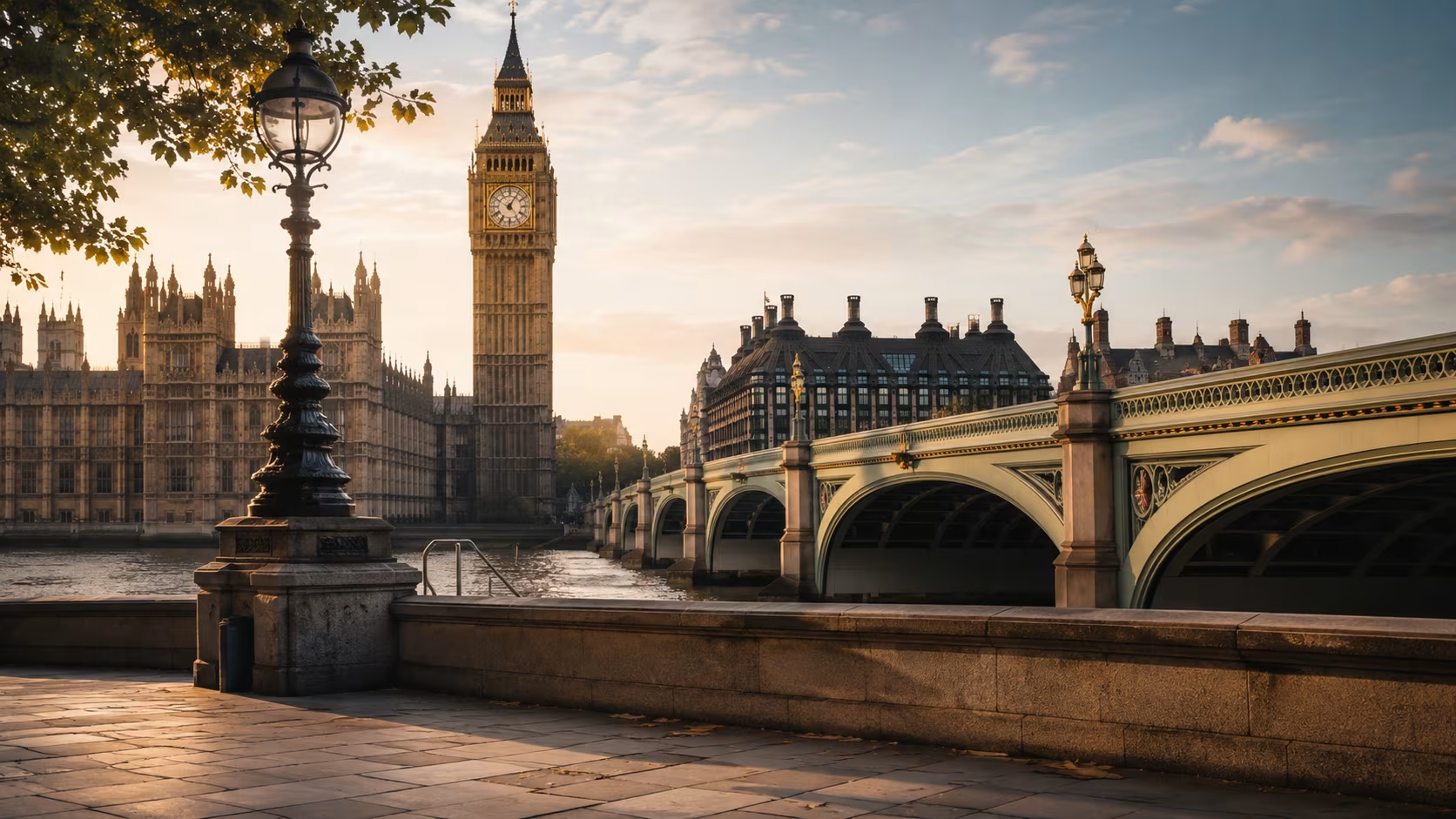
11:30. Houses of Parliament + Big Ben. Walk past externally. The Elizabeth Tower (Big Ben) was restored 2017–2022; the photograph is the city postcard.
12:30. Lunch in Westminster. The Cinnamon Club (modern Indian) for upscale. The Old Star (Westminster pub) for working-class. Vincent Square for casual British.
14:00. Walk along the Thames to Tate Modern. Cross Westminster Bridge for the iconic Big Ben + Houses of Parliament photograph.
14:30. Tate Modern. Free. The contemporary art collection in a converted power station. Allow 2.5 hours. The viewing platform on Level 10 has the best free panoramic London view.
17:00. Borough Market. A 1,000-year-old market under London Bridge. Real food + real local atmosphere; not a tourist trap.
18:30. Aperitivo. Sky Garden (free, but reservation required) for panoramic views from a rooftop garden. The Shard for premium high-rise. Bone Daddies in Soho for cocktails.
20:00. Dinner. Dishoom (Indian, multiple locations, queues real but worth it). St. John for British nose-to-tail. The Wolseley for grand café elegance. Eat Tokyo for working-class Japanese.
22:00 onward. West End musical (booked) or one drink at The Connaught Bar (one of the world's most-respected hotel bars).
Day 2 (sunday) — Tower of London + Choose Your Afternoon
08:00. Coffee in Soho or near.
09:00. Tower of London. Booked early entry. The Crown Jewels (the headline), Tower Bridge views, the ravens (legend says the kingdom falls if they leave), the Yeoman Warder (Beefeater) tour. Allow 3 hours.
12:00. Walk Tower Bridge. Walk across; consider the Tower Bridge Exhibition (£14, includes the glass walkway across the upper deck) if you have time.
13:00. Lunch. Choose:
- Borough Market if not done Day 1.
- Mercato Mayfair for upscale food court.
- Camden for casual market food (if going there next).
14:30. Choose your Sunday afternoon:
Path a — British Museum + Bloomsbury
Free entry. The Rosetta Stone, the Elgin Marbles, the Egyptian galleries. Allow 3 hours.
Walk Bloomsbury: university quarter, second-hand bookshops on Charing Cross Road, Russell Square.
Back to your hotel by 17:30.
Path B — Notting Hill + Portobello Road
The Sunday Portobello Road Market (technically the Saturday market is the main; Sundays smaller but still active) for vintage and antiques. Walk Notting Hill's pastel-colored townhouses. The colorful streets are the Instagram tourist photo spot.
Back to your hotel by 17:30.
Path C — Camden + Regent's Park + Primrose Hill
Tube to Camden Town. Walk Camden Market (touristy, chaotic, but distinctive). Walk through Regent's Park to Primrose Hill (the panoramic city view from a small hill, locals' Sunday afternoon spot).
Back to your hotel by 17:30.
Path D — South Bank + Hyde Park
Walk along the Thames South Bank from Tate Modern to the London Eye. Visit Hyde Park for the Sunday afternoon Speakers' Corner (the historic free-speech area, since 1872, anyone can stand and speak; locals still do).
Back to your hotel by 17:30.
18:30. Final dinner. Stay in your hotel area; you've earned the slow walk to the Tube for departure.
What to Eat
London's food scene is one of the world's most diverse. The classic British food is part of it; the multicultural layer (Indian, Caribbean, Vietnamese, Korean, Italian) is equally important.
Classic British
| Dish | What it is |
|---|---|
| Sunday roast | Roast beef/lamb/pork + Yorkshire pudding + roast potatoes + vegetables. Sunday lunch tradition. |
| Fish and chips | Battered cod or haddock + chips (fries) + mushy peas + tartar sauce. Working-class classic. |
| Full English breakfast | Bacon, sausage, eggs, beans, tomato, mushroom, toast, black pudding. |
| Bangers and mash | Sausages and mashed potatoes with gravy. |
| Shepherd's pie / cottage pie | Minced lamb (shepherd) or beef (cottage) with mashed potato top. |
| Fish pie | White fish in white sauce, topped with mashed potato. |
| Pie and mash | Meat pie + mashed potato + parsley sauce. East London classic. |
| Afternoon tea | Sandwiches + scones with clotted cream and jam + cakes + tea. £40–80 per person at hotel teas. |
| Cornish pasty | Filled pastry, traditionally pork and vegetables. |
Indian (london's Second Cuisine)
Indian food in London is among the world's best. The Indian community has been here since the 1800s; cuisine spans regional traditions.
- Dishoom: multiple locations, modern Bombay-cafe style. Queues real but worth it.
- Gymkhana: 1-Michelin-star, modern Indian.
- The Cinnamon Club: upscale Indian in old Westminster Library.
- Bibi: modern Indian in Mayfair, 1-star.
- Chutney Mary: high-end Indian.
- Lahore Kebab House: working-class East End Pakistani.
Modern British
The "new British" movement: locally-sourced, seasonal, refined.
- St. John (Fergus Henderson's nose-to-tail institution).
- The Wolseley (grand café, traditional menu).
- Quo Vadis (Soho institution).
- Rules (since 1798, the oldest London restaurant; traditional game).
- Gymkhana (Indian).
- The Berners Tavern (modern British in Sanderson Hotel).
- Padella (Italian, no-booking, queue 30+ min).
High-End Restaurants
London has more Michelin-starred restaurants than any other UK city.
- Sketch (The Lecture Room & Library): 3-star.
- Restaurant Gordon Ramsay: 3-star.
- CORE by Clare Smyth: 3-star.
- Frog by Adam Handling: 1-star.
- Hide: 1-star.
- Brat: 1-star (Basque-influenced).
- Sketch for the Instagram-famous pink room.
Costs and Budget
2026 daily budgets per person, excluding flights and hotel:
| Style | Per day | Notes |
|---|---|---|
| Backpacker | £55–90 | Hostel, casual lunches, walking |
| Mid-range | £100–170 | Mix of casual and proper restaurants, museums, transit |
| Comfortable | £200–350 | Better restaurants, theatre show, taxi rides |
| Higher-end | £500+ | Tasting menus, premium hotel breakfasts |
London is expensive. Tube cap: £8.50/day. Mid-tier dinner: £40–80 per person before drinks. Hotel breakfast: £20–40.
Practical Info
- Cards. Universal. Tap-to-pay everywhere.
- Tipping. Service charge often added (12.5% standard). 10–12.5% if not. Round up taxis.
- Sundays. Most museums open. Many shops open until 18:00 (later than European norm). Pubs open later.
- Pubs. Order at the bar. Pay when ordering. Pubs close around 23:00–01:00 depending on license.
- Transit during Pride or major events. Specific weekend disruptions; check TfL Status before travel.
- Pickpocketing. Real on Tube during rush hour, around tourist sites, at major transport hubs.
- Crime. Generally low. Standard precautions at night.
- Weather. Rainy any day. Pack a light waterproof jacket year-round.
- Daylight. Mid-June: 16+ hours. Mid-December: 8 hours.
Common Weekend-Visit Mistakes
- Trying to do all 30 "London must-sees." Cut to 8–10.
- Booking flights that arrive Friday morning. You'll be exhausted by Saturday afternoon.
- Eating fish-and-chips at Westminster tourist restaurants. Quality is mediocre and prices high. Walk one block off the main streets.
- Skipping Tube; relying on taxis. Taxis in London traffic = slower than Tube.
- Buying Oyster Card for short trips. Tap-to-pay is the standard since 2014.
- Visiting Camden expecting it to be cool. It's mostly tourist-targeted now.
- Underestimating distances. "London" is huge. Westminster to Notting Hill is 6 km; Camden to Greenwich is 12 km.
- Booking 2 days in London + 2 days in Edinburgh by car. The 6-hour drive each way wastes a day each direction. Train (London → Edinburgh, 4h 30m) is the answer.
- Visiting in November expecting summer. Dark by 16:30; cold; rainy.
- Trying to climb Big Ben. You can't (the Elizabeth Tower is closed to public except very rare advance-booked tours).
When to Add Days
A real London visit deserves 5–7 days. With weekend (2 days), you're getting a sample. Three more days adds:
- Day 3: Greenwich + Maritime Museum + Royal Observatory.
- Day 4: Hampstead Heath + Highgate Cemetery + slow walk.
- Day 5: National Gallery + Trafalgar + St. Paul's + Covent Garden in depth.
A 7-day London trip lets you walk the city instead of rushing it.
Final Notes
A London weekend is enough to fall in love with the city; it's not enough to see it. The travelers who get this right pick 8–10 sights they'd regret missing, walk between them when possible, and accept that they'll come back.
The quietest piece of advice: take the Route 11 bus (Liverpool Street to Fulham) on the upper deck for 60 minutes one way. You'll pass Bank, St Paul's, Trafalgar Square, Whitehall, Westminster, Parliament Square, Victoria, Sloane Square. The £1.75 ticket gives you a London panorama from the front row of an old red bus. The London that stays with you isn't the queue at the Tower: it's the slow tram-like ride past five centuries of architecture in an hour.


0 Comments
No comments yet — start the conversation.