

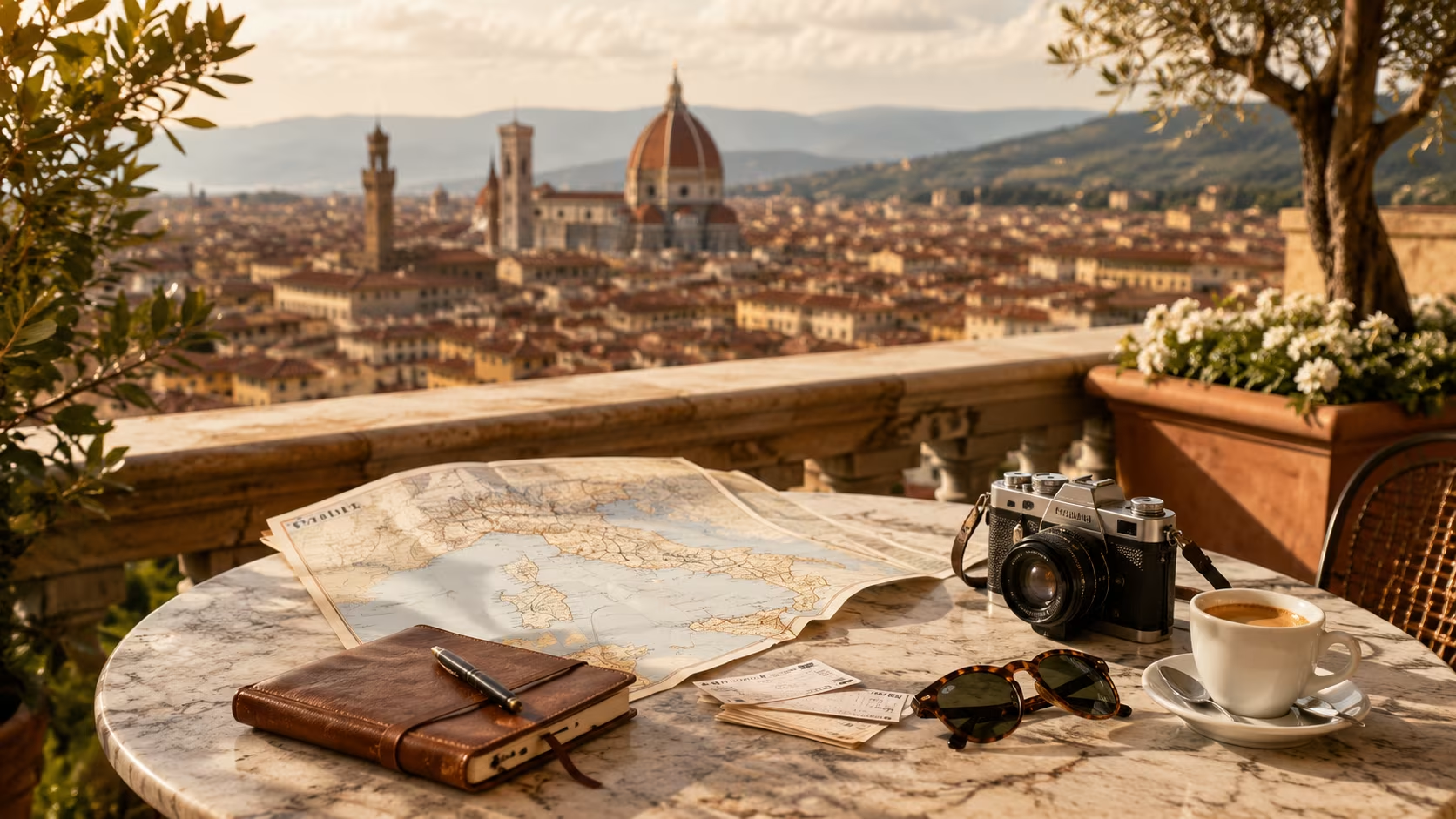
Ten days in Italy is the right length for a focused first visit if you resist the temptation to add a fourth city. The classic Italy mistake is attempting Rome + Florence + Venice + Cinque Terre + Amalfi + Sicily in 10 days; the result is a string of 4-hour train rides and one good photograph from each stop.
The better trip stays in 3 places. Rome and Florence are non-negotiable for a first Italy visit; the third destination is the choice that defines the trip's character. Tuscany for slow countryside; Venice for canal-and-art; the Amalfi Coast for Mediterranean drama; Cinque Terre for hiking-and-villages; Naples + Pompeii for ancient history.
This is a 10-day itinerary that respects Italy's actual scale and the rhythm of how the country lives.
Quick Facts
| Item | Detail |
|---|---|
| Country | Italy |
| Currency | Euro (€) |
| Language | Italian; English in tourist areas |
| Time zone | CET (UTC+1) / CEST (UTC+2) |
| Tourist tax | €1.50–8 per person/night by hotel category and city |
| Best time | April–early June, mid-September–October |
| Visa | Schengen, 90 days for most non-EU |
When to Go
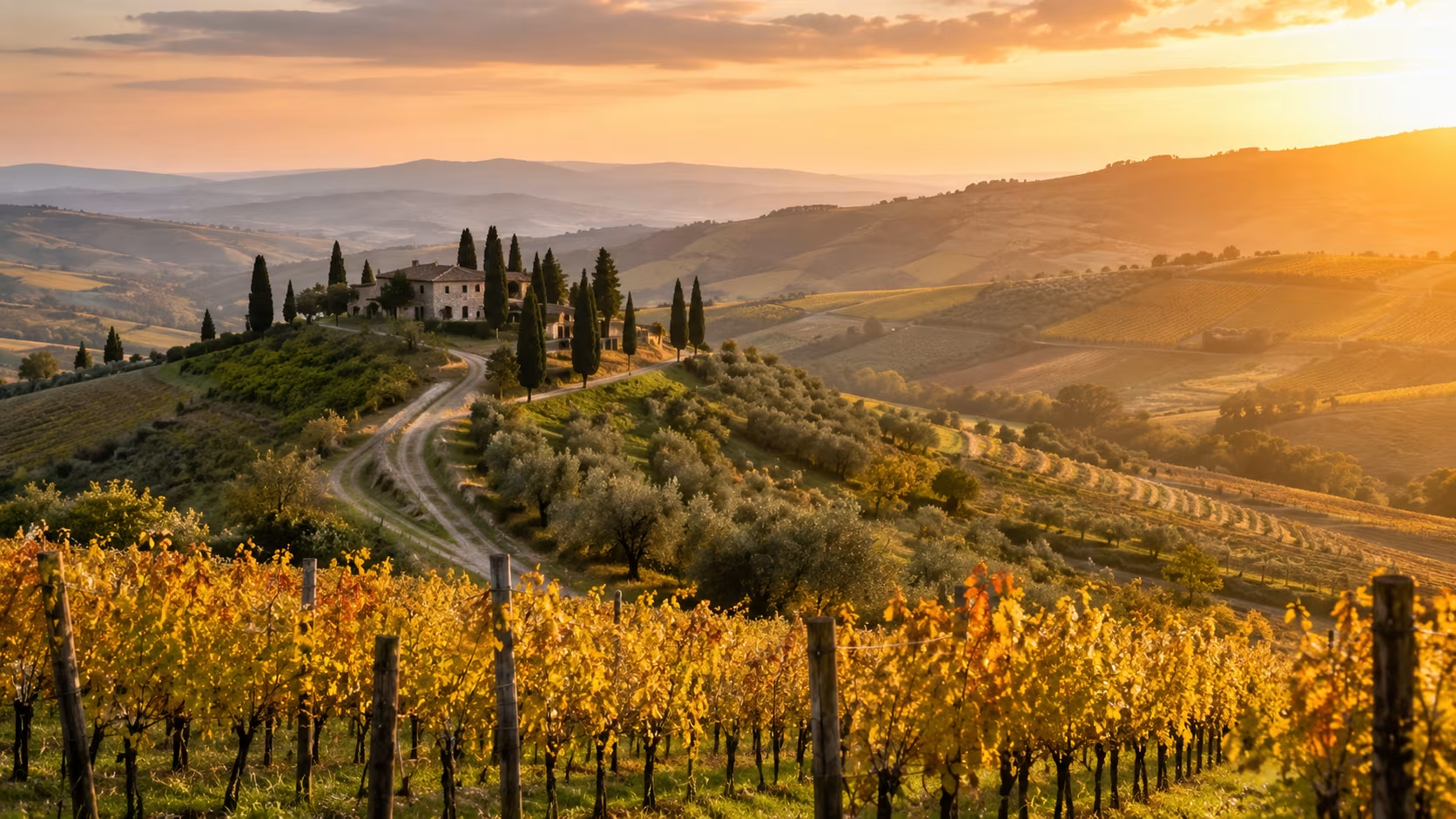
April to early June. The sweet spot. Highs 17–25°C, gardens flowering, manageable tourist density.
Mid-September to October. The other prime window. Schools resumed, autumn light excellent, tourist density drops sharply after early September.
June to August. Hot (often 32-38°C), tourist-dense beyond comfort. Peak season; everything is more expensive.
November to March. Cool (5-15°C), occasional rain. Galleries are emptier; queues drop dramatically. Christmas markets and decorated cities give it a different character.
Avoid:
- Easter Week for some museum closures and packed restaurants.
- Mid-July to mid-August for the heat-and-crowd combination.
- Major Italian holidays (Liberation Day April 25, Labor Day May 1, Republic Day June 2, Assumption August 15) for closures.
Choosing Your Third Destination
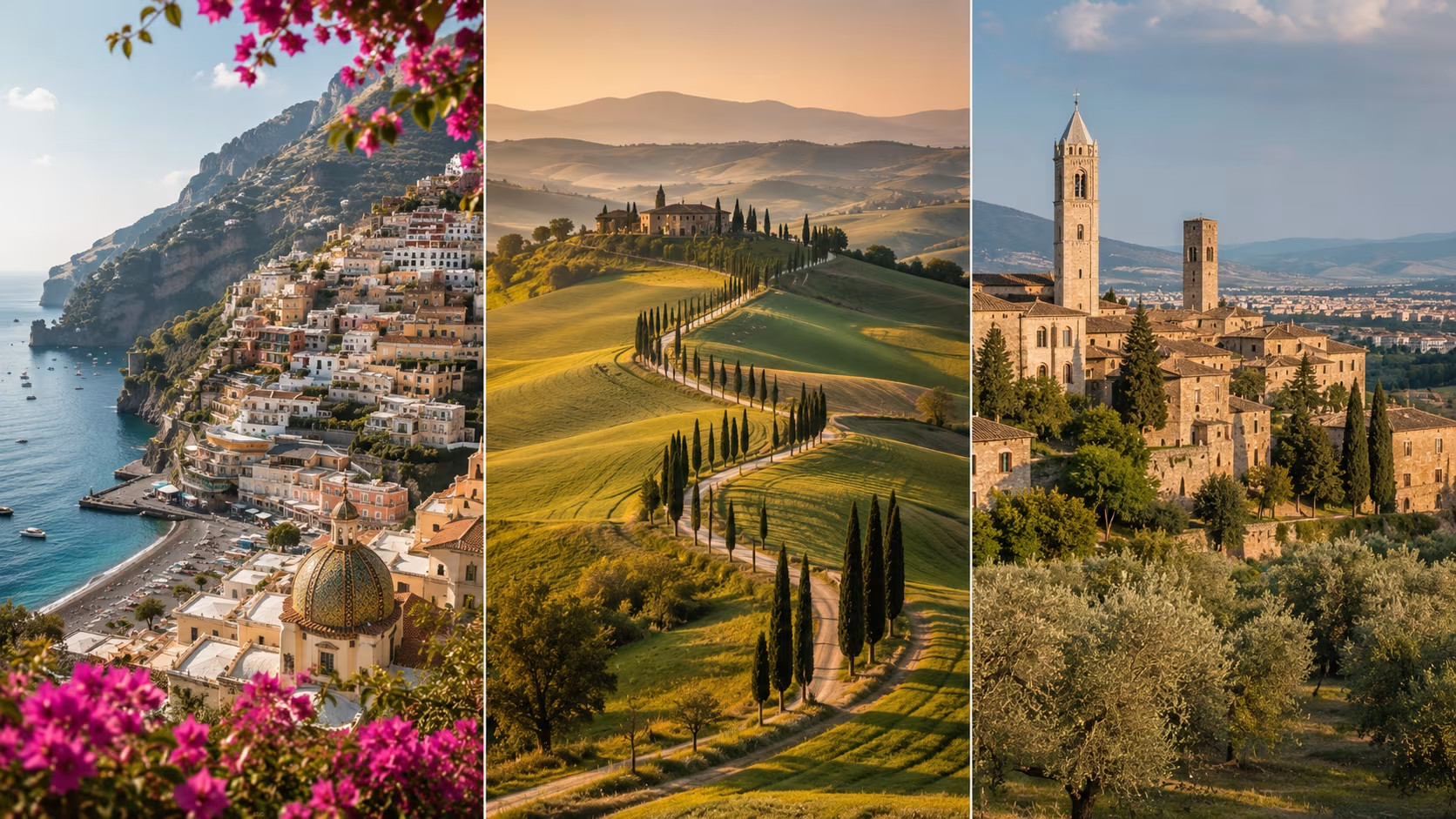
This is the central decision. The five strong options:
Option A — Rome + Florence + Tuscany
Most relaxed, most countryside-focused.
For travelers who want wine, food, slow afternoons, gentle Renaissance-and-medieval villages.
Trade-offs less ancient history beyond Rome; less variety in landscapes than other options.
Option B — Rome + Florence + Venice
The classic museum-heavy first-time itinerary.
For travelers who want maximum art density, the iconic three Italian cities, the canal experience.
Trade-offs Venice in summer is brutal (heat + crowds + tourist-trap restaurants); the contrast with the other cities can feel uniform (all heritage).
Option C — Rome + Florence + Amalfi Coast
City-then-coast. Most-photographed Italy.
For travelers who want Mediterranean drama, terraced cliffs, lemon groves, beach + boat tours.
Trade-offs Amalfi Coast logistics are real (winding mountain roads, limited transit, summer crowds). Naples is often skipped despite being on the route.
Option D — Rome + Florence + Cinque Terre
The hiking-and-villages variant.
For travelers who want active outdoor time, the famous coastal trail, smaller fishing village atmosphere.
Trade-offs the five villages are small and busy; some are practically tourism museums in summer; trains between them are crowded.
Option E — Rome + Naples/Pompeii + Florence
The ancient-history-focused itinerary.
For travelers who want Pompeii + Herculaneum, Naples' working-class energy, cuisine, the south.
Trade-offs Naples has a perceived (and partly real) safety reputation that some travelers avoid. The pace is intense.
For first-time visitors, the Tuscany option (Option A) and the Amalfi Coast option (Option C) are the most rewarding. Tuscany if you want slow; Amalfi if you want drama.
This itinerary uses Rome (4 nights) + Florence (3 nights) + Tuscany / Amalfi (3 nights) — adapt to your preference.
The 10-Day Itinerary
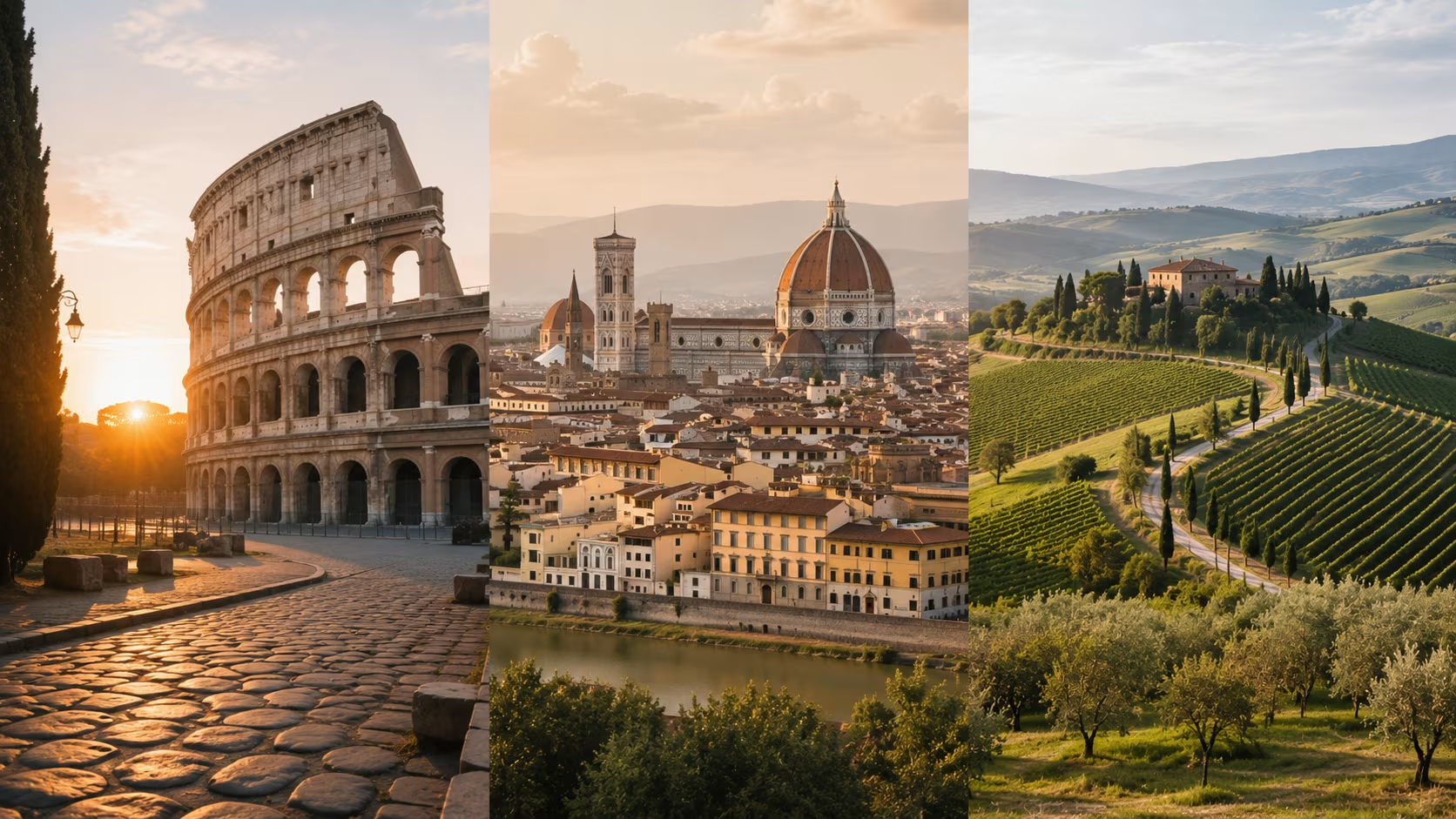
Days 1–4: Rome
Four nights in Rome covers the essential sights without rushing.
Day 1 — Arrival + Centro Storico
- Late morning arrival at FCO/CIA airport. Transfer to hotel (45-60 min).
- Lunch in Piazza Navona area. Roscioli for Roman classic.
- Afternoon walking tour: Piazza Navona → Pantheon (free, 30 min) → Trevi Fountain → Spanish Steps. ~2 hours total.
- Aperitivo at a Centro café terrace. Salumeria Roscioli for wine + meat.
- Dinner. Trattoria Sostanza (working-class). Armando al Pantheon if booked.
Day 2 — Vatican Day
- 08:00. Vatican Museums (booked early entry, see Rome guide).
- 12:00. St. Peter's Basilica. Climb the dome if your knees handle 551 steps.
- 14:00. Lunch in Prati district.
- 16:00. Castel Sant'Angelo (the riverside fortress).
- Evening in Trastevere. Dinner at Da Enzo al 29 (book ahead) or walk-up at Tonnarello.
Day 3 — Ancient Rome Day
- 09:00. Colosseum + Roman Forum + Palatine Hill (booked combined ticket).
- 13:00. Lunch in Monti. Trattoria Monti for traditional.
- 15:00. Capitoline Museums.
- 17:30. Walk through Centro to Piazza del Popolo for sunset.
- Dinner in Centro or near hotel.
Day 4 — Borghese + Free Afternoon
- 09:00. Borghese Gallery (booked, 2-hour timed slot). Bernini sculptures.
- 11:30. Walk Villa Borghese gardens.
- 13:00. Lunch.
- Free afternoon for whatever you missed (Doria Pamphilj, Trastevere streets, more shopping).
- Final Roman dinner. Save Spondi or La Pergola for tonight if your budget supports a Michelin meal.
Day 5: Travel Day to Florence
- 09:00. Pack out of Rome hotel. Train to Florence.
- 10:30. Frecciarossa Rome-Florence: 1h 30min, €30-80 in advance, book at trenitalia.com.
- 12:00. Arrive Florence. Walk to hotel.
- 13:00. Lunch. All'Antico Vinaio for sandwiches; Trattoria Mario for working-class.
- 15:00. Slow afternoon walking. Piazza della Signoria + Loggia dei Lanzi + Palazzo Vecchio exterior.
- 18:30. Sunset from Piazzale Michelangelo (the panoramic terrace south of the river).
- Dinner in Oltrarno. Il Santo Bevitore for modern; Trattoria Cammillo for traditional.
Days 6–7: Florence
Day 6 — Duomo + Uffizi
- 08:30. Cathedral of Santa Maria del Fiore + Brunelleschi's Dome (booked Duomo Pass, see Florence guide).
- 12:00. Baptistery of San Giovanni + Cathedral Museum.
- 13:00. Lunch in Centro.
- 14:30. Uffizi Gallery (booked). 4 hours minimum.
- 19:00. Aperitivo.
- Dinner. Trattoria Sostanza for traditional bistecca alla fiorentina.
Day 7 — Accademia + Oltrarno
- 08:30. Accademia Gallery (booked). Michelangelo's David + slave statues. 90 minutes.
- 10:30. Mercato Centrale (lunch on upper floor).
- 13:00. Walk across Ponte Vecchio to Oltrarno.
- 14:00. Pitti Palace + Boboli Gardens (booked).
- 17:30. Walk Oltrarno's San Frediano neighborhood.
- 19:30. Dinner. Cibrèo for modern; Coquinarius for casual.
Days 8–10: The Third Region
Option A — Tuscany (Days 8–10)
Day 8 Drive or train + bus to Siena. UNESCO city; spend 4 hours including Piazza del Campo, Duomo, lunch.
Day 9 Drive through Chianti region. San Gimignano (the medieval hilltop town with 14 surviving towers, UNESCO). Volterra for Etruscan history. Stay in a Tuscan agriturismo (farm hotel).
Day 10 Visit a winery. Drive to Pisa for the Leaning Tower (1 hour worth). Train back to Florence airport (FLR) or back to Rome (FCO).
Option B — Amalfi Coast (Days 8–10)
Day 8 Train Florence → Naples (3 hours). Day in Naples + Pompeii (90 min from Naples).
Day 9 Drive or bus to Positano or Amalfi. Stay in cliffside hotel.
Day 10 Boat trip to Capri (full day) or drive coastal road to Ravello. Return to Naples airport for departure.
Option C — Venice (Days 8–10)
Day 8 Train Florence → Venice (2 hours). Walk San Marco, Doge's Palace.
Day 9 Vaporetto to Murano + Burano. Galleries in Cannaregio.
Day 10 Final morning. Train to airport (Venice, Florence, or Rome depending on departure).
Option D — Cinque Terre (Days 8–10)
Day 8 Train Florence → Cinque Terre (3 hours via La Spezia). Stay in Vernazza or Manarola.
Day 9 Hike between villages (the Sentiero Azzurro coastal trail; some sections still partially closed for repairs).
Day 10 Final swim at Monterosso. Train to Florence or Pisa airport.
Logistics: Trains + Driving
Trains
Italy's high-speed rail (Frecciarossa, Italo) is excellent for the major cities.
| Route | Duration | Price (advance) |
|---|---|---|
| Rome → Florence | 1h 30m | €30-80 |
| Rome → Naples | 1h 10m | €25-65 |
| Florence → Venice | 2h 5m | €30-80 |
| Rome → Venice | 3h 50m | €40-110 |
| Florence → Cinque Terre (La Spezia) | 2h 30m | €25-50 |
| Florence → Pisa | 1h | €10-15 |
Book 1-2 weeks ahead for best fares. Walk-up fares are 50-100% more.
Driving
Needed for Tuscany option; useful for Amalfi Coast option (though tight roads + parking restrictions are real).
- Tuscany: rent in Florence; drop in Florence or Pisa.
- Amalfi Coast: rent in Naples; drop in Naples. Ramada-grade discomfort on the SS163 coastal road.
- Avoid driving in: Rome, Florence, Venice (no cars allowed), Naples (don't try).
Italian ZTL zones (restricted-traffic zones) are common in city centers. Driving into a ZTL produces automatic camera tickets €70-150. Park outside ZTL; walk in.
What to Eat: Quick Reference
See Italy-specific guides for full detail. Headlines:
- Rome: carbonara, cacio e pepe, amatriciana, gricia, bistecca alla romana.
- Florence: bistecca alla fiorentina, ribollita, pappardelle al cinghiale.
- Tuscany: pici cacio e pepe, cinghiale ragù, Tuscan beef.
- Amalfi Coast: spaghetti alle vongole, sfogliatella, caprese salad.
- Naples: pizza Napoletana, pastiera, sfogliatella riccia, friarielli.
- Venice: sarde in saor, fegato alla veneziana, cicchetti (Venetian tapas).
- Cinque Terre: pesto Genovese (the original), seafood antipasti.
Costs and Budget
2026 daily budgets per person, excluding flights:
| Style | Per day | Notes |
|---|---|---|
| Backpacker | €70-110 | Hostel, working-class lunches, walking |
| Mid-range | €130-220 | Mix of casual and proper restaurants, museums, transit, trains |
| Comfortable | €260-400 | Better restaurants, premium museum tours, taxis, comfort hotels |
| Higher-end | €600+ | Tasting menus, private guide, luxury hotel breakfasts |
Specific anchors:
- Espresso at counter: €1.20-1.50.
- Pasta lunch at trattoria: €10-15.
- Sit-down dinner mid-range: €40-70 per person before drinks.
- Bistecca alla Fiorentina: €60-100 per kg.
- Premium hotel breakfast: €25-40 per person.
- Trains between major cities: €30-110 per leg.
Common 10-Day Italy Mistakes
- Adding a fourth city. Rome + Florence + Venice + one more = exhausted, no memories.
- Booking flights into Rome and out of Venice (or vice-versa) without checking pricing. Open-jaw flights are sometimes cheaper, sometimes not.
- Trying to drive in cities. Park outside; walk or transit in.
- Skipping museum reservations. Walk-up at the Vatican, Uffizi, Accademia means hours in queue.
- Eating dinner at 19:00. Italian dinners start 20:00-21:00.
- Eating only at restaurants near major sights. Tourist factories. Walk three blocks; quality jumps.
- Visiting in mid-August. Hot, crowded, expensive.
- Drinking only Italian wines you've heard of. Try regional varieties (Etna Rosso in Sicily, Sagrantino in Umbria, Lambrusco in Emilia-Romagna).
- Booking hotel near airport for Florence transit. Florence airport is small; close-to-station hotels are better for transit.
- Trying to combine Cinque Terre with Amalfi. Different coastlines; 7 hours apart.
Final Notes
Ten days in Italy is enough for a focused trip across three places. The mistake is to treat the country as a checklist. The traveler who picks Rome + Florence + one third region — and goes deep on each — comes back with real memories. The traveler who tries to see everything comes back with a slideshow.
The quietest piece of advice: book one Italian dinner for at least 3 hours. Antipasto, primo, secondo, dolce, espresso, amaro, conversation. The pace is the meal as much as the food. Italians don't rush dinner; the trip will work better if you don't either.
0 Comments
No comments yet — start the conversation.