

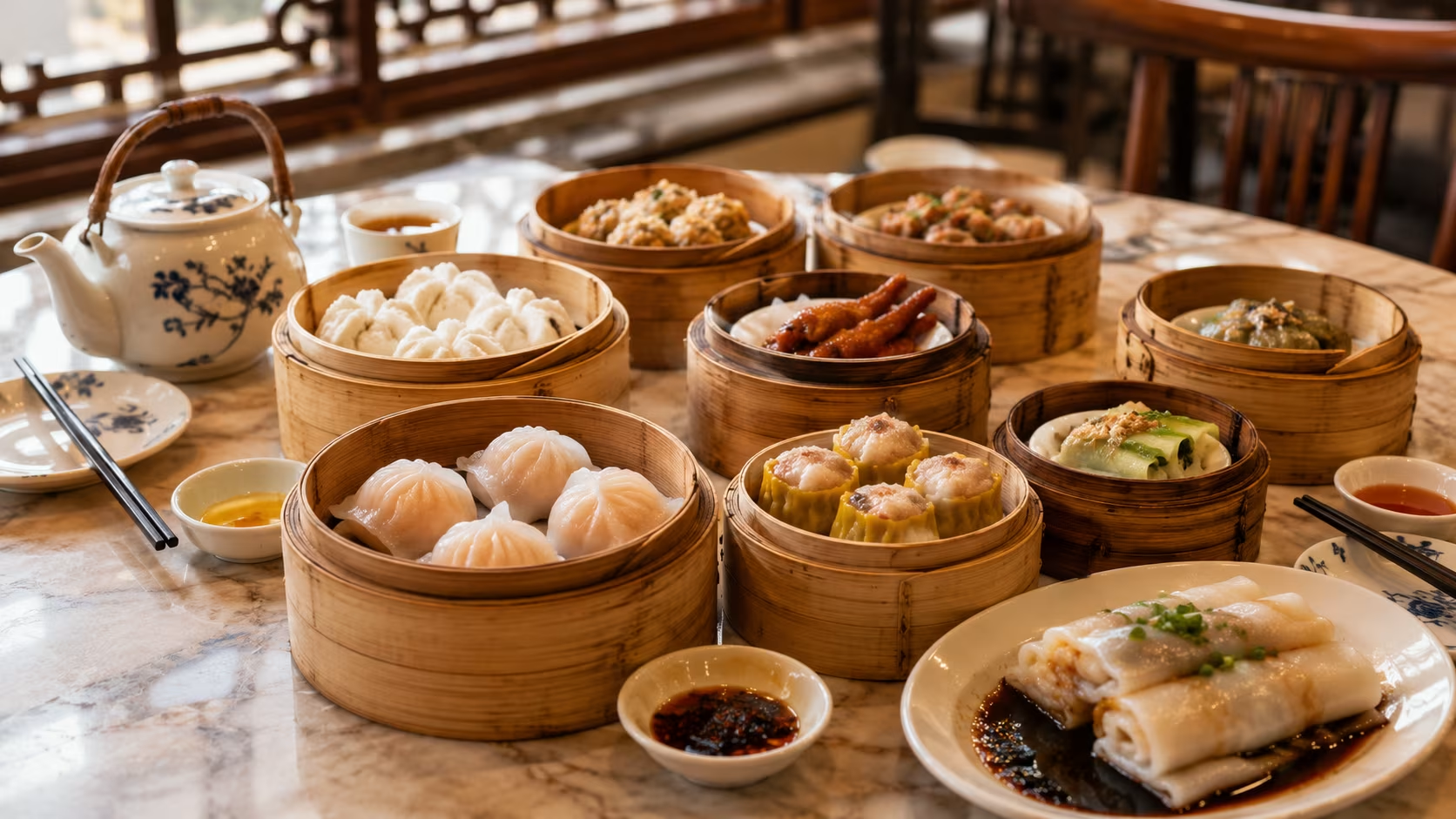
Dim sum is the most-distinctive food ritual in Cantonese culture + among the world's great dining experiences. Hong Kong specifically is the global capital of dim sum, with restaurants ranging from working-class cha chaan teng to 3-Michelin-star Lung King Heen. The 2026 dim sum scene blends 1,000-year-old tradition with modern innovation; some restaurants serve recipes unchanged for generations while others reinvent the genre with contemporary techniques.
This is a 2026 field guide for travelers eating dim sum in Hong Kong. The advice covers the cultural ritual, the must-order dishes, the regional variations, and how to participate in yum cha (the proper morning + early-afternoon dim sum tradition).
What Dim Sum Actually Is
The Core Concept
Dim sum ("a touch of the heart") is small portions of cooked food served alongside Chinese tea, traditionally during the morning + early-afternoon meal called yum cha ("to drink tea"). The food complements the tea; the tea is the central element culturally.
The Ritual
Yum cha is a multi-hour social gathering centered on tea + small dishes. Tables ordered cumulatively; pace is slow; conversation flows. The meal isn't optimized for efficiency.
Traditional Schedule
- Yum cha breakfast: 06:00-10:00 (working-class start).
- Yum cha brunch: 10:00-13:00 (the standard).
- Yum cha lunch: 13:00-15:00 (extended into afternoon).
Most dim sum restaurants serve from 06:00-15:00 + don't operate at dinner. This is intentional — dim sum is the morning-and-noon meal, not evening.
How Service Works
Cart Service (Traditional)
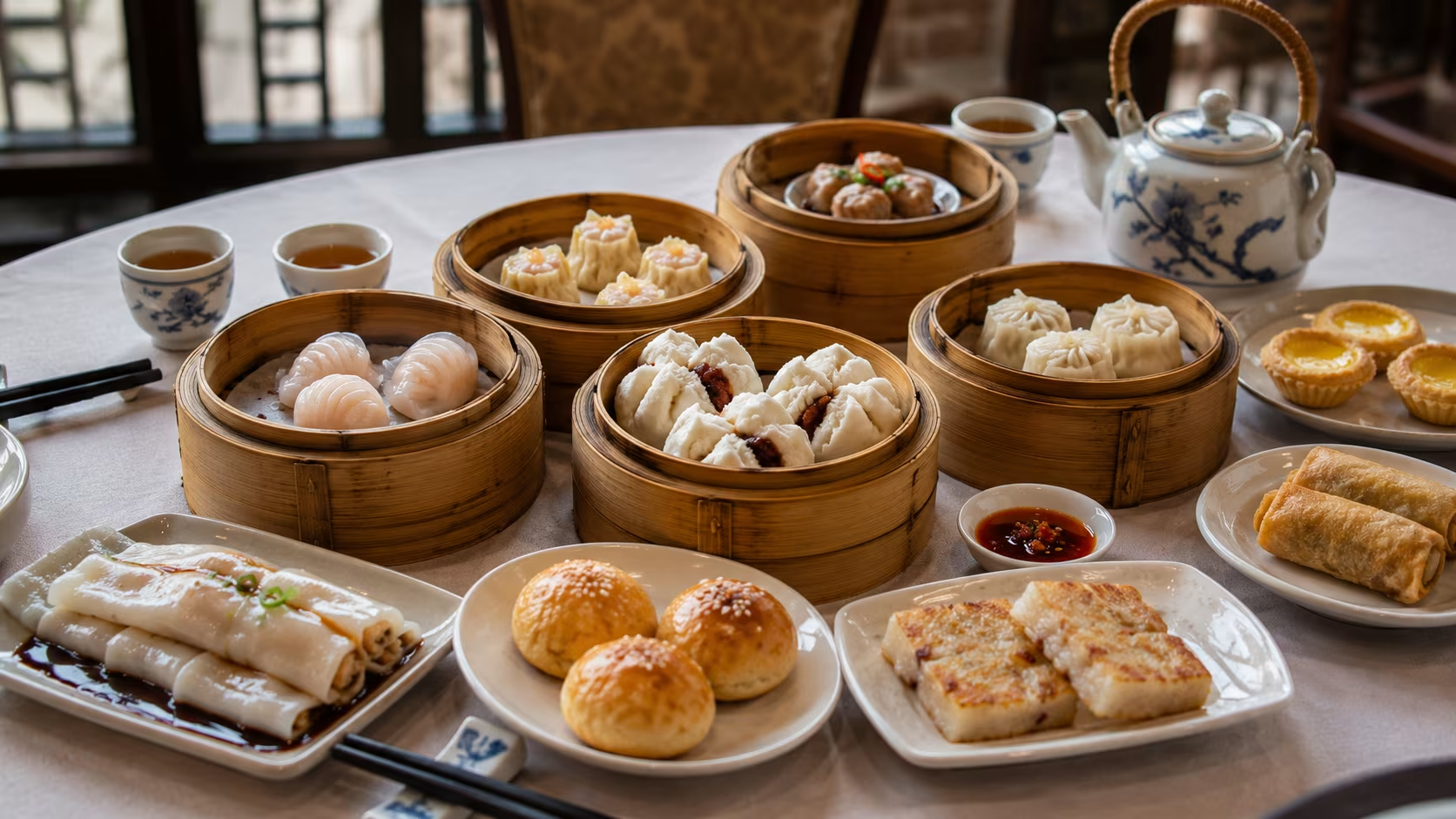
Servers push carts loaded with steam baskets + small plates. Diners flag down carts to take items.
The classic Hong Kong dim sum experience. Many restaurants now offer this at premium tier or on weekends.
Order-by-Form Service (Modern)
Menu cards on tables; mark items + return to server. Common at modern dim sum restaurants.
Pros: more variety; less guesswork. Cons: less spontaneous; loses some tradition.
Combination
Many restaurants now combine — order most items via form; cart service brings specific items (custard tarts, cheung fun, etc.).
Tea Selection
First order is tea. Common choices:
- Pu-erh — earthy, dark, classic for dim sum.
- Jasmine — floral, light.
- Tieguanyin — semi-fermented.
- Chrysanthemum — herbal.
- Sao Mei — white tea, mild.
Tea pots refilled throughout meal (lid open or moved sideways signals 'please refill').
Must-Order Dishes
The Big Five
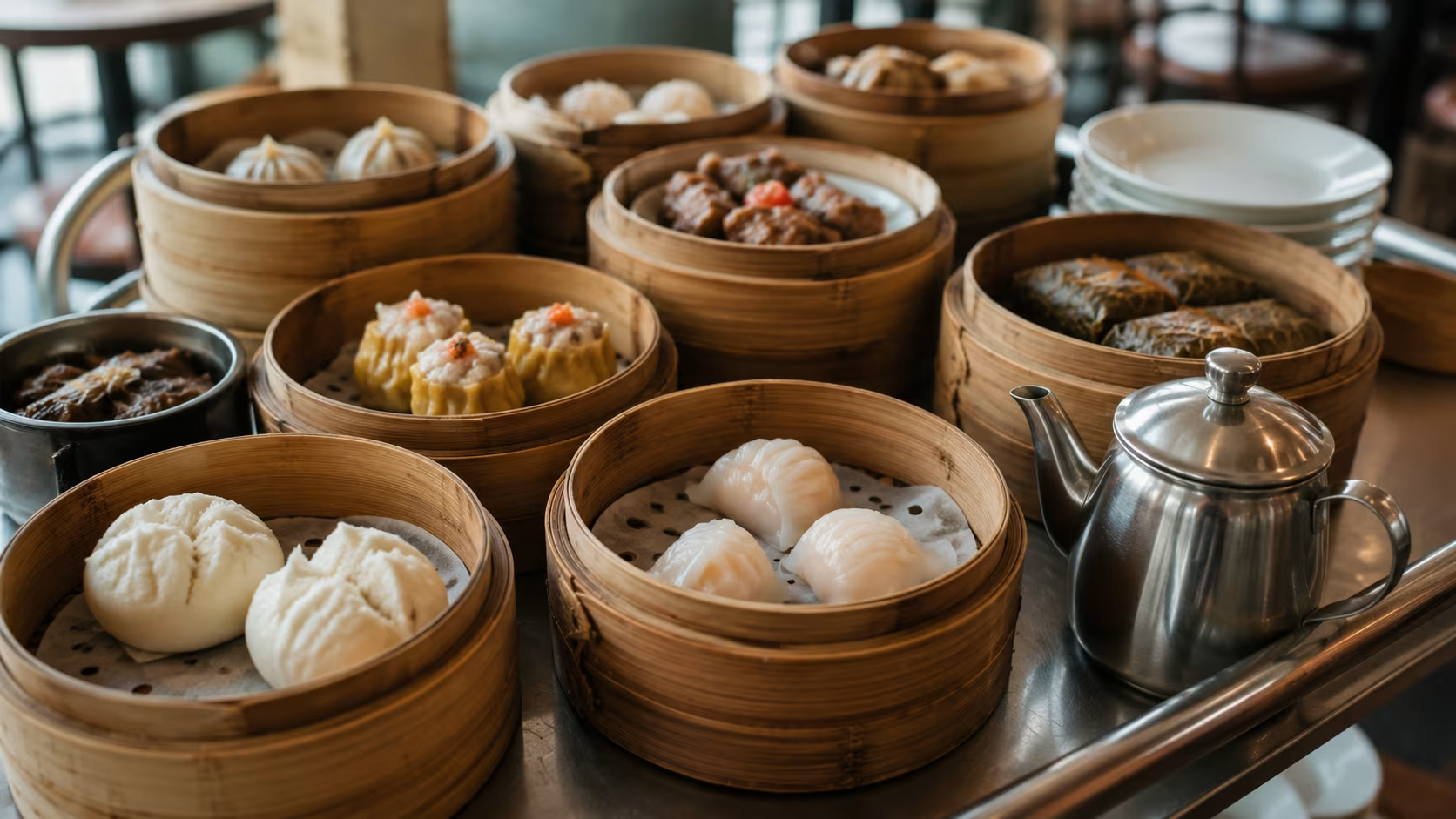
1. Har Gow (蝦餃) - Shrimp Dumplings
Translucent rice-flour wrapper around shrimp + bamboo shoot.
The classic dim sum dish. Quality test: thin wrapper that doesn't break; proper shrimp filling.
2. Siu Mai (燒賣) - Pork Dumplings
Open-topped yellow dumplings with pork + shrimp + mushroom.
The companion to har gow. Should be juicy with chopped pork (not minced).
3. Char Siu Bao (叉燒包) - BBQ Pork Buns
Fluffy steamed buns with sweet BBQ pork. Two main types:
- Steamed (傳統蒸): white, fluffy.
- Baked (焗叉燒包): golden, slightly sweet, modernized.
Try both; the baked version is the modern Hong Kong specialty.
4. Cheung Fun (腸粉) - Rice Noodle Rolls
Silky white rolls of steamed rice flour with fillings:
- Char siu (BBQ pork).
- Shrimp.
- Beef.
- Plain (eaten with soy sauce).
Served with sweet soy + light soy + sesame.
5. Egg Tart (蛋撻) - Custard Tart
The iconic Hong Kong sweet:
- Pastry-style: flaky butter pastry crust.
- Hong Kong-style: smoother shortcrust.
Served at the end of the meal or as a snack.
Other Essential Dishes
6. Cha Siu (叉燒) - BBQ Pork
Hong Kong-style BBQ pork. Served as a separate plate or in buns.
7. Roast Goose (燒鵝)
The Hong Kong specialty. Yat Lok (the famous Michelin-starred goose institution) serves the iconic version.
8. Lo Mai Gai (糯米雞) - Sticky Rice in Lotus Leaf
Glutinous rice with chicken, mushroom, sausage, wrapped + steamed in lotus leaf. Heavier; one or two per group.
9. Phoenix Claws (鳳爪) - Chicken Feet
Braised chicken feet with black bean sauce. Texture is the point; acquired but classic.
10. Beef Balls (魚旦)
Springy beef balls in soup or with cheung fun.
11. Wu Gok (芋角) - Taro Croquette
Deep-fried taro paste shell with savory filling. Crispy outside, soft inside.
12. Ma Lai Ko (馬拉糕) - Steamed Sponge Cake
Malaysian-influenced steamed cake with brown sugar. Sweet course.
13. Jin Deui (煎堆) - Sesame Ball
Deep-fried sesame ball with sweet bean filling. Sweet snack.
14. Tofu Skin Roll (鮮竹卷)
Tofu skin filled with shrimp + pork + vegetables.
15. Crystal Dumpling (水晶餃)
Clear-wrapper dumpling with various fillings.
Yum Cha Etiquette
Tea Service
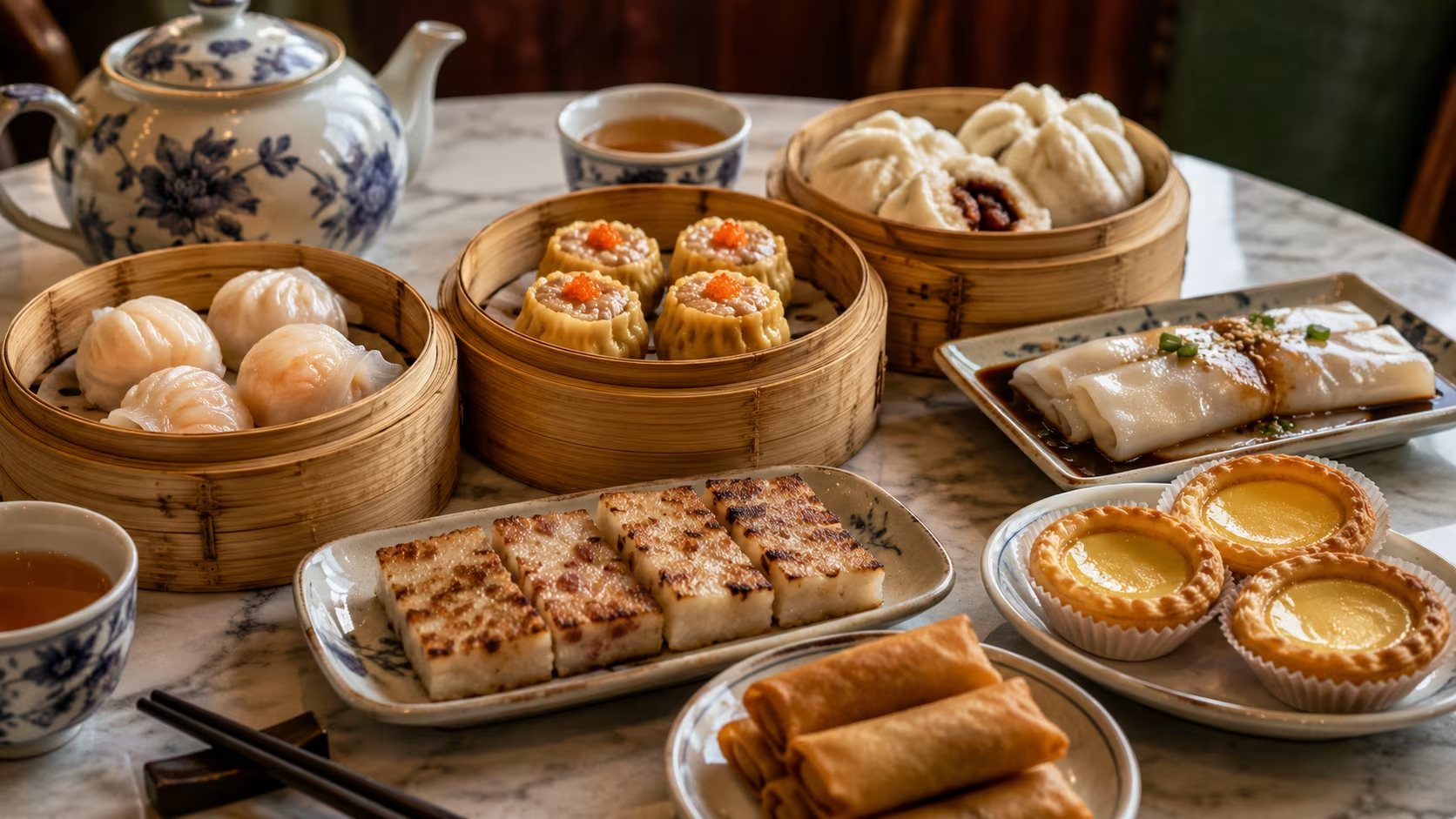
- Lid open or moved sideways signals 'please refill the teapot.'
- Tap two fingers on the table when someone pours your tea (the silent thank-you).
- Pour tea for others first before yourself.
- First pour typically discarded (rinses tea leaves) or used to rinse cups in some traditional places.
Eating
- Use chopsticks for solid items.
- Use spoon for cheung fun + soup items.
- Eat slowly. Yum cha is a 1.5-3 hour ritual.
- Try at least one of each category (steamed, fried, sweet).
- Share dishes. Each item arrives in 3-4 pieces; perfect for sharing.
- Don't stack used dishes. Restaurants count empty containers/plates for billing.
Group Dynamics
- Order incrementally. 4-6 items at a time; reorder as you eat.
- Last to leave: usually the one paying.
- Tea pot refill signals you're staying for more.
- Bill calculation: based on counted dishes/baskets.
Pricing
Basic Categories
Dim sum priced by category (small/medium/large/special). Each restaurant has price tiers.
2026 Hong Kong typical:
- Small (most steamed dumplings): HK$30-40 per dish (3-4 pieces).
- Medium (cheung fun, pork buns): HK$40-55.
- Large (sticky rice, larger dishes): HK$55-75.
- Special (premium dishes, abalone, etc.): HK$80-200+.
Total Costs
- Working-class dim sum: HK$80-150 per person (4-5 dishes + tea).
- Mid-tier dim sum: HK$200-400 per person (full yum cha experience).
- Premium dim sum (Lung King Heen, Tin Lung Heen): HK$600-1,500+ per person.
Where to Eat in Hong Kong
Premium Dim Sum (3-Michelin-Star)
Lung King Heen at Four Seasons
The famous 3-star Cantonese restaurant. Premium dim sum + full Cantonese menu. Books 1-2 weeks ahead. HK$800-1,500 per person for full experience.
Tin Lung Heen at Ritz-Carlton
The 102nd-floor Cantonese restaurant. 3-star.
T'ang Court at Langham
Classical 3-star Cantonese.
Mid-Tier Premium Dim Sum
Yu Yuan (魚遊苑)
- Quality dim sum in mid-priced setting.
Above + Beyond at Hotel Icon
- Modern dim sum with creative variants.
Mott 32
- Modern + premium; multiple locations.
Yan Toh Heen at Intercontinental
- Premium harbor-side Cantonese.
Working-Class + Traditional Dim Sum
Tim Ho Wan (添好運)
The famous "world's cheapest Michelin-starred restaurant" (1-star). Multiple Hong Kong locations. HK$80-150 per person for full meal. Excellent quality at working-class prices.
Must-orders: baked char siu bao + steamed shrimp dumplings + cheung fun.
Lin Heung Tea House (蓮香居)
Since 1928. The traditional cart-service institution. Walking dim sum cart service. Atmospheric + authentic. Working-class atmosphere.
Maxim's Palace at City Hall
The classic harbor-view dim sum restaurant. Cart service + traditional atmosphere.
DimDimSum (點點心)
Accessible chain. Modern but well-priced.
Sun Yuen Cuisine
Working-class Mong Kok. Less polished but authentic.
Yat Lok (一樂)
Famous for roast goose; serves dim sum-adjacent items. Michelin Bib Gourmand. Working-class atmosphere.
Specific Famous Dishes by Restaurant
- Best baked char siu bao: Tim Ho Wan.
- Best steamed har gow: Lung King Heen or Tim Ho Wan.
- Best cheung fun: Sun Hing for working-class; Lung King Heen for premium.
- Best egg tart: Tai Cheong Bakery (the famous + crowded; multiple locations).
- Best roast goose: Yat Lok.
Modern Dim Sum + Innovation
Recent Trends
- Vegetarian + plant-based dim sum at premium restaurants.
- Modernist techniques (foam-topped shrimp dumplings, etc.).
- Cross-cultural fusion (Japanese-influenced dim sum, etc.).
- Health-conscious versions (whole-grain wrappers, etc.).
Where to Find Modern Dim Sum
- Mott 32 (multiple locations).
- Above + Beyond.
- Lung King Heen (modernized classics).
- Yu Yuan.
Specific Days + Times
Sunday Yum Cha
The most-loved time for Hong Kong dim sum:
- Multi-generational families.
- Long meals (2-4 hours).
- Premium atmosphere.
- All restaurants busy.
Reserve in advance for popular restaurants.
Weekday Brunch
Similar food + atmosphere; less crowded.
Weekend Breakfast (06:00-09:00)
Working-class atmosphere. Less tourist density. Authentic.
Beyond Hong Kong: Dim Sum Variations
Cantonese Diaspora (Singapore, Malaysia)
- Similar dishes; some local adaptations.
- Higher price points typically.
Mainland China
- Dim sum varies by region.
- Guangzhou (the historical home) has its own traditions.
Western Cities
- Hong Kong-quality dim sum in major Cantonese-diaspora cities.
- San Francisco, Los Angeles, NYC, Vancouver, Toronto, Sydney.
Specific Hong Kong-Quality Outside Hong Kong
- Yauatcha (London).
- Hutong (London).
- Hakkasan (London, NYC, Las Vegas, Dubai).
- Mott 32 (multiple cities).
How to Order Like a Local
Two-Person Yum Cha
Reasonable order:
- Tea pot.
- Har gow (1 basket = 4 pieces).
- Siu mai (1 basket = 4 pieces).
- Char siu bao (3 pieces).
- Cheung fun (1 plate, char siu).
- One sweet item (egg tart, sesame ball).
- Optional: phoenix claws + wu gok + others.
6-8 dishes total. HK$200-400 per person at mid-tier.
Four-Person Yum Cha
- Two tea pots (typically different types).
- Multiple of each main item.
- More variety of dishes.
- 3-5 sweet items to share.
12-15 dishes total. HK$300-600 per person at mid-tier.
Common Tourist Mistakes
- Trying to order all the food at once. Order incrementally.
- Skipping the tea. Tea is the central element.
- Eating quickly. Yum cha is a 2-3 hour experience.
- Going for dinner. Most dim sum closes by 15:00.
- Not reserving on Sunday. Premium spots fill.
- Over-ordering rich dishes. Balance light + heavy.
- Skipping cheung fun. Distinctive Hong Kong specialty.
- Skipping the chicken feet. They're texturally distinctive + part of the tradition.
- Stacking used baskets. Servers count for billing.
- Not trying egg tart. The iconic Hong Kong sweet.
Specific Vocabulary
Useful phrases:
- Yum cha (飲茶) — "drink tea"; the meal name.
- Dim sum (點心) — "a touch of the heart"; the food category.
- Lai cha (拉茶) — "pour tea" (request).
- Mm goi (唔該) — "please" / "thank you" (Cantonese).
- Doh jeh (多謝) — formal "thank you."
- Mai dan (埋單) — "the bill, please."
Final Notes
Dim sum in Hong Kong is one of the world's great food rituals. The traveler who participates properly — with appropriate pace + variety + cultural awareness — experiences Cantonese culture in a way that other tourist activities can't match.
The single best advice book a 2-3 hour Sunday yum cha at a quality dim sum restaurant. The slow social meal, multiple dishes, the cultural ritual of tea + family-style sharing reveals the heart of Hong Kong food culture.
The second-best try Tim Ho Wan at least once for accessible Michelin-starred dim sum. The HK$120 meal there delivers Hong Kong's culinary heritage at a working-class price point.
The quietest piece of advice don't try to optimize the meal. Yum cha rewards slowness; ordering 4-5 dishes + drinking tea + chatting + ordering 3 more + chatting + ordering dessert is the cultural form. The Western efficiency mindset ("order everything; eat fast; leave") misses the point. The dim sum that stays with you is the one consumed across 2.5 hours of conversation, not the one rushed through in 45 minutes.

0 Comments
No comments yet — start the conversation.
Your name, email address and comment are processed to publish and reply to the comment; your email address is never published. Details: Privacy Notice.