

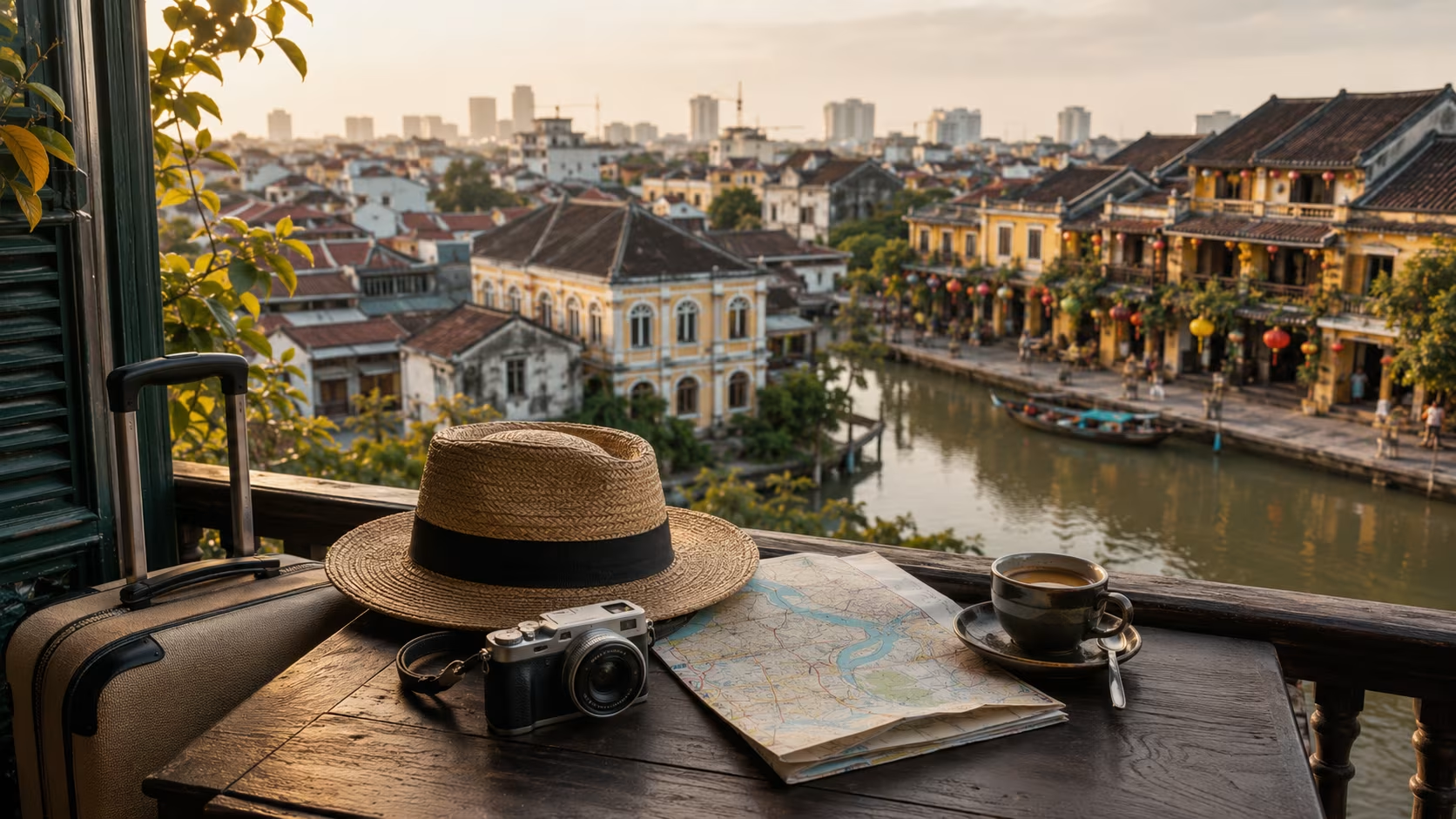
Seven days is the right length for a focused first Vietnam trip if you resist the temptation to add Saigon (Ho Chi Minh City), Sapa, and Phu Quoc to a Hanoi + Halong + Hoi An itinerary. The country's regional differences are dramatic — the cuisine, climate, history, and culture vary substantially between north + central + south. The classic mistake is the country-hop: 7 days across all four major destinations means 4-5 transit days + minimal time at each.
The stronger trip stays in 2-3 places. Hanoi for the medieval-French-colonial historical capital + Old Quarter dense cultural experience. Halong Bay (or its alternative, Lan Ha Bay) for the limestone-karst seascape. Hoi An for the UNESCO Old Town + central Vietnam tailoring + slower pace. The trip from Hanoi south to Hoi An is by flight (1h 30m).
This is a 7-day itinerary that respects Vietnam's regional logic.
Quick Facts
| Item | Detail |
|---|---|
| Country | Vietnam |
| Currency | Vietnamese dong (VND), ~25,000 VND/USD in 2026 |
| Language | Vietnamese; English in tourist areas |
| Time zone | ICT (UTC+7, no DST) |
| Tourist tax | None |
| Best time | October–April (avoiding monsoon + Tet) |
| Visa | E-visa for most countries; 90-day options since 2023 |
When to Go

Vietnam's three regions (north + central + south) have different climates.
October to December. Sweet spot for north (Hanoi cool 18-26°C). Central (Hoi An) dry. Best overall.
January to early February. Cool in north; pleasant in central. Tet (Vietnamese New Year) falls late January-early February — disruptive for travelers.
March to April. Spring in north; warm in central. Good window.
May to August. Hot in north (28-35°C+). Central is HOT; the rainy season for some areas.
September. Late summer in north. Rain potential in central.
Avoid:
- Tet (late January or early February). Many businesses close 3-5 days; transit packed.
- Mid-summer in Hanoi (heat + humidity peak).
- Major Vietnamese holidays.
The Choice: 7 Days for Vietnam

Option A — Hanoi + Halong Bay + Hoi An (Recommended for First-Timers)
The classic northern-central combination. Most-visited route.
Option B — Hanoi + Sapa + Hoi An
Replace Halong with Sapa (mountain trekking + ethnic minority villages). For travelers who prefer mountains over coastal karsts.
Option C — Saigon + Mekong + Hoi An
Southern-central focus. Skip Hanoi entirely.
Option D — Hanoi + Saigon + Da Nang
Three cities; minimal countryside. Less rewarding than Options A-C.
The 7-Day Itinerary (Hanoi + Halong + Hoi An)

Days 1-2: Hanoi
Day 1 — Arrival + Old Quarter
- Arrive Hanoi. Most flights arrive afternoon; allow rest.
- Walk the Old Quarter. The 36 streets named for their traditional trades.
- Lunch at a working-class phở or bún chả restaurant.
- Afternoon at Hoàn Kiếm Lake + Ngọc Sơn Temple.
- Sunset at the lake.
- Dinner. Bún chả Hương Liên (the Obama-Bourdain spot) or a working-class neighborhood restaurant.
- Optional Water Puppet Show (booked).
Day 2 — Ba Đình + French Quarter + Cooking
- Morning: Ho Chi Minh Mausoleum + Stilt House + One Pillar Pagoda.
- Late morning: Temple of Literature.
- Lunch in central.
- Afternoon: Vietnam Museum of Ethnology or Hỏa Lò Prison Museum.
- Evening: Beer + street food at Tạ Hiện (the famous beer street) or a working-class neighborhood.
- Late dinner.
Day 3 — Halong Bay (Day Trip or Overnight Cruise)
Real talk: the day cruise is exhausting (12 hours total). The 2-day overnight cruise is dramatically better.
Path 3A — Day Cruise to Halong
- 07:30. Pickup from hotel.
- 11:30. Arrive Halong / Tuan Chau Marina. Board cruise.
- 12:30. Lunch on boat.
- 13:00-17:00. Cruise through karst landscape. Stops at limestone caves, kayaking, swimming.
- 17:30. Return to dock. Drive back to Hanoi.
- 21:30. Arrive Hanoi.
Path 3B — Overnight Cruise (Day 3-4)
- Day 3: pickup → cruise → afternoon kayaking → dinner on boat → overnight in cabin.
- Day 4: sunrise on karst → tai chi class → cave visits → lunch → return to Hanoi by mid-afternoon.
The overnight cruise costs 2-3× the day cruise but delivers genuinely different experience. Tour packages: $90-250 per person for overnight. Lan Ha Bay is the less-touristy alternative to Halong proper.
Days 4-5: Hoi An (via Da Nang)
Day 4 — Travel + Hoi An Arrival
- Morning flight Hanoi → Da Nang (1h 30min, $50-180).
- Drive Da Nang → Hoi An (45 min, $20-30 by Grab).
- Lunch in Hoi An Old Town.
- Afternoon walking the Old Town. UNESCO heritage; lantern-lit streets at evening.
- Famous Japanese Bridge.
- Evening: lantern-lit Old Town + dinner.
Day 5 — Hoi An Deeper
- Morning at My Son Sanctuary (90 min from Hoi An, ancient Cham ruins).
- Lunch in Hoi An.
- Afternoon: beach time at An Bang Beach (5 km from Hoi An, free, calm).
- Late afternoon: Hoi An tailoring appointment (custom clothing 24-48 hours).
- Evening: Old Town walking + dinner.
Days 6-7: Departure or Extended Hoi An
Day 6 — Hoi An Slow Day or Hue
Path 6A — Hue Day Trip
Hue is 130 km north of Hoi An. The former imperial capital. Day excursion: drive over Hai Van Pass (one of the world's great coastal drives), visit Imperial City + Khai Dinh Tomb + Tu Duc Tomb.
Path 6B — Slow Hoi An
- Beach morning at An Bang.
- Lunch.
- Old Town shopping.
- Famous evening boat ride on Thu Bon River.
- Final dinner.
Day 7 — Departure
- Morning at hotel.
- Drive to Da Nang airport.
- Flight back via Hanoi or direct international.
Variations
Add Saigon (10-Day Trip)
Days 7-10: fly Hoi An (Da Nang) → Saigon. Two days in Saigon + Mekong day trip + departure.
Add Sapa (Replace Halong)
Replace Halong cruise (Day 3) with Sapa. Overnight train Hanoi → Sapa (8 hours; sleeper trains comfortable). 2 days trekking through ethnic minority villages. Train back.
Skip Halong (City + Hoi An Only)
If time-constrained: Days 1-2 Hanoi + Days 3-7 in central Vietnam (Hoi An + Hue + Da Nang).
Beach-Focused
Replace Hoi An tailoring + cooking with extended beach time at An Bang or Cua Dai Beach. Or fly south to Phu Quoc Island for end-of-trip beach.
Logistics
Domestic Flights
Better than overnight trains for time efficiency:
| Route | Duration | Price |
|---|---|---|
| Hanoi → Da Nang | 1h 30m | $50-180 |
| Hanoi → Saigon | 2h 10m | $80-250 |
| Da Nang → Saigon | 1h 25m | $50-180 |
| Hanoi → Phu Quoc | 2h 30m direct | $90-250 |
Vietnam Airlines + Bamboo Airways are the major operators. Book 2-4 weeks ahead for best fares.
Trains
Slower but scenic:
- Hanoi → Sapa (8h overnight; comfortable sleeper). Real cultural experience.
- Hanoi → Hue (12h overnight). Faster to fly + drive.
- Hue → Da Nang (3h scenic coastal). Worth doing once.
Local Transit
- Grab for everything in cities. Reliable + cheap.
- Cyclo in Hanoi/Hoi An for atmospheric short trips.
- Motorbike rental not recommended for first-time visitors (traffic + accident risk).
What to Eat
Vietnamese cuisine has regional layers. North (Hanoi) is subtler + cooler-flavored. Central (Hue + Hoi An) is spicier + more royal-court-influenced. South (Saigon) is sweeter + more abundant herbs.
Northern (Hanoi) Specialties
- Phở (Hanoi style) — clearer broth than southern.
- Bún chả — grilled pork + rice noodles.
- Cha ca — turmeric fish.
- Bánh cuốn — steamed rice rolls.
Central (Hue + Hoi An) Specialties
- Cao lầu — Hoi An-only noodle dish (water sourced from specific Cham well, allegedly).
- Mỳ Quảng — turmeric noodles with shrimp + pork.
- Bún bò Huế — spicy Hue-style noodle soup.
- Bánh mì Hoi An — the famous Hoi An sandwich.
- Cơm tấm — broken rice (more central than south but available here).
Universal
- Spring rolls (gỏi cuốn + chả giò).
- Cà phê sữa đá — iced sweet milk coffee.
- Bia Hà Nội / Bia Saigon — Vietnamese street beers.
Costs and Budget
2026 daily budgets per person, excluding flights:
| Style | Per day | Notes |
|---|---|---|
| Backpacker | $15-30 | Hostel, street food, walking, occasional Grab |
| Mid-range | $40-80 | Mix of street and proper restaurants, transit |
| Comfortable | $100-180 | Better restaurants, premium hotel, taxi |
| Higher-end | $250+ | Tasting menus, luxury hotels, private guide |
Vietnam is among the most cost-effective Asian destinations.
Practical Info
- Cards. Accepted at hotels + mid-tier+. Cash for street food, taxis, smaller establishments.
- Tipping. Not standard. 5-10% appreciated at sit-down restaurants. Round up Grab.
- English. Common in tourism; less in residential.
- Pickpocketing. Real in tourist areas. Standard precautions.
- Heat. Real in central Vietnam. Schedule indoor breaks.
- Crime. Low.
- Currency. Carry small bills; many places can't break large notes.
- Bottled water only for drinking + ice.
Common 7-Day Vietnam Mistakes
- Adding Saigon to a 7-day Hanoi-Hoi An trip. Compressed; transit-heavy.
- Day cruise to Halong instead of overnight. The day version is exhausting + much less rewarding.
- Skipping Hoi An for tailoring time. 24-48 hours needed for custom clothing.
- Visiting in mid-summer. Heat is real.
- Not booking flights between cities in advance. Last-minute fares high.
- Eating only at chain restaurants. Vietnamese street food is the cultural experience.
- Renting motorbikes without experience. Tourist injuries are real.
- Skipping Hue. Central Vietnam's imperial capital is essential context.
- Underestimating Hoi An's tailoring quality. Genuinely good + competitive prices.
- Drinking tap water. Bottled only.
- Not booking Halong overnight cruise in advance. Best operators sell out.
Final Notes
Seven days for Vietnam works as Hanoi + Halong + Hoi An (with a sub-itinerary for each). The mistake is the country-hop. The traveler who stays in 2-3 places + goes deep on each comes away with three distinct experiences.
The quietest piece of advice: spend a slow afternoon in the Hoi An Old Town between 14:00-17:00, when the heat eases + before the evening lantern crowds. The streets are mostly empty; the architecture (UNESCO since 1999) is at its most-visible. The Hoi An that stays with you isn't the lantern photograph from the bridge; it's the cumulative effect of 16th-19th century shophouses, the Japanese covered bridge, the slow pace of a town that retained its character through centuries of trade + colonization. Combined with cooking class + tailoring + beach + mountain pass, the 7 days produce a complete first-Vietnam experience.



0 Comments
No comments yet — start the conversation.