

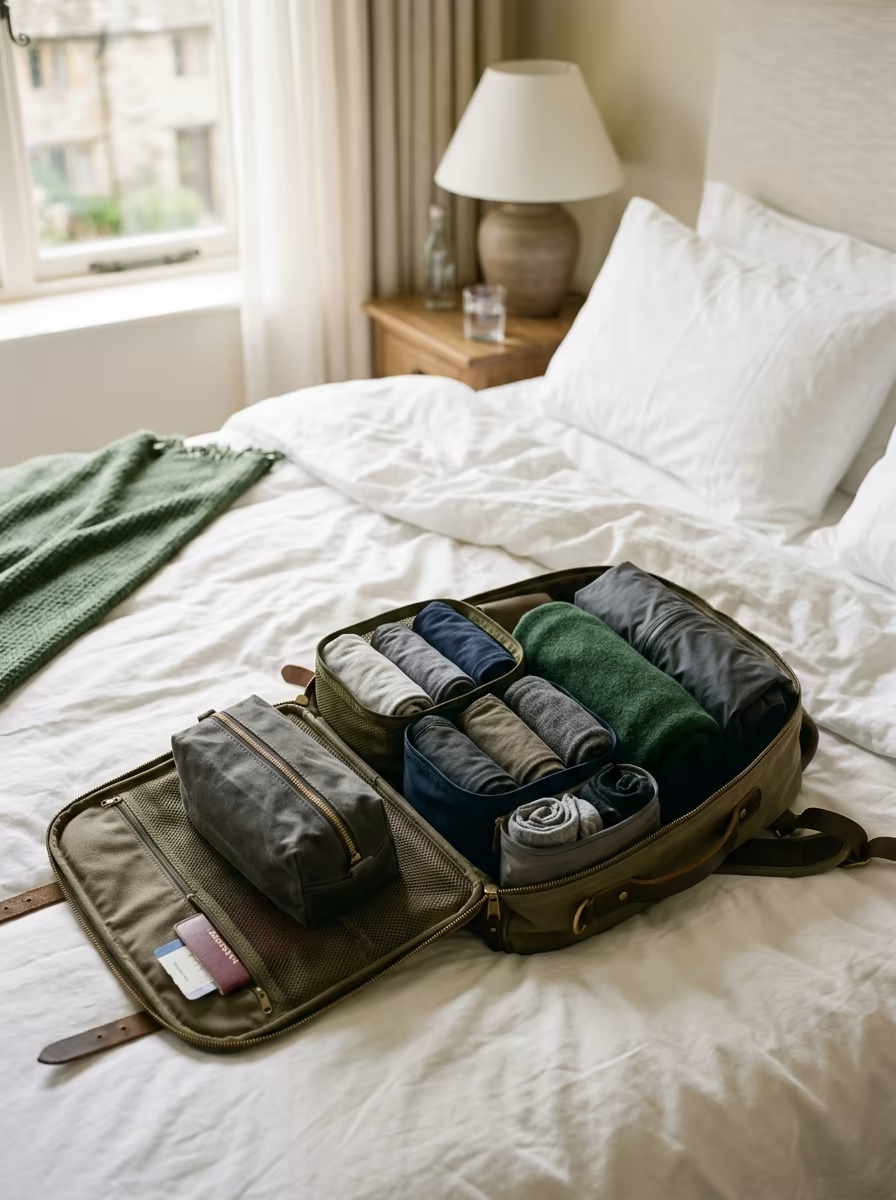
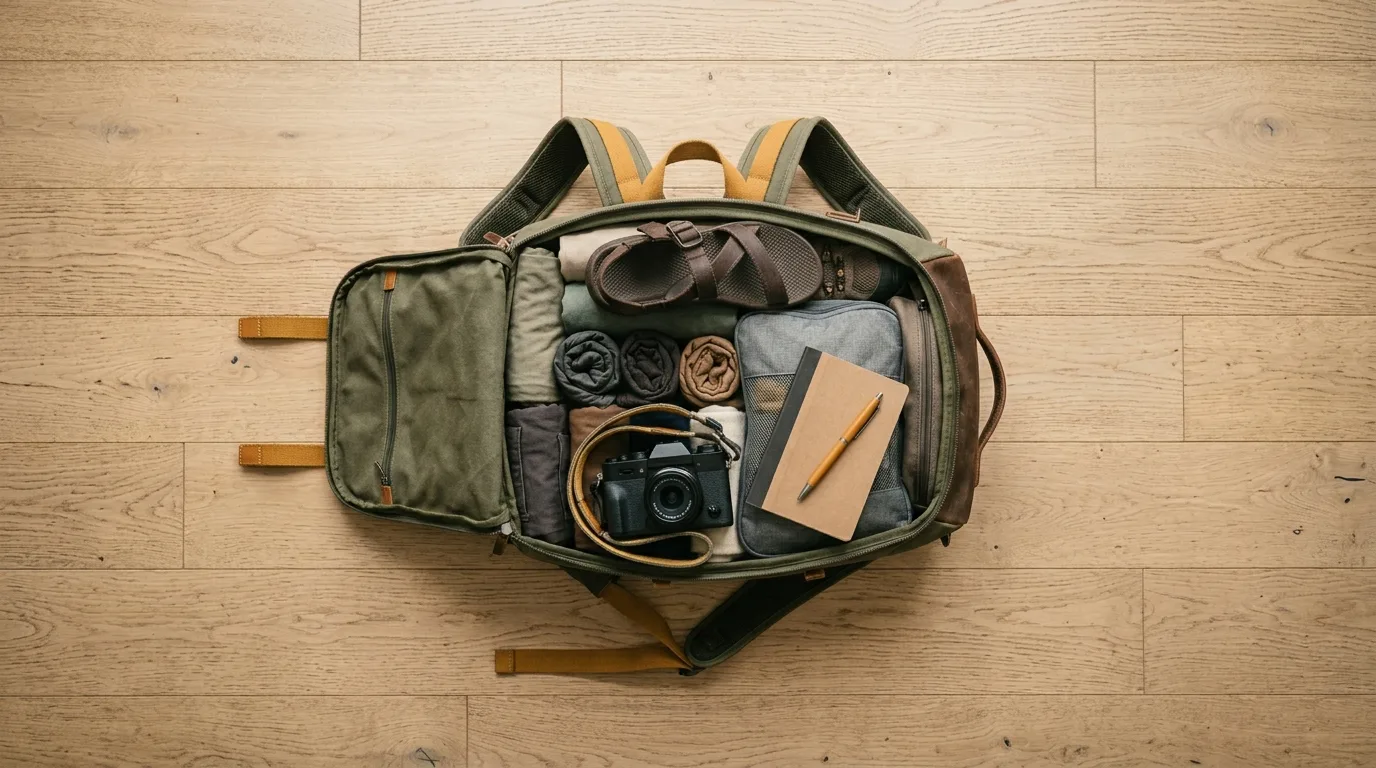
I missed a connection once because of a suitcase. Istanbul, 2016, an overnight train that arrived forty minutes late and an international departure gate that required checked luggage to be rechecked at the domestic terminal. Watching the plane pull back from the gate with my bag already on it (and me not) was the moment I decided checked luggage was someone else's problem from that point forward.
I've been a one-bag traveler ever since. Not for ideological reasons, and not because I enjoy the inconvenience of constraints. Because once you understand how to pack a carry-on properly, there is no inconvenience. You walk off every plane directly through passport control while other passengers are still standing at the carousel. You don't pay checked bag fees on budget carriers. You don't spend the first two hours of any trip at lost luggage. And you force yourself, early in the packing process, to make the decisions about what you actually need, which turns out to be far less than you thought.
Three weeks into a single carry-on is achievable for most climates and most trip types. Here's exactly how.
Carry-on is a decision problem, not a space problem
The problem with most packing advice is that it treats the bag as a container problem: you need to fit more into less space. That framing is wrong. The carry-on constraint is primarily a decision problem: you need to determine which of the forty things you're considering are the actual ten things you need. Compression cubes and vacuum bags are secondary tools. The primary tool is ruthless editing.
The editing framework is this: pack for the version of the trip where you can do laundry once a week. Not once a day, not every three days: once a week. If an item can't survive that frequency context (either because you need it more often or because it can't be hand-washed and air-dried), it needs to either be excluded or substituted with something that can survive it.
Most people pack for the version of the trip where laundry doesn't exist, where every outfit is needed exactly once. That produces an impossibly large packing list. Pack for the laundry-once-a-week version and you'll find that most trips require: three to four bottoms, five to six tops, two to three layers, three pairs of shoes (including what you wear), and seven pairs of each of socks and underwear. That's the skeleton. Everything else is accessories and context-specific additions.
The corollary to this principle: the fabric matters more than the item count. A merino wool t-shirt worn three times before washing, washed and dried overnight in a hotel room, is more useful than three cotton t-shirts that take 24 hours to dry and smell after a long walking day. The decision to invest in merino and quick-dry fabrics is what makes the system work, not the packing cubes.
Choose the bag, then the clothes
1. Choose your bag before you choose your clothes.
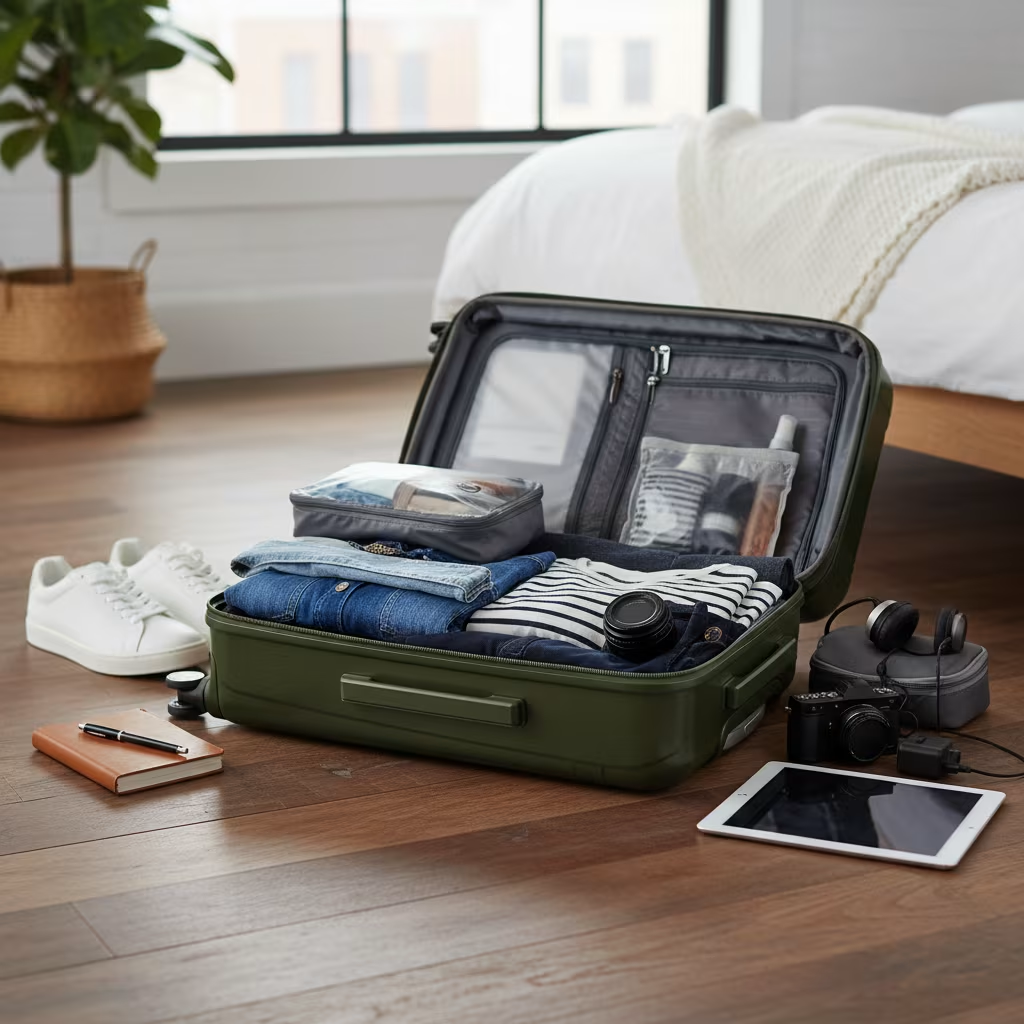
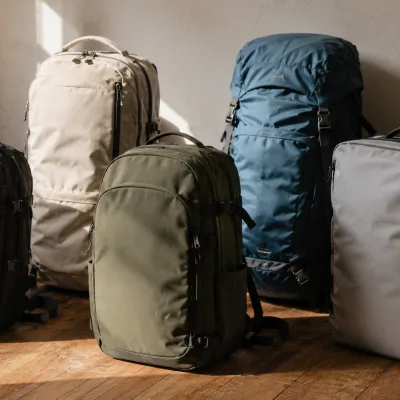
The bag defines the constraint. For most international carry-on allowances (IATA standard: 55×40×20cm / 21.7×15.7×7.9in), a 35–40L bag is the practical sweet spot. Osprey Farpoint 40, Aer Travel Pack 3, and the Tom Bihn Synik are all proven systems. The bag should fit the maximum dimensions with room to spare; a bag that's just barely within limits will be gate-checked on half your flights. Get a bag that's demonstrably carry-on sized and show gate agents if challenged.
2. Build a capsule wardrobe in neutral colors.
Choose a color palette of three: two neutrals (black and navy, or grey and olive) and one accent. Every item in your bag should work with every other item. A dark blue merino sweater that pairs with black chinos and grey shorts is doing three times the work of a bold-patterned shirt that only goes with one pair of pants. This sounds limiting until you realize that most of what you remember about your travel outfits in photographs is the background, not the clothes.
3. Apply the one-item-out rule when adding anything.
For every item you decide to add beyond the skeleton, something else must come out. This makes the trade-off explicit. You want to bring dress shoes for one dinner? Then your sandals go home. You want the larger jacket? The hoodie layer gets left behind. The rule prevents gradual accumulation, the way bags gain three pounds between the first time you pack them and the time you're actually at the airport.
4. Use packing cubes for categories, not compression.
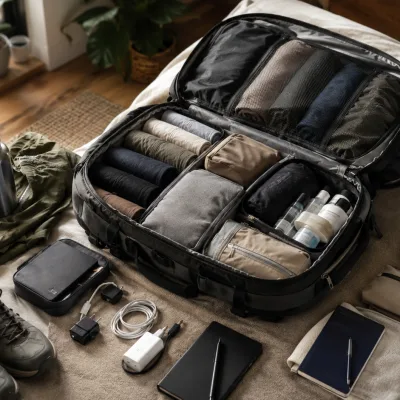
One cube for tops, one for bottoms, one for underwear/socks. Lay clothes flat and roll them: rolling is demonstrably more compact than folding for most fabrics. The cubes allow you to pull one category without destroying the arrangement of the others. Compression cubes are useful for bulky items (a down jacket, hiking trousers) but the gains elsewhere are minimal.
5. Pack your toiletries last and in the smallest possible containers.
Airline 100ml / 3.4oz limits are well-known. What people miss: you don't need 100ml of shampoo for three weeks. You need approximately 60ml. Buy travel-sized decant bottles (Nalgene wide-mouth 60ml are excellent) and fill them to the actual amount you'll use. Solid toiletries (shampoo bars, solid sunscreen, solid deodorant) eliminate liquid limits entirely and are worth trying if you haven't. A full kit of solid toiletries takes about as much space as a large wallet.
6. Test the pack before you leave.
Load the bag. Wear it for an hour around the house. Go up and down stairs. Put it in your overhead locker (if you have one in a wardrobe) and lift it down. If any of these tests produce a problem, the solution is removing weight, not a better packing strategy.
Three weeks through the Balkans in October
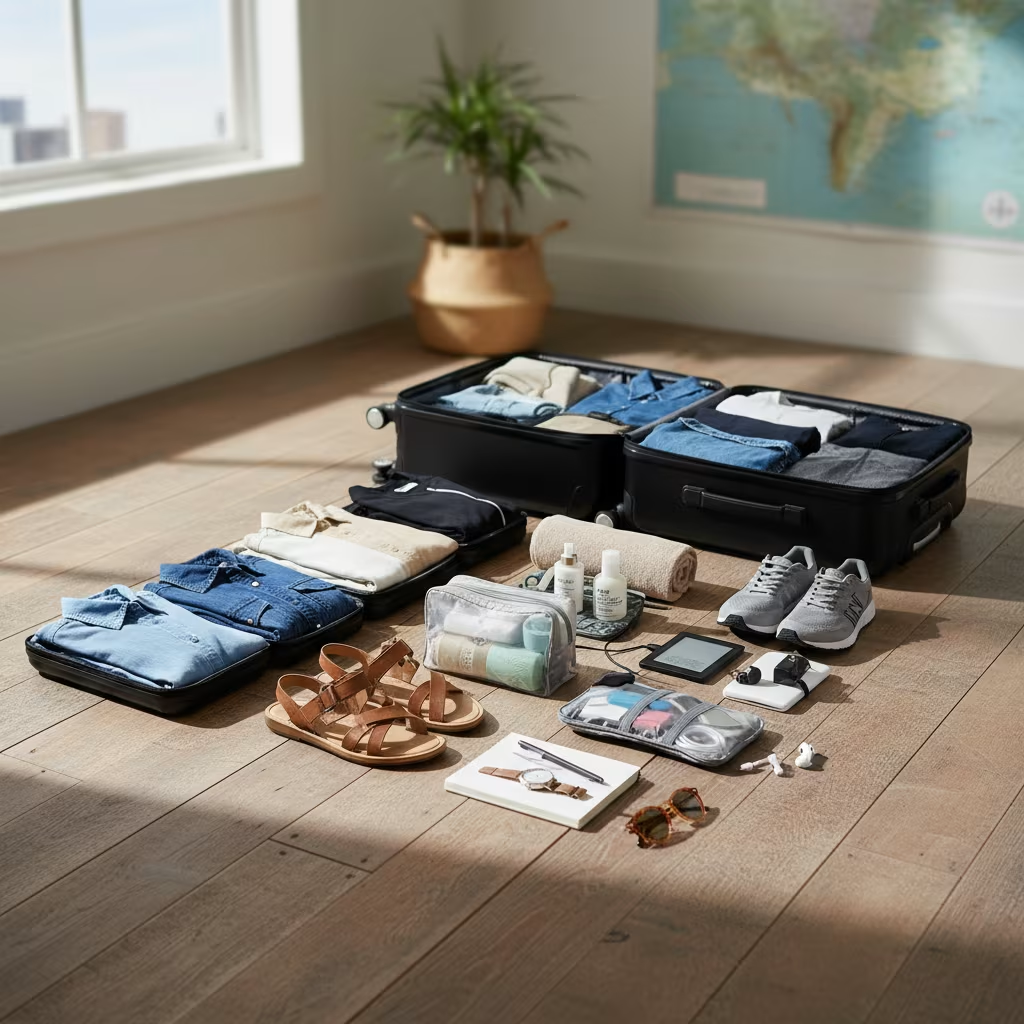
Three weeks through the Balkans, October. The climate variable (warm days, cool evenings, occasional rain) makes this look like a complex packing problem. It isn't. The solution: two pairs of chinos, one merino t-shirt in dark grey, two lightweight long-sleeve shirts, a packable down jacket, a rain shell, and one merino sweater. The down jacket and shell stuffed into their own pockets took up about 20% of the bag. Everything else lay flat. Total clothing weight: 3.2kg.
A photographer friend traveling for six weeks in East Africa. Her constraint was camera gear: she'd allocated one third of the bag to a camera body, two lenses, and charging cables. That left about 20L for three weeks of warm-climate clothes. She solved it with an almost entirely Merino Protect base layer system plus two dresses that doubled as evening wear. She did laundry every five days. She didn't check a bag.
A business traveler doing four countries in two weeks. The suit problem: can you pack a suit in a carry-on? Yes, using a garment folder and a lightweight unstructured blazer. He wore the blazer and dress shoes on board (the heaviest items), packed the trousers in the garment folder, and brought exactly two dress shirts on the principle that dry-cleaning services are available in every business hotel in the world.
Packing for anxiety instead of for the trip
Packing for anxiety, not for the trip. The "what if I need" items (the fourth pair of shoes, the formal wear for a dinner invitation that hasn't been issued, the medication for an illness you don't have) are the weight that kills one-bag packing. Pack for the trip you have confirmed, not for scenarios.
Bringing cotton in humid climates. Cotton absorbs sweat and takes 18–24 hours to air-dry. In tropical destinations, this means you are genuinely rotating through clothes too fast to travel light. Synthetic blends or merino are the only viable alternatives.
Not wearing your heaviest items on board. Your coat, your boots, your heaviest layer: wear them on the plane. They don't count toward your carry-on weight if they're on your body.
Packing full-size toiletries. A 250ml shampoo bottle to last three weeks means you have 230ml of shampoo left when you land. Decant precisely.
Not accounting for souvenirs. You will buy things. Leave 10–15% of your bag's capacity empty on departure for the return journey, or pack a lightweight foldable tote bag that can become a second personal item.
Gate checks, laundry and the one-bag worries
The questions I get most when I talk about one-bag travel tend to cluster around a few specific anxieties.
What if an airline takes my carry-on at the gate?
Choose bags that are demonstrably within IATA limits. If challenged, ask politely to measure it: agents sometimes back down. On budget airlines that enforce limits aggressively, the fee for gate-checking is usually €30–60 and worth knowing about in advance if your itinerary includes carriers like Ryanair or AirAsia.
How do you do laundry on the road?
Hand-wash in the hotel sink using Dr. Bronner's concentrated soap (a travel essential) for small items. Use a laundromat for larger loads: most cities have lavanderias, laundrettes, or dry-cleaning services. Budget about $5–12 per full laundry run. High-end hotels will charge 10× that; use local laundromats instead.
Is three weeks really achievable in a carry-on?
For most climates and trip types, yes. The exceptions: destinations requiring formal evening wear every night, winter travel to genuinely cold climates requiring heavy insulation, or any trip where you'll be doing outdoor activities requiring multiple categories of specialized gear. For most city trips, warm-weather travel, and mixed itineraries, three weeks fits comfortably.
What's the best carry-on bag to buy?
That depends on your use case. For general travel: Osprey Farpoint 40 (budget-friendly, comfortable backpack carry). For urban travel: Aer Travel Pack 3 (clamshell opening, laptop protection). For frequent business travel: Away Carry-On (wheeled, durable, TSA-approved lock). All three fit standard international carry-on dimensions.
Carry-on numbers that matter:
| Item | Figure | Note |
|---|---|---|
| IATA carry-on standard | 55×40×20 cm | 35–40 L bag is the sweet spot |
| Liquids | 100 ml limit — but 60 ml lasts 3 weeks | decant into Nalgene 60 ml bottles |
| Total clothing weight | 3.2 kg (tested) | merino tee: 3 wears, dries overnight |
| Jacket + shell packed | ~20% of the bag | — |
0 Comments
No comments yet — start the conversation.