

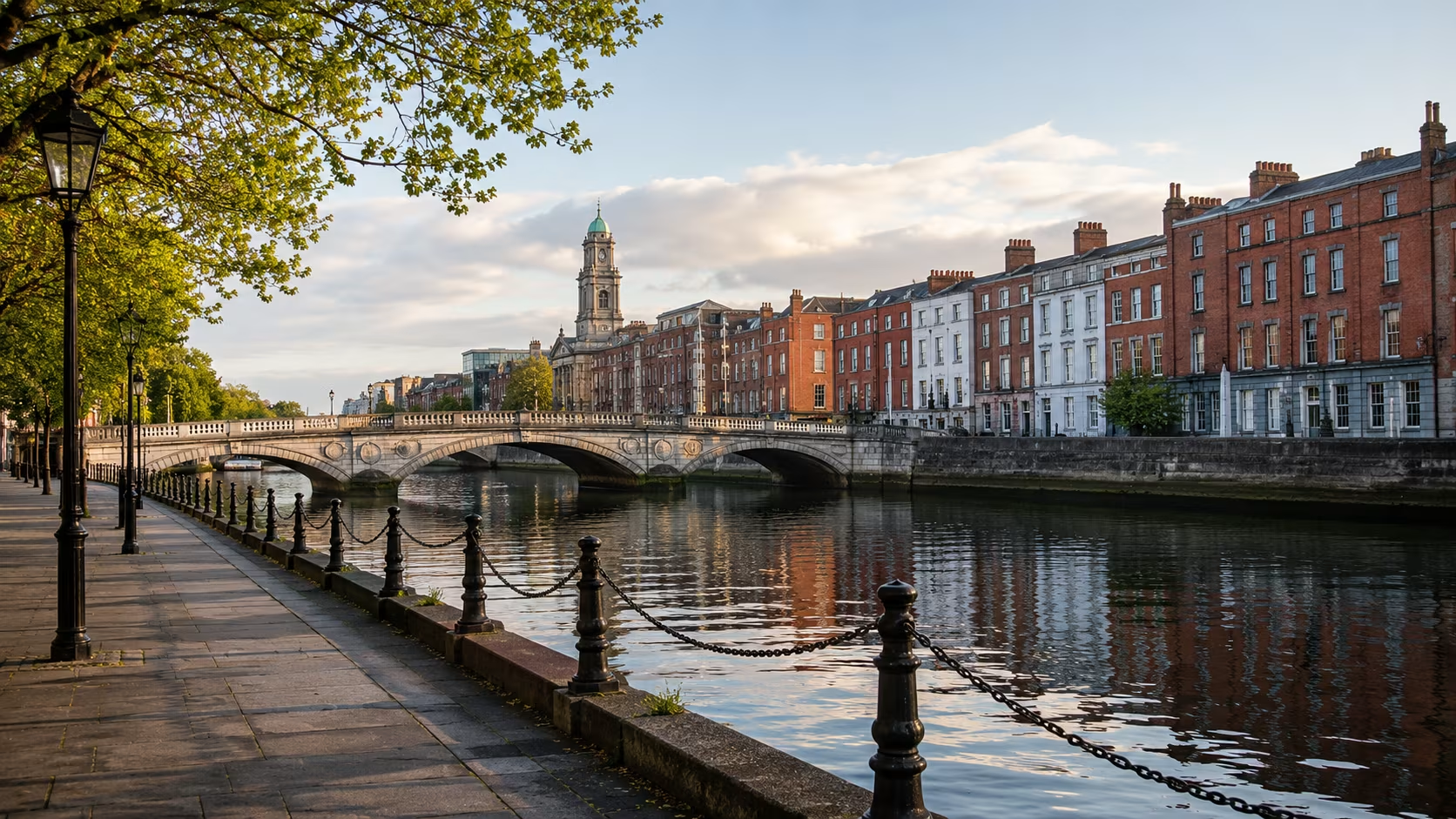
Dublin is small. The compact city center fits inside roughly 2 km × 1.5 km, which means most first-time visitors over-schedule what's already a walking-distance city. The other common mistake is treating Dublin as a 1-2 day stopover before a Cliffs of Moher day trip. The city deserves 3 focused days for the literary sights, the food scene that has improved dramatically since the 2010s, and at least one full afternoon in a real Irish pub doing nothing in particular.
The 2026 city is more polished than the version travelers visited in 2014. Dublin's tech-and-finance boom (Google, Facebook/Meta, LinkedIn, TikTok all have European headquarters here) has attracted a young international population, raised hotel and restaurant prices, and produced a creative-class restaurant scene that didn't exist 20 years ago. The Georgian-era architecture, the medieval pubs, and the literary tradition (Joyce, Yeats, Beckett, Heaney all lived here) remain the city's anchor.
This is a 3-day guide for first-time visitors who want both versions.
Quick Facts
| Item | Detail |
|---|---|
| Country | Ireland |
| Currency | Euro (€) |
| Language | English (and Irish/Gaeilge in some signage) |
| Time zone | GMT (UTC+0) / IST (UTC+1) |
| Tourist tax | None (Ireland has no nationwide tourist tax) |
| Best time | May–September |
| Visa | Visa-free for US, EU, UK, Canada, Australia, etc. for 90 days |
| Trip length | 2–3 days |
When to Go
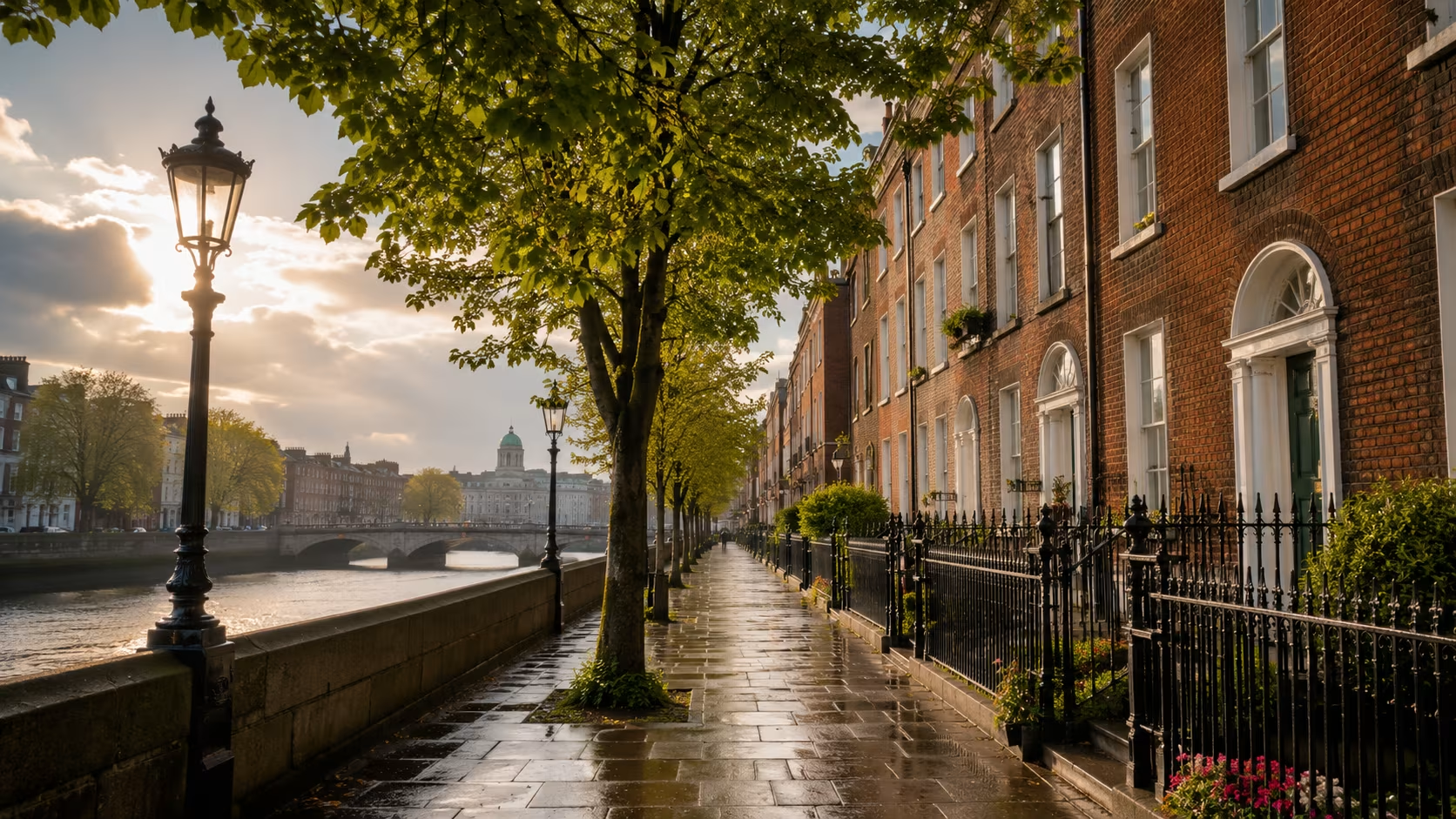
May to September. The sweet spot. Long days (15–17 hours of daylight in mid-summer), weather mild (12–20°C), pub gardens open. Tourist density at peak July-August.
March (around St. Patrick's Day, March 17). The famous parade and festival; a different trip from a quiet visit. Hotel prices triple. Crowds intense.
October to April. Cool to cold (3–11°C), often rainy, occasional snow. Indoor-pub culture peaks; quieter at major sights. The city has its own atmosphere in winter darkness.
Avoid:
- St. Patrick's Day weekend unless you specifically want it.
- Six Nations Rugby home matches (Ireland vs. England, etc.) for booking conflicts.
- Christmas Day when most things close.
Getting in
Dublin Airport (DUB). 12 km north of central Dublin.
From DUB:
- Aircoach: €9 single, 30 min to most central destinations.
- Dublin Bus 16, 41: €4 with Leap Card, 35–60 min.
- Taxi: €30–40, 25–40 min.
- Uber/Bolt: €25–35.
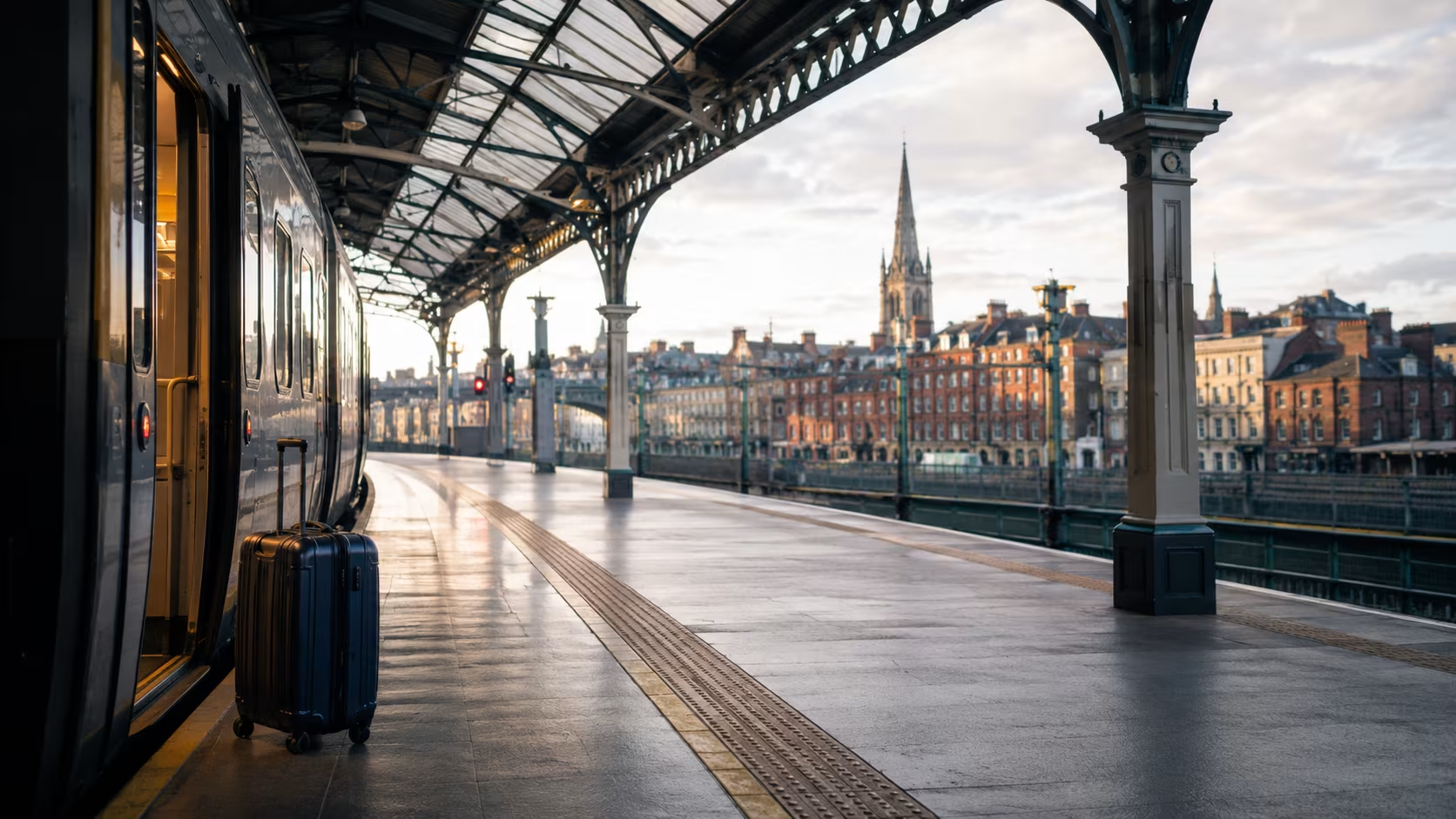
Dublin is also a major rail hub. Trains to Galway (2.5 hours), Cork (2.5 hours), Belfast (2 hours).
Getting Around
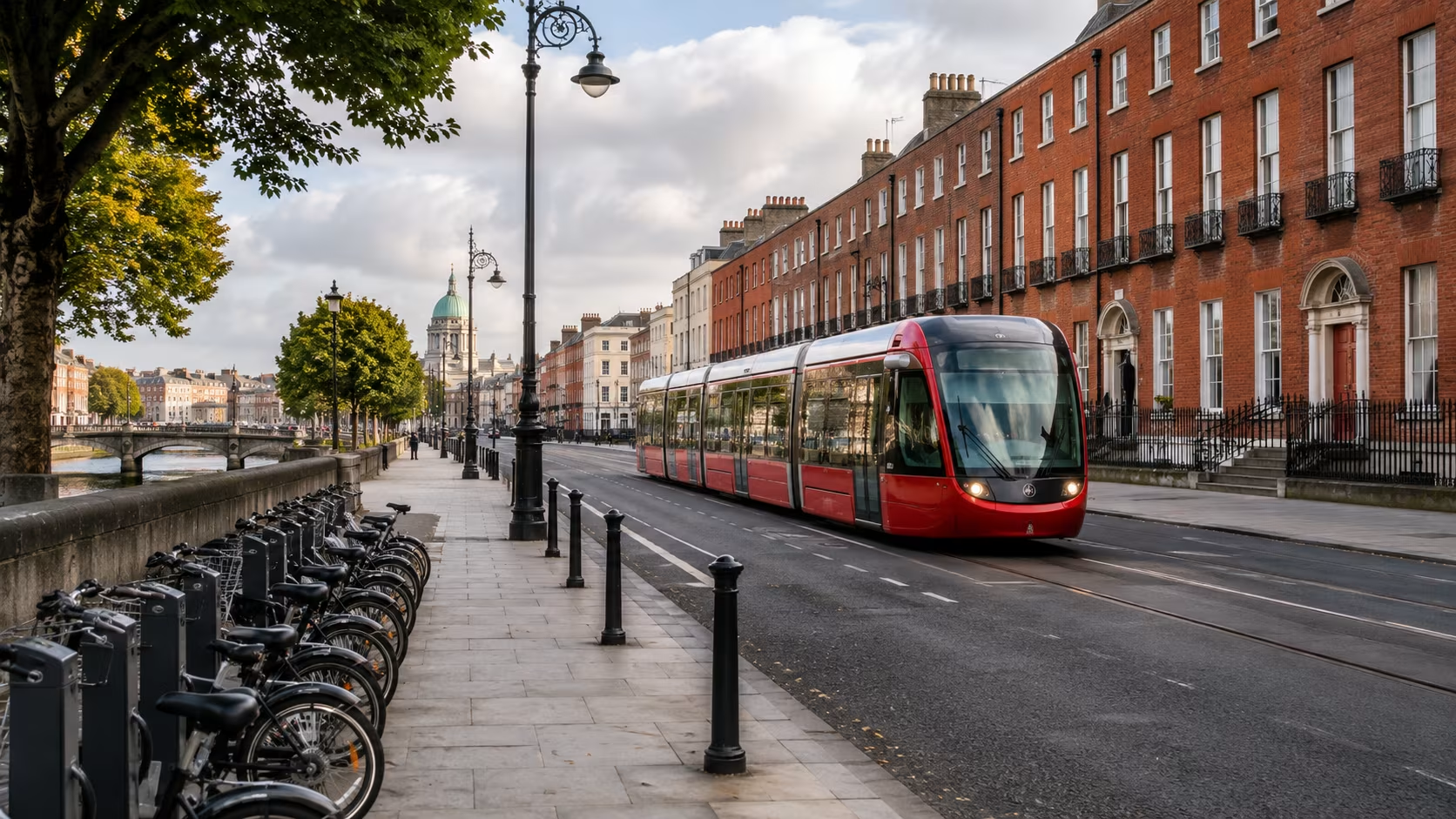
Dublin's central core is more walkable than most European capitals; transit fills in the gaps.
Walking
The central area covers roughly 2 km × 1.5 km. From Trinity College to St. Patrick's Cathedral is a 10-minute walk. From O'Connell Street to Temple Bar is 5 minutes.
Bus + Tram (luas)
Leap Card is the rechargeable smart card. €5 + balance at any retailer. Single bus ride: €2.30; Luas (tram): €2.30. Daily cap: €8 (€8 in 2026 across bus + Luas + commuter rail).
Apple Pay / Google Pay tap-in works on Luas as of 2024. Bus payment still requires Leap Card or exact change.
DART (commuter Rail)
The coastal commuter rail. Useful for Howth, Dún Laoghaire, and other coastal day trips.
Bicycle
Dublinbikes is the bike share. Limited central network; Bleeperbike app-based system has wider coverage.
Taxi
Reliable; metered. Apps: Free Now, Uber, Bolt. Standard fare: €4.10 base + €1.13/km. Average central trip: €10–18.
Where to Stay
Dublin's neighborhoods are more uniform than larger European capitals; the city center vs. suburbs distinction matters most.
Temple Bar
The famous pub district. Touristy, crowded at night, walking distance to most major sights. Boutique hotels in restored buildings.
Trinity / Around the College
Central, quieter than Temple Bar at night. Walking distance to Grafton Street, the Castle, the Liberties. Mid-range hotels.
Merrion Square / Georgian Dublin
The upscale residential heart. Walking distance to St. Stephen's Green, the National Museums. Premium hotels.
St. Stephen's Green
Famous central park. Walking distance to Grafton Street shopping. Mix of premium hotels.
The Liberties
Older neighborhood, gentrifying. Closer to St. Patrick's Cathedral and Christ Church; mid-tier accommodations.
Smithfield / Stoneybatter
Northside districts; smaller boutique hotels in restored buildings. Slightly less central but real neighborhood feel. Connected by Luas.
Avoid as a Base
- Far suburbs (Tallaght, Lucan) — too far for a 3-day trip.
- Around Connolly Station only — convenient for trains but transitional area.
Realistic 2026 nightly prices (4-star, weekday, shoulder):
| Neighborhood | Mid-range | Higher-end |
|---|---|---|
| Temple Bar | €230–340 | €450–800 |
| Trinity / Grafton | €200–320 | €400–800 |
| Merrion Square | €280–420 | €600–1,200 |
| The Liberties | €170–270 | €350–650 |
| Smithfield | €150–230 | €300–550 |
What to Book in Advance
Trinity College Old Library + Book of Kells
The famous 9th-century illuminated manuscript at Trinity College. The Long Room (the magnificent library hall, used in Star Wars: A New Hope) reopened after major renovation 2025. €18.50. Walk-up usually fine off-season; book online for summer to skip queue. Allow 90 minutes.
Guinness Storehouse
The brewery experience and museum. €30 standard; €36 with Gravity Bar pour. Walk-up usually 60+ min queue in summer. Book online. Allow 2.5 hours.
Kilmainham Gaol
The historical prison where leaders of the 1916 Easter Rising were executed. €12. Books out 2-3 weeks ahead. Allow 90 minutes.
Dublin Castle
The historic seat of British rule + current state ceremony location. €12. Walk-up usually fine.
Christ Church Cathedral + Dublinia
€20 combined. The 11th-century cathedral + Viking/medieval museum. Walk-up.
St. Patrick's Cathedral
The largest cathedral in Ireland. €11. Walk-up.
Premium Restaurants
- Chapter One (Michelin two-star). Books 2–4 weeks ahead.
- The Greenhouse (Michelin one-star).
- Liath (Michelin one-star, Blackrock).
Day 1 — Trinity, Georgian Dublin, and Temple Bar
08:30. Coffee in central. 3FE Coffee (multiple locations, the city's premier specialty roaster). Two Pups for casual specialty. Vice Coffee Inc.
09:30. Trinity College. Walk through the front gate (free) and across the cobbled main square. Allow 30 minutes for slow walking.
10:00. Old Library + Book of Kells (booked). Allow 90 minutes including the Book itself + the Long Room (the famous barrel-vaulted library hall).
11:30. Walk to Grafton Street (the city's main pedestrian shopping street). The buskers are a real Dublin tradition.
12:30. Lunch on or near Grafton Street. Chapter One for the full Michelin experience (book months ahead). Avoca Café for casual. The Pig's Ear for traditional Irish modernized.
14:00. St. Stephen's Green. The 9-hectare park in central Dublin. Allow 30 minutes for slow walking.
14:30. Merrion Square. Walk the Georgian-era square. The Oscar Wilde statue at the corner. The colorful Georgian doors are the iconic Dublin photograph.
15:30. National Museum of Ireland — Archaeology at Kildare Street. Free. Bog bodies, the Tara Brooch, Viking artifacts. Allow 90 minutes.
17:00. National Gallery of Ireland. Free. Strong on Irish artists (Jack Yeats, the Le Brocquy collection). Allow 60 minutes for highlights.
18:30. Temple Bar walk. The famous cobbled streets at the south side of the river. Touristy and crowded; the architectural and cultural density justifies a slow walk-through. The street called Temple Bar itself is the headline.
19:30. Dinner. The Pig's Ear. Pichet (modern Irish brasserie). Etto (Italian-Irish, Bib Gourmand).
21:00. Pub time. Choose:
- The Long Hall (since 1881, traditional Victorian pub).
- The Stag's Head (Victorian institution).
- Mulligan's of Poolbeg Street (since 1782, working-class).
- The Brazen Head (claims since 1198, Ireland's oldest pub).
Avoid the obvious Temple Bar tourist pubs; walk one block off for real local atmosphere.
Day 2 — Liberties + Kilmainham + Guinness
09:00. Coffee.
09:30. Walk through The Liberties (the historic neighborhood west of the central core). The neighborhood has been gentrifying since the 2010s; mix of working-class shops and creative-class new spaces.
10:00. St. Patrick's Cathedral (€11). The largest Irish cathedral; Jonathan Swift was Dean here from 1713–1745. Allow 60 minutes.
11:15. Walk to Christ Church Cathedral (€20 with Dublinia). The 11th-century cathedral with restored medieval crypt. Allow 60 minutes including Dublinia (the Viking/medieval museum).
12:30. Lunch. The Pepper Pot Café in Powerscourt Centre. The Hop House in The Liberties for casual. The Dublin Pizza Company for working-class pizza.
14:00. Walk to Kilmainham. The neighborhood west of Phoenix Park.
14:30. Kilmainham Gaol (booked). The prison where the leaders of the 1916 Easter Rising were executed. Heavy and historically essential. Allow 90 minutes.
16:30. Walk to Guinness Storehouse (15 minutes from Kilmainham).
17:00. Guinness Storehouse (booked). The brewery experience. Allow 2 hours including the Gravity Bar at the top with panoramic city views.
19:30. Dinner near Smithfield or back in central. The Brewmaster (modern Irish in Smithfield). Fish Shop (working-class fish-and-chips, but better). Mr. Fox (modern Irish, mid-tier).
21:00. Smithfield pubs. The Cobblestone (the famous traditional Irish music pub — sit at the back; the front is for the music sessions).
Day 3 — Choose: Howth Day Trip, Cliffs of Moher, or Slow Dublin Day
Path a — Howth Half-Day
The small fishing village 12 km northeast of Dublin. DART train 25 minutes. €3.30 round-trip with Leap Card.
09:30. Train to Howth.
10:00. Walk the Howth Cliff Path (2-hour loop). Cliffs, sea views, lighthouse. Coffee at Howth Yacht Club (member-only access; alternatives nearby).
12:30. Lunch in Howth village. The Brass Monkey for casual. The Bloody Stream for upscale.
14:00. Train back to Dublin.
15:30. Free afternoon back in Dublin.
Path B — Cliffs of Moher Day Tour
The famous Atlantic cliffs in County Clare, 250 km west.
Most travelers do this as a full-day tour with bus pickup in Dublin. Wild Rover Tours, Paddywagon, Iconic Tour Company all offer day tours: €60–80 per person; pickup 06:30, return 21:30.
Real talk: the Cliffs are spectacular but the day is long. 12+ hours of bus + 2 hours at the cliffs. Worth it if you have only 3-4 days in Ireland and won't be returning west independently. If you have more time in Ireland, drive yourself or take the train to Galway and do the cliffs from there.
Path C — Day Trip to Glendalough
The medieval monastic site in the Wicklow Mountains, 50 km south. Round Tower, ruins, two scenic lakes. Day-tour pickup or rental car. Half-day excursion.
Path D — Slow Dublin Day
Morning at the National Museum of Ireland — Decorative Arts and History (Collins Barracks, free). Allow 2 hours.
Lunch at Toner's Pub for traditional working-class atmosphere with food.
Afternoon at the Irish Museum of Modern Art at Royal Hospital Kilmainham. Free. Modern and contemporary art in a 17th-century complex.
Late afternoon at Phoenix Park (Europe's largest urban park, with deer, the Wellington Monument, and the President of Ireland's official residence). Free. Cycling possible.
Evening at one final neighborhood pub.
What to Eat
Irish cuisine has been historically modest; the modern "new Irish" movement has reframed traditional ingredients (potato, beef, lamb, butter, salmon, shellfish) into something more refined.
Headline Dishes
| Dish | What it is |
|---|---|
| Irish stew | Slow-cooked lamb or mutton + potatoes + onions + carrots. The traditional national dish. |
| Boxty | Traditional Irish potato pancake. |
| Coddle | Working-class Dublin stew with sausage, bacon, potatoes. |
| Bacon and cabbage | The Irish-American "corned beef" is actually called bacon in Ireland (cured pork; not corned beef). |
| Fish and chips | Same as British; Irish version often uses fresh whitefish. |
| Black/white pudding | Blood sausage and oat-based sausage. Standard breakfast. |
| Full Irish breakfast | Bacon, sausage, eggs, beans, tomato, mushroom, black/white pudding, soda bread. |
| Soda bread | Quick bread made with buttermilk and baking soda. Traditional. |
| Brown bread | Wholemeal soda bread. Standard accompaniment. |
| Irish stew | The traditional version. |
| Smoked salmon | Irish-cured smoked salmon (cold-smoked). |
| Oysters | Irish oysters from Galway Bay. Best in months with R (September–April). |
| Guinness | Irish dry stout. The national brewery. |
| Whiskey (Jameson, Bushmills, Powers) | Irish whiskey distinct from Scotch (triple-distilled, smoother). |
| Cream liqueur (Baileys) | Modern Irish creation; not traditional but ubiquitous. |
Where to Eat
Modern Irish:
- Chapter One (2-Michelin-star, the top of the city's modern Irish).
- The Greenhouse (1-star).
- Liath (1-star, Blackrock).
- Pichet (modern Irish brasserie).
- The Pig's Ear (modern Irish, Trinity area).
- Etto (Italian-Irish, Bib Gourmand).
- Mr. Fox (modern Irish).
- The Hardy Buoys (Smithfield).
Traditional Pubs with Food:
- Mulligan's of Poolbeg Street (since 1782).
- The Brazen Head (since 1198, oldest pub).
- Toner's Pub (Victorian institution).
- The Long Hall (1881).
- The Stag's Head (Victorian).
- Slattery's of Capel Street (working-class).
Working-Class Casual:
- Bewley's on Grafton Street (since 1840, the historic café).
- Brother Hubbard for breakfast.
- Pepper Pot Café in Powerscourt.
- Honey Truffle for casual.
Costs and Budget
2026 daily budgets per person, excluding flights and hotel:
| Style | Per day | Notes |
|---|---|---|
| Backpacker | €60–95 | Hostel, working-class meals, walking |
| Mid-range | €110–170 | Mix of casual and proper restaurants, museums, transit |
| Comfortable | €200–290 | Better restaurants, distillery tour, taxis |
| Higher-end | €400+ | Tasting menus, premium hotels, private guide |
Dublin has gotten more expensive since 2018. A working-class pub lunch: €12–22. A sit-down dinner mid-range: €40–70 per person. Premium tasting menu: €150–250.
Practical Info
- Cards. Universal. Most places card-only or contactless.
- Tipping. 10–12.5% at sit-down restaurants if no service charge. €1–2 at pubs for table service. Round up taxis.
- Pubs. Order at the bar; pay when ordering. "Round" culture: when drinking with locals, taking turns paying for everyone's drinks is the norm.
- English/Irish. Universal English; Irish (Gaeilge) appears in some signage. Most tourists won't need any Irish.
- Sundays. Most things open. Many pubs serve traditional Sunday lunch (Sunday roast Irish style).
- Pickpocketing. Real around tourist sites and on busy buses. Standard precautions.
- Weather. Rain expected on most days. Pack waterproof.
- Daylight. Mid-June: 17 hours. Mid-December: 7.5 hours.
- Crime. Generally low. Some petty theft in Temple Bar at night.
Common First-Timer Mistakes
- Spending all your nights in Temple Bar. It's tourist-targeted; the prices are 30-50% above what locals pay; the music sessions are choreographed for tourists.
- Booking the Cliffs of Moher day-tour at the start of an Ireland-only trip. Better to drive west and base in Galway for a few days if exploring the west.
- Skipping Kilmainham Gaol. The 1916 Easter Rising history is foundational to modern Ireland; the prison tour is essential.
- Eating only fast-food in central Dublin. The modern Irish restaurant scene is excellent.
- Paying for the "Irish music experience" at a tourist pub. Real traditional music sessions happen at neighborhood pubs (The Cobblestone, Hughes' Bar) and are free.
- Trying to do Dublin + Galway + Belfast in 3 days. Either Dublin or one regional city, not all.
- Visiting in late November expecting normal weather. Rain is constant; pack accordingly.
- Ordering Guinness at any pub. Real Guinness varies by pub (the slow-pour technique matters). The Long Hall and Mulligan's pour particularly well.
- Not booking the Book of Kells in advance. Walk-up queues exceed 60 min in summer.
- Booking only Temple Bar hotels. Other neighborhoods are quieter and within walking distance.
Final Notes
Three days in Dublin is the right length for a focused first visit. One day for Trinity, Georgian Dublin, and the central core; one day for the Liberties, Kilmainham, and Guinness; one day for a coastal day trip or slow city walking.
The quietest piece of advice: spend 90 minutes at one neighborhood pub on a Tuesday afternoon. Order a slow Guinness, sit in the corner, watch the regulars. The Dublin that stays with you isn't the Trinity College photograph or the Cliffs of Moher; it's the working-class pub at 16:00 on a weekday — where the bartender knows the regulars by name, and the conversation moves between politics and football and storytelling without rushing.
0 Comments
No comments yet — start the conversation.