

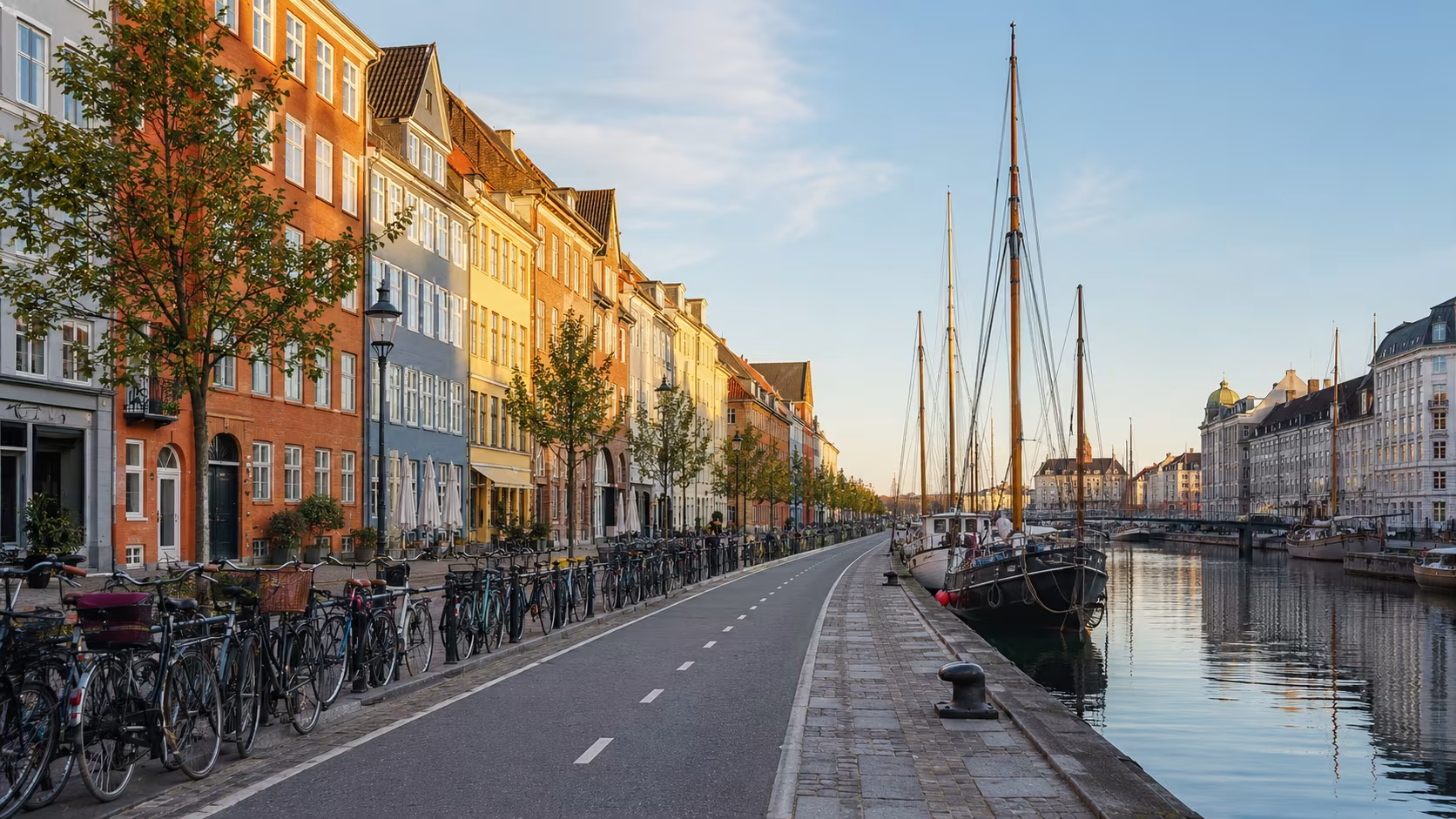
Copenhagen in 2026 is the rare city that lives up to its press. The bicycle infrastructure (50%+ of commutes are by bike), the Nordic food scene that reshaped global fine dining (Noma + the New Nordic movement), the design-forward retail and hotel landscape, the canals and the harbor swimming pools: all real, all genuinely good. The city's reputation as Europe's most livable has gradually become a tourist draw rather than just a residential reality.
The trade-off is cost. Copenhagen is among the most expensive cities in Europe. A casual lunch at a working café runs €25–35; a sit-down dinner mid-range €60–100 per person; a 4-star hotel mid-range €280–380 per night. The travelers who plan accordingly love the city. The travelers who arrive expecting Western European mid-range pricing are often surprised.
This is a 4-day guide for first-time visitors who want the headline experiences (Tivoli, Nyhavn, the Little Mermaid, design shopping) plus the Copenhagen that residents actually live in.
Quick Facts
| Item | Detail |
|---|---|
| Country | Denmark |
| Currency | Danish krone (DKK), ~6.9 DKK/USD or ~7.5 DKK/EUR |
| Language | Danish; English near-universal |
| Time zone | CET (UTC+1) / CEST (UTC+2) |
| Tourist tax | None |
| Best time | May–June, September |
| Visa | Schengen, 90 days for most non-EU |
| Trip length | 3–4 days |
When to Go
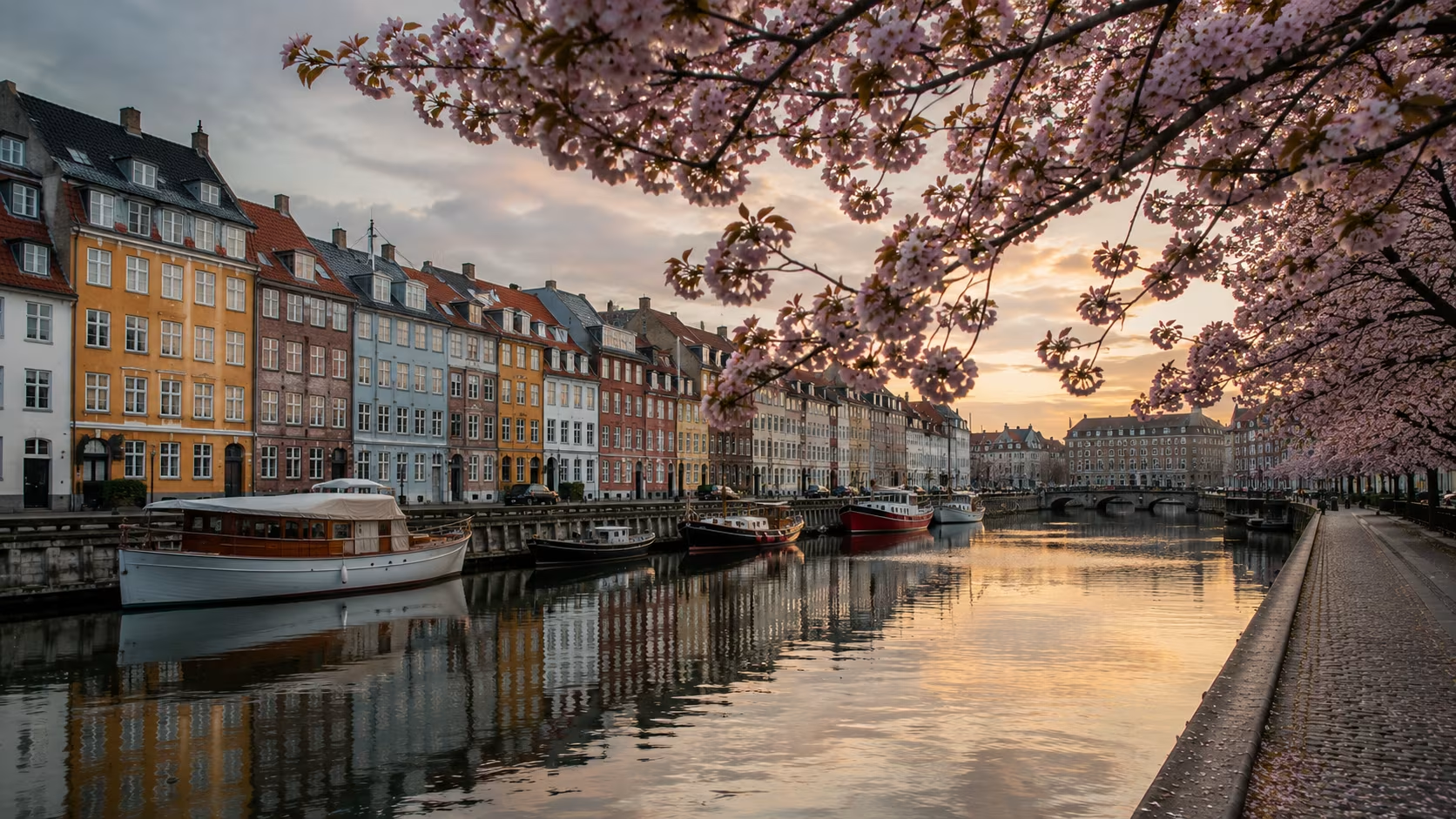
May to June. The sweet spot. Long days (15–17 hours of daylight), parks at their best, harbor swimming starts to be feasible, terrace season opens.
Late June to August. Long daylight (June 21 has 17.5 hours), warmest weather (highs 18–24°C), peak tourist density. Many Danes leave for vacation in July.
September. The other prime window. Schools resumed, weather still pleasant, lower crowds.
October to April. Cool to cold (0–10°C), often gray. Indoor culture takes over: the famous "hygge" cultural concept of cozy indoor warmth peaks in winter. Christmas markets in Tivoli (December) are real local events.
Avoid
- Distortion festival week (early June): Copenhagen's biggest street festival. Wonderful if you want it; problematic if you want quiet.
- Roskilde Festival week (late June/early July): many young Danes go to the festival 30 km west; bars and restaurants quieter that week.
- Christmas Eve and Day: most things closed.
Getting in

Copenhagen Airport (CPH). 8 km southeast of central. One of Europe's most efficient airports.
From CPH
- Metro M2 (yellow): 30 DKK, 14 min to central. Default option.
- Train: 30 DKK, 12 min to central station.
- Taxi: 250–350 DKK, 25 min.
- Uber/Bolt: 200–280 DKK.
Copenhagen is also a major rail hub. Trains to Sweden's south coast (Malmö is 35 min away by train), Hamburg (5 hours), Berlin (7 hours), Oslo (8 hours).
Getting Around
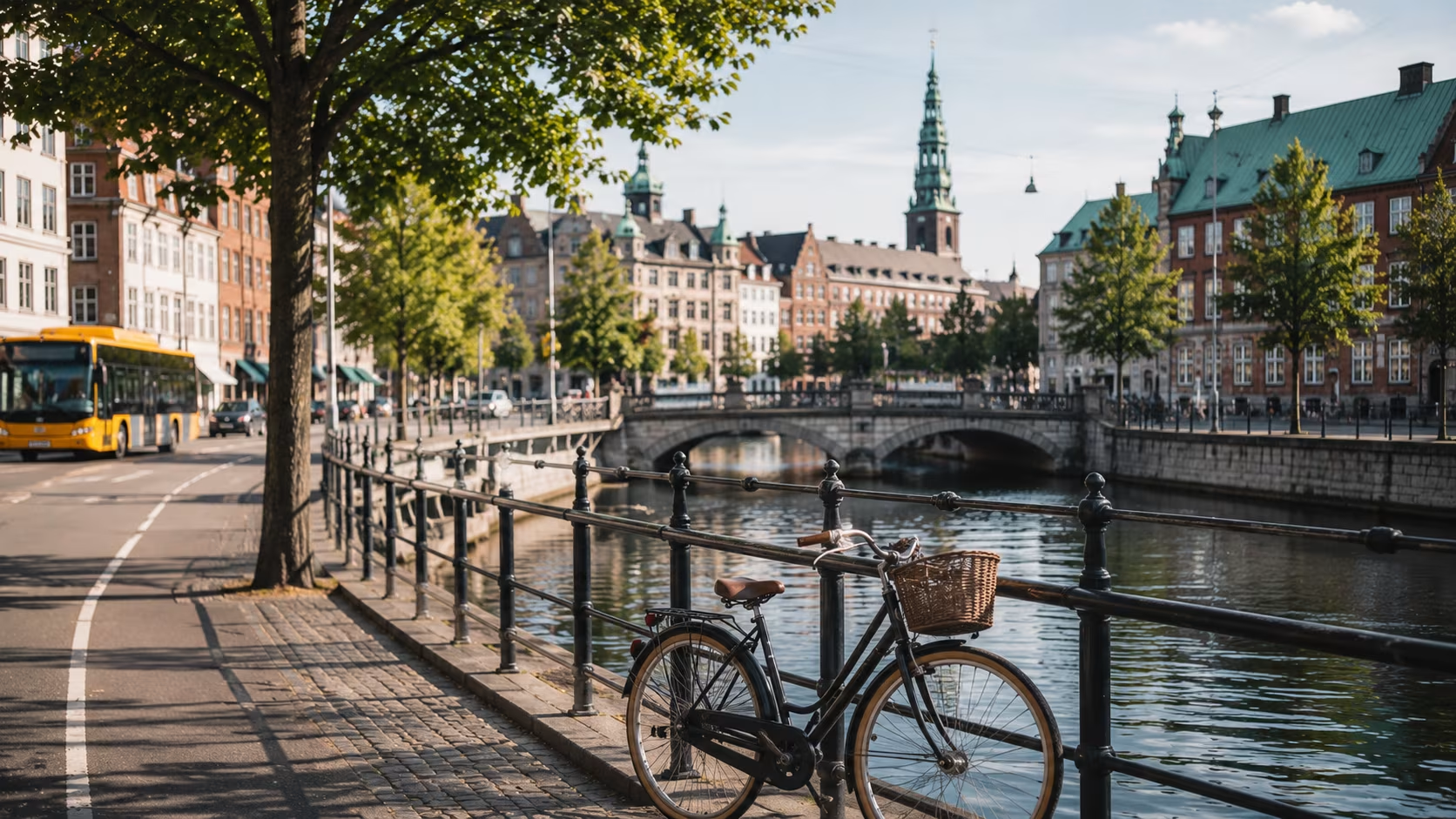
Copenhagen's transit is genuinely excellent.
Bicycle
The city's signature mode. 50% of commutes are by bike. Rentals are easy: Donkey Republic (app-based bike share, ~150 DKK/day for 3+ days). Hotels often have bikes available.
Important Rules for Tourists
- Stay on the right side of bike lanes (the dedicated paved tracks alongside the road).
- Walking on bike lanes is a real safety issue; locals are fast and impatient with tourists.
- Hand signals: stop = arm down with palm flat; left turn = left arm out; right turn = right arm out.
- Helmets are optional; most Danes don't wear them. For tourists unfamiliar with cycling, helmets are worth packing.
Metro + Trains
The metro is fully driverless. M1, M2, M3, M4. Single ride 30 DKK; 24-hour CityPass 80 DKK.
Rejsekort is the rechargeable smart card. Buy at any station. Apple Pay / Google Pay tap-in works on metro/bus/train as of 2024.
Walking
The central tourist core (Indre By, Nyhavn, around Tivoli, Vesterbro) is walkable in 30 minutes corner-to-corner.
Bus
Clean and reliable. Same payment system.
Taxi
TaxiNord, Dantaxi. Apps: TaxiFix, Uber. Standard fares: 50 DKK base + 9 DKK/km. Average central trip 100–180 DKK.
Where to Stay
Copenhagen's neighborhoods (kvarterer) feel different.
Indre by (inner City)
The central tourist core. Strøget shopping street, Royal palaces, government buildings. Walking distance to most major sights. Premium pricing.
Nyhavn / Around the Harbor
The iconic colorful waterfront strip. Classic Copenhagen postcard. Mid-range to higher-end hotels.
Vesterbro
Former working-class neighborhood, now creative-class. Meatpacking District (Kødbyen) is the converted-industrial restaurant zone. Younger, hipper, livelier nightlife.
Nørrebro
Most diverse neighborhood. Multicultural, dense restaurant scene, Assistens Cemetery (where H.C. Andersen and Søren Kierkegaard are buried).
Christianshavn
The historic harbor district built by King Christian IV. Canal-side cafés, small craft shops, walking distance to the alternative Christiania commune (the controversial autonomous district).
Frederiksberg
The upscale residential district (technically a separate municipality). Wide avenues, Royal Frederiksberg Palace, shopping along Gammel Kongevej.
Avoid as a Base
- Far suburbs (Albertslund, Brøndby, Glostrup), too far for short trips.
- North Sjælland: beautiful but distant.
Realistic 2026 nightly prices (4-star, weekday, shoulder, USD equivalent):
| Neighborhood | Mid-range | Higher-end |
|---|---|---|
| Indre By | $260–400 | $500–1,000 |
| Nyhavn | $300–450 | $600–1,500 |
| Vesterbro | $200–320 | $450–800 |
| Nørrebro | $170–260 | $350–650 |
| Christianshavn | $240–360 | $500–900 |
| Frederiksberg | $200–320 | $400–700 |
What to Book in Advance
Tivoli Gardens
The historic amusement park (since 1843, second-oldest in the world). 175 DKK general entry; 295 DKK including unlimited rides. Walk-up usually fine; book online to skip queue. Open mid-April through late September + autumn (Halloween) + winter (Christmas market).
Noma
The most famous restaurant in Copenhagen (and arguably in the world). Closes briefly each year between concept changes. Booking opens 2–3 months in advance; sells out in minutes. ~3,500 DKK per person plus wine pairings.
Geranium
The other 3-Michelin-star Copenhagen restaurant. Books 2 months ahead. Similar pricing.
Christiania Tour
The alternative commune (founded 1971 in former military barracks). Open to the public; photography restricted in some areas. Free to walk in; structured tours available 100–200 DKK.
Round Tower (rundetårn)
The 17th-century observation tower with spiral ramp (no stairs to the top). 40 DKK. Walk-up usually fine.
Frederiksborg Palace
Day trip palace 35 km north. 100 DKK. Train to Hillerød (40 min). Walk-up fine.
Day 1 — Indre by and Tivoli
08:30. Coffee in Indre By. Coffee Collective (multiple locations, the city's most-respected). Andersen Bakery for proper breakfast.
09:30. Strøget, the pedestrian shopping street (1.1 km). Walk it slowly. Most major Danish design houses (Illums Bolighus, Stilleben, Hay) along this strip. The street covers Indre By's heart.
11:30. Round Tower (Rundetårn). 40 DKK. The 17th-century tower with a 209-meter spiral ramp instead of stairs (originally built so a horse-drawn cart could ride to the top). Allow 45 minutes.
12:30. Lunch in Indre By. Aamanns 1921 for traditional smørrebrød. Schønnemann for the same, since 1877. The Royal Smushi Café for the more modern smørrebrød experience.
14:00. National Museum of Denmark. Free. The 17th-century palace with 4,000 years of Danish history. Allow 2 hours minimum.
16:00. Walk to Tivoli Gardens. 175 DKK general entry. Walking the gardens (the rides aren't required). The historic 1843 layout with formal gardens, restaurants, performance stages. Allow 2.5 hours; longer if doing rides.
19:00. Dinner in or near Tivoli. Nimb Brasserie (in the Tivoli compound, upscale Danish). The Nimb Hotel restaurants for various dining. Höst outside Tivoli for modern Danish.
21:00. Tivoli evening lights. The gardens are particularly beautiful after dark with thousands of fairy lights.
Day 2 — Nyhavn, Christianshavn, Christiania
09:00. Coffee in Nyhavn or near.
10:00. Nyhavn. The colorful 17th-century harbor street is the city's iconic photograph. Walk slowly; the painted facades have been lived in by Hans Christian Andersen (#20, #67) and other Danish creative figures. Allow 30 minutes for slow photo-walking.
10:30. Canal tour from Nyhavn (90 DKK, 1 hour). The boat passes the Royal Library Black Diamond, the Royal Opera House, the Little Mermaid. The narration is informative; sitting on a boat for an hour is also restful.
12:00. Walk across the Knippelsbro Bridge to Christianshavn. 17th-century canal-side district with quieter feel.
12:30. Lunch in Christianshavn. Atelier September (modern). Holm's Bager for casual.
14:00. Church of Our Saviour (Vor Frelsers Kirke). The 17th-century church with a famous external spiral staircase (400 steps). Optional climb (75 DKK) for panoramic view of the city. Allow 60 minutes.
15:30. Walk to Christiania. The autonomous commune founded 1971. Walk through the central area (free). The atmosphere is genuinely different from the rest of Copenhagen: relaxed, colorful, alternative-culture. Pusher Street (where cannabis is openly sold; technically still illegal in Denmark but tolerated) is the controversial focal point. Allow 60 minutes.
17:00. Walk back through Christianshavn. Coffee at Den Plettede Gris for casual.
19:00. Dinner. Restaurant 108 (modern, Michelin-recommended). Restaurant Manfreds for natural-wine modern. BROR for Nordic small plates. Höst mentioned.
Day 3 — Vesterbro, Meatpacking, and the Latin Quarter
09:30. Coffee in Vesterbro. Coffee Collective Jægersborggade. Sonny in Latin Quarter.
10:30. National Museum of Modern Art (SMK / Statens Museum for Kunst). 110 DKK. The largest art museum in Denmark. Strong on Danish Golden Age + modern European. Allow 2.5 hours.
13:00. Lunch in Latin Quarter or Vesterbro. Bæst (modern Italian). Café Atelier September (mentioned). Manfreds for natural wine + small plates.
14:30. Vesterbro. Walk Istedgade (the main commercial street), the small parks, the old slaughterhouses converted to restaurants and design studios.
16:00. Carlsberg Brewery. The historic Carlsberg brewery (founded 1847, the original moved to Frederikshavn in 2008 but the original brewery is preserved as a museum). 240 DKK including a flight tasting. Allow 2 hours.
18:00. Sunset walk. Søerne (the Lakes): the three artificial lakes that border Vesterbro and Nørrebro.
19:30. Dinner at the Meatpacking District (Kødbyen). Hija de Sanchez for Mexican. Mother for Roman pizza. War Pigs Brewpub for craft beer + barbecue. Fiskebar for seafood (institution).
Day 4 — Choose: Frederiksborg Palace, Day Trip to Malmö, or Slow City Day
Path a — Frederiksborg Palace Day Trip
The Renaissance palace 35 km north of Copenhagen. Train: 40 minutes to Hillerød station, then short bus or walk.
One of the largest Renaissance palaces in Northern Europe; built by Christian IV in the early 17th century. Now houses the Museum of National History. 100 DKK. Allow 4 hours including the lake walk.
Path B — Day Trip to Malmö, Sweden
Cross the Øresund Bridge to Sweden. 35 minutes by train (160 DKK round-trip). Different country, different feel. The historic Old Town (Gamla staden), the Turning Torso (the 190-meter twisting skyscraper), Lilla Torg (the small square with cafés).
Path C — Day Trip to Helsingør (elsinore Castle)
Kronborg Castle, the setting of Hamlet. UNESCO. 50 km north. Train: 50 min. 110 DKK. Allow 6 hours including the trip.
Path D — Slow Copenhagen Day
Morning at Designmuseum Danmark (the country's design museum). 130 DKK. The Y-shaped layout covers Danish design heritage from the 18th century to contemporary.
Afternoon at Louisiana Museum of Modern Art (35 km north, in Humlebæk). 145 DKK. One of Europe's most important modern art museums; the building, the gardens, and the collection are all serious.
Evening at a wine bar: Ved Stranden 10 (natural wine), Den Vandrette (Christianshavn).
What to Eat
Danish cuisine is honest and ingredient-focused. The New Nordic movement (Noma + the broader movement) reshaped global fine dining; Copenhagen's mid-tier and casual restaurants follow the same logic.
Headline Dishes
| Dish | What it is |
|---|---|
| Smørrebrød | Open-faced rye-bread sandwich with various toppings. The Danish lunch institution. |
| Frikadeller | Pork meatballs (or pork-veal). Working-class dinner classic. |
| Stegt flæsk med persillesovs | Crispy pork belly with parsley sauce + boiled potatoes. The voted-most-Danish dish (literally, a national vote). |
| Sild | Pickled herring. Multiple preparations (curry, dill, tomato, etc.). Traditional lunch. |
| Rugbrød | Dense dark rye bread. The base of smørrebrød; also breakfast. |
| Wienerbrød | Danish pastries (the actual Danish; what's called "Danish pastry" abroad). |
| Æbleskiver | Pancake balls with apple, eaten at Christmas. |
| Risengrød | Rice porridge. Traditional Christmas Eve dinner starter. |
| Roast Pork | Sunday family meal. |
| Aquavit | Caraway-flavored spirit. Toasted between courses. |
| Carlsberg / Tuborg / Mikkeller | Danish beer. Mikkeller is the modern craft brewery scene leader. |
New Nordic
The global movement that reshaped fine dining: locally-sourced, seasonally-driven, foraging-influenced cooking. Copenhagen has the highest concentration of New Nordic restaurants in the world.
- Noma (the originator, 3-star).
- Geranium (3-star).
- Alchemist (2-star, a 50-course experiential tasting menu).
- Frederikshøj (2-star).
- Hooks (1-star).
- Restaurant 108 (originally Noma's spinoff, now standalone).
- Studio (modern).
- Bror (Nordic small plates).
- Höst (modern Danish, Cofoco group).
- Cofoco restaurants (the larger Cofoco group's various restaurants, accessible-price modern Danish).
Smørrebrød Specifically
Classic Danish lunch tradition. Open-faced sandwich with various toppings:
- Sild (pickled herring) on rugbrød.
- Roast beef with horseradish cream and pickles.
- Smoked salmon with dill and lemon.
- Frikadeller (meatballs) with pickled cucumber.
- Roast pork with red cabbage.
- Egg + shrimp with mayonnaise.
Where:
- Schønnemann (since 1877, the institution).
- Aamanns 1921 (modern interpretations).
- Kompa'9 (working-class).
- Selma (modern).
Working-Class Casual
- Hija de Sanchez for Mexican (in Meatpacking).
- War Pigs for barbecue.
- Mikkeller Bar for craft beer.
- Mirabelle Bakery for casual breakfast.
Costs and Budget
2026 daily budgets per person, excluding flights and hotel (USD equivalent):
| Style | Per day | Notes |
|---|---|---|
| Backpacker | $90–150 | Hostel, smørrebrød lunches, walking, transit |
| Mid-range | $180–280 | Mix of casual and proper restaurants, museums, transit, occasional bike rental |
| Comfortable | $350–500 | Better restaurants, cocktails, taxis |
| Higher-end | $750+ | Tasting menus, premium hotels, private guide |
Copenhagen is among Europe's most expensive cities. A working coffee + pastry: 60–90 DKK. A casual lunch: 150–250 DKK. A sit-down dinner mid-range: 400–700 DKK per person.
Practical Info
- Cards. Universal. Most places card-only or Apple Pay; cash is rare.
- Tipping. Service charge typically included. Round up at cafés. 5–10% at sit-down for good service.
- English. Universal. Older Danes also fluent.
- Sundays. Most museums open. Many shops closed except in tourist zones; restaurants generally open.
- Weather. Cold in winter (often below freezing); rainy in shoulder seasons. Pack waterproof layers.
- Daylight. Mid-June: 17.5 hours. Mid-December: 7 hours. Affects pace of life.
- Pickpocketing. Real around tourist zones (Nyhavn, central station). Standard precautions.
- Bike rules. As above; respect bike lanes.
- Smoking. Banned indoors at restaurants.
- Crime. Among lowest in Europe. Standard urban precautions.
Common First-Timer Mistakes
- Underestimating costs. Copenhagen is expensive. Budget twice what you'd budget for Lisbon.
- Walking on bike lanes. Most-dangerous tourist mistake.
- Visiting the Little Mermaid statue expecting majesty. It's small (1.25 m), surrounded by tour buses, and slightly underwhelming. The 5-minute walk-by is enough.
- Skipping Christianshavn and Christiania. They're the city's most distinctive corners.
- Eating only at chain restaurants because of cost shock. Working-class smørrebrød lunches and Cofoco-group dinners offer good value within Copenhagen prices.
- Booking 1 day for Copenhagen and rushing to Stockholm. Each city deserves 3–4 days.
- Trying to do Frederiksborg + Helsingør + Louisiana in one day. Each is a half-day or full-day excursion.
- Drinking only Carlsberg. The craft beer scene (Mikkeller, To Øl, Amager Bryghus) is excellent.
- Not booking Noma months ahead. Walk-ups don't exist.
- Visiting in November expecting summer light. It's dark by 16:30.
Final Notes
Four days in Copenhagen is the right length for a focused first visit. One Indre By and Tivoli day, one Nyhavn and Christiania day, one Vesterbro and Meatpacking day, one excursion or museum day. A fifth day buys you Louisiana Museum or a Malmö excursion.
The quietest piece of advice: rent a bike for one full day. Ride from Nørrebro through the Lakes, past Tivoli, along the harbor, through Christianshavn, around Christiania, and back. The 4–5 hours on a bike reveals the city the way 60% of residents see it daily: not on foot, not in transit, but at bike pace through dedicated infrastructure. The Copenhagen that stays with you isn't the Nyhavn photograph or the Tivoli ride; it's the way the city has been engineered to be lived in, and the way that engineering shows when you experience it the way locals do.
0 Comments
No comments yet — start the conversation.