


The question of camera vs. phone for travel is more nuanced in 2026 than 2018. Phone cameras have improved dramatically — multi-lens systems, computational photography, AI processing produce images that match dedicated cameras for most use cases. But mirrorless cameras have also improved + dropped in price; the gap between casual photo + serious photo has shifted.
This is a 2026 field guide for travelers deciding whether to pack a real camera + which one to choose.
When Phone Cameras Are Enough
For most travelers, phone cameras are sufficient:
Phone Camera Strengths
- Always with you. No second device to carry or lose.
- AI processing produces better-than-RAW results in many situations.
- Easy sharing to social media + cloud storage.
- Multi-lens versatility (wide, ultra-wide, telephoto on flagship phones).
- Computational photography for night, portrait, panorama modes.
- Video quality matches consumer cameras.
- Free (you already own the phone).
Specific Phone Camera Models 2026
- iPhone 17 Pro / iPhone 17 Pro Max — best Apple computational photography.
- Pixel 10 Pro — Google's AI-heavy approach; excellent low-light.
- Samsung Galaxy S26 Ultra — best telephoto on phone (10x optical).
- Sony Xperia 1 VII — pro-style controls.
Any flagship phone from these brands produces excellent travel photos.
Phone Photography Tactics
- Use ProRAW or RAW mode when serious quality matters.
- Shoot in good light. Phone cameras struggle in true low-light.
- Use telephoto judiciously. Most phone telephoto past 5x is poor quality.
- Manual controls for specific scenes (sunset, fast motion).
- Tripod or stable surface for long exposures + night shots.
- External flash can help with phone photography in some scenarios.
When You Need a Real Camera
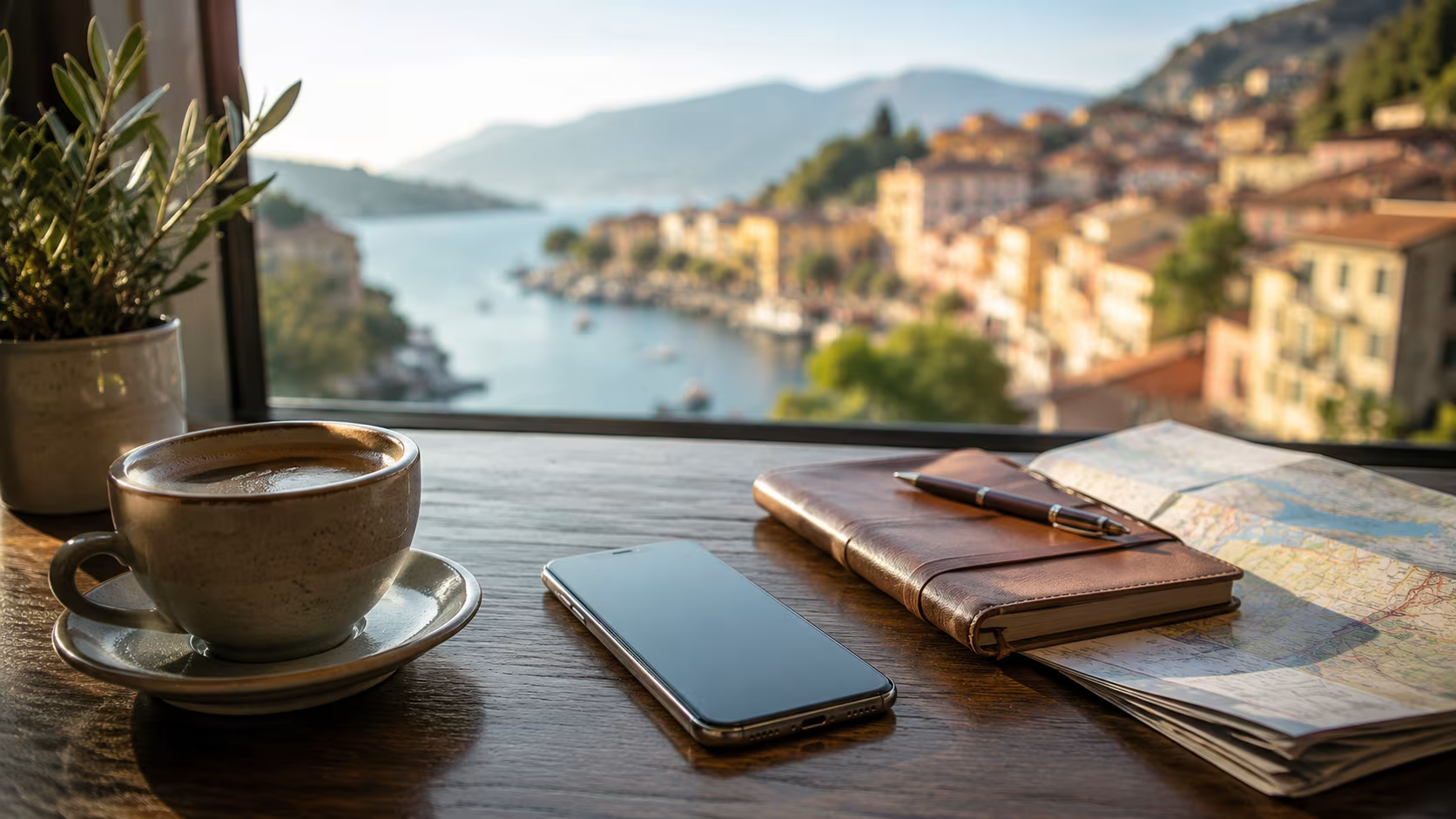
Real cameras (mirrorless or DSLR) outperform phones for:
Specific Scenarios
- Wildlife + sports (long telephoto needed).
- Low light (high ISO + larger sensor).
- Professional event (commercial use).
- Astrophotography.
- Concert photography (low light + telephoto + audio).
- Macro photography (extreme close-up).
- High-end portraits (shallow depth of field with long-focal lens).
- Sports + action (fast shutter + autofocus).
- Print-quality landscape (high resolution + detail).
- Wildlife safari.
- Aurora borealis (long exposure + low noise).
What Real Cameras Provide
- Larger sensors = better low-light performance + dynamic range.
- Long telephoto lenses (200mm-600mm) for distant subjects.
- Wide-angle prime lenses (14mm-24mm) for landscapes.
- Macro lenses for extreme detail.
- Better autofocus for fast-moving subjects.
- Higher resolution for printing or cropping.
- Better video quality at premium tier.
- Manual control over exposure + focus.
- External flash + lighting options.
The Modern Mirrorless Era
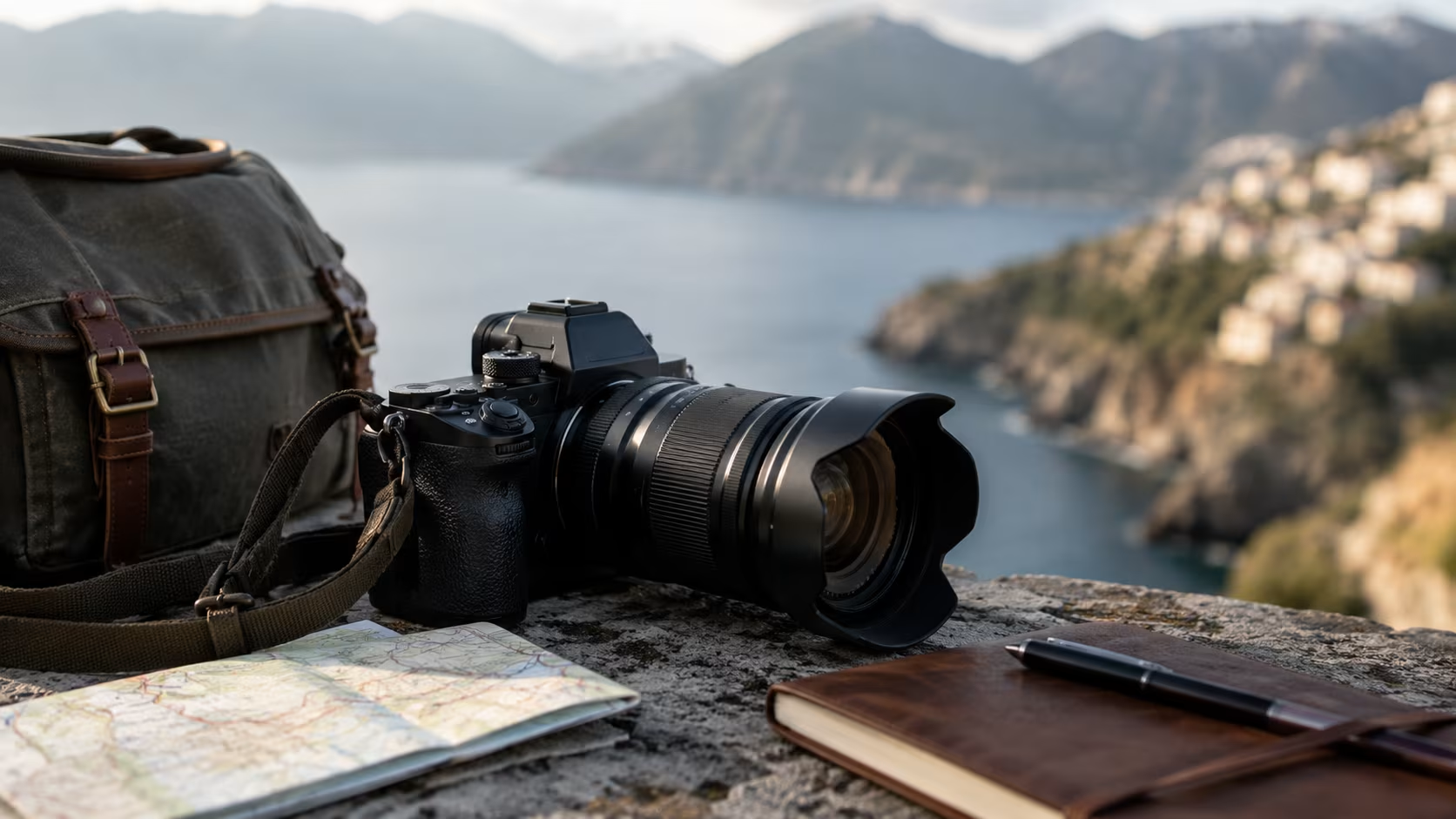
Mirrorless cameras dominate dedicated camera market in 2026.
Why Mirrorless
- Smaller + lighter than DSLRs.
- Better video typically.
- Real-time exposure preview in viewfinder.
- Faster autofocus in modern bodies.
- Better with AI + computational features.
Best Travel Mirrorless Cameras 2026
Sony A7C II ($2,200) — Premium Full-Frame Compact
- Full-frame sensor in compact body.
- 24MP resolution.
- Excellent autofocus.
- Smaller than traditional A7 series.
- Strong video.
For: travelers who want full-frame quality without bulky body.
Sony A7 IV ($2,500) — Versatile Full-Frame
- 33MP sensor.
- Excellent for both stills + video.
- Larger than A7C II but more powerful.
For: travelers wanting one camera for all genres.
Fuji X100VI ($1,600) — Fixed-Lens Compact Premium
- APS-C sensor.
- Fixed 23mm lens (35mm-equivalent).
- Distinctive Fuji film simulations.
- Compact + travel-friendly.
For: street + casual travel photographers wanting a single fixed-lens experience.
Fuji X-T5 ($1,700) — Versatile APS-C
- 40MP APS-C sensor.
- Smaller than full-frame.
- Excellent for travel + landscape.
- Film simulations.
For: travelers wanting smaller mirrorless with strong build + image quality.
Fuji X-S20 ($1,300) — Beginner-Friendly
- APS-C sensor.
- Compact.
- Strong video.
For: entry into Fuji ecosystem.
Canon R6 II ($2,500) — Professional Versatile
- Full-frame.
- Strong video.
- Premium autofocus.
For: Canon-system users.
Canon R10 ($1,000) — Budget Crop Sensor
- APS-C sensor.
- Reasonable autofocus.
- Compact.
For: budget travelers entering Canon ecosystem.
Nikon Z6 III ($2,500) — Premium Versatile
- Full-frame.
- Excellent video.
- Strong stabilization.
For: Nikon-system users wanting modern.
Compact Cameras (Non-Interchangeable Lens)
Ricoh GR III / GR IIIx ($900-$1,000)
- APS-C sensor.
- Fixed 28mm or 40mm lens.
- Pocketable.
- Cult following for street photography.
For: travelers wanting always-with-you compact camera.
Sony RX100 VII ($1,300)
- 1-inch sensor.
- Versatile zoom lens.
- Pocketable.
For: travelers wanting versatile but pocketable.
Fuji X100VI (mentioned above)
Slightly larger than truly pocketable but premium image quality.
Lens Strategy for Travel
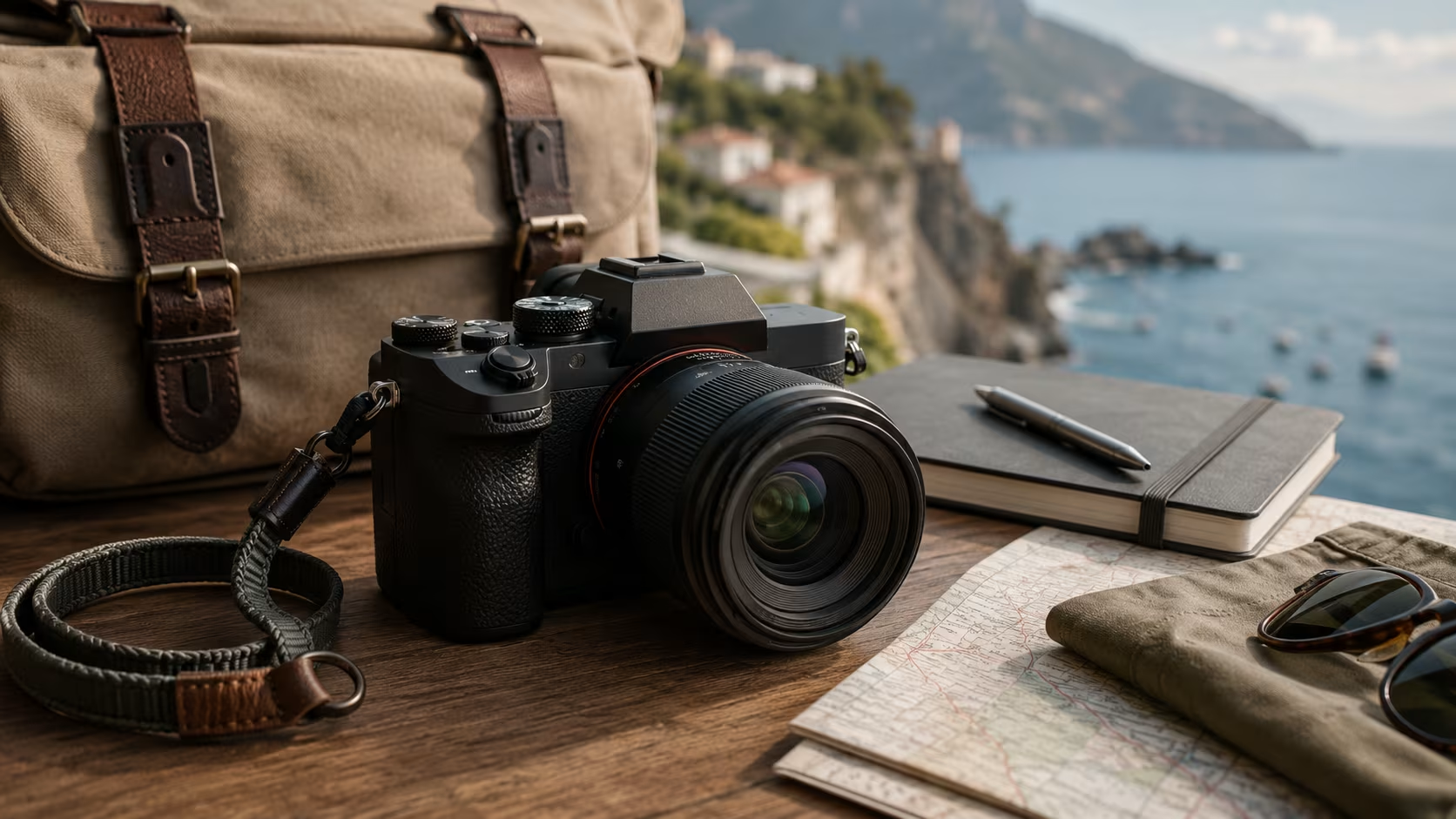
If bringing a mirrorless camera, lens choice matters more than body for most travel:
One-Lens Travel
For most travel, one versatile zoom lens suffices:
- 24-70mm f/2.8 (premium zoom).
- 24-105mm f/4 (most-versatile travel zoom).
- 18-55mm kit lens (budget option).
- 24-200mm or 28-200mm (super-zoom; more reach).
Two-Lens Setup
For more serious photography:
- Wide zoom (16-35mm or 14-24mm) for landscapes.
- Telephoto zoom (70-200mm) for portraits + distant subjects.
Three-Lens Setup (Serious Photographers)
- Wide + Standard zoom + Telephoto.
- 7-9 kg of camera gear; impractical for casual travel.
Prime Lenses
- 35mm or 50mm prime for street + travel.
- 85mm prime for portraits.
- 24mm prime for wide.
- 135mm or 200mm prime for portraits at distance.
Prime lenses are smaller + sharper but less versatile than zooms.
Specific Travel Scenarios
Wildlife Safari (Africa)
Real camera essential.
- Mirrorless body (Sony A7 IV or A1, Canon R5, Nikon Z9).
- Telephoto zoom (200-600mm).
- Wide zoom for landscape (24-70mm).
Street Photography (City Travel)
Camera optional but elevates results.
- Compact camera (Ricoh GR, Fuji X100VI).
- Phone + mirrorless small body (X-S20).
Landscape Photography
Real camera produces dramatically better results.
- Mirrorless full-frame (A7C II).
- Wide zoom (16-35mm).
- Tripod for low-light + long-exposure.
Portrait + People
Phone often sufficient.
- Phone telephoto modes good enough for casual portraits.
- Real camera with 85mm prime for serious portraits.
Astrophotography
Real camera + tripod essential.
- Mirrorless with low-light performance.
- Wide-angle lens (14-24mm f/2.8 ideal).
- Sturdy tripod.
- Remote shutter.
Concert / Event Photography
Real camera essential for low-light + telephoto.
- Premium mirrorless body.
- Telephoto lens (70-200mm f/2.8).
Macro Photography
Real camera + macro lens. - 100mm macro is the standard.
Underwater Photography
Real camera + housing.
- Compact camera + housing for casual snorkeling.
- Premium mirrorless + housing for diving.
Pack-Friendly Camera Setups
Setup 1: Phone Only
- iPhone 17 Pro or equivalent + protective case + cleaning cloth.
- Total weight: in your pocket.
- Result: excellent for 95% of travel scenarios.
Setup 2: Phone + Compact Camera
- Phone for everyday.
- Ricoh GR IIIx ($1,000) for serious moments + street photography.
- Total weight: ~270g additional.
- Result: premium results when wanted; phone for casual.
Setup 3: Mirrorless + Single Lens
- Sony A7C II ($2,200) + 24-105mm f/4 lens (~840g).
- Total weight: ~1.7 kg.
- Result: full-frame quality; one-lens versatility.
- Carry-friendly for serious travelers.
Setup 4: Premium System
- Body (Sony A1 or Canon R5 II).
- Two zooms (24-70mm + 70-200mm).
- Wide prime (35mm).
- Total weight: 3-4 kg.
- For: serious enthusiasts + commercial photographers.
Common Travel Camera Mistakes
- Bringing too much gear. Most travelers carry 50% more than they use.
- Wrong lens for the trip. Telephoto-heavy when wide is needed; vice-versa.
- Forgetting batteries + charger. Pack 2-3 batteries; charger.
- Forgetting memory cards + backup.
- Not using a quality strap. Cheap straps fail.
- Not protecting against dust + moisture in tropical destinations.
- Skipping insurance. Camera gear is expensive; loss insurance worthwhile.
- Bringing camera but not learning to use it before travel.
- Over-relying on automatic modes.
- Not backing up images during trip.
Camera Care During Travel
Daily Care
- Clean lens with microfiber cloth.
- Battery management. 2-3 batteries; charge every night.
- Memory card management. Multiple smaller cards over single large.
- Storage between uses. Camera bag with desiccant in humidity.
Image Backup
- Cloud backup during trip if internet available (iCloud Photos, Google Photos).
- External SSD for daily backup.
- Multiple memory cards rotated.
- End-of-day backup ritual.
Insurance
- Travel insurance typically covers cameras as personal property.
- Specific camera insurance for premium gear.
- Verify coverage limits + adventure activity inclusions.
Specific Add-On Accessories
Worth Bringing
- Strap (good neck or wrist strap; the kit one fails).
- Spare batteries (3+ for full-day shoots).
- Memory cards (2-3 backup).
- Cleaning kit (cloth, blower, lens cleaner).
- Camera bag or insert.
- Lens hood (reduces flare + protects lens).
Optional
- Travel tripod (Peak Design or Manfrotto compact).
- Filters (polarizer + ND for landscape).
- External flash (rare for travel).
- Wireless remote.
Skip
- Heavy professional tripods.
- Multiple zooms covering same range.
- Specialty lenses without specific use case.
Editing on the Road
Apps
- Snapseed (free, mobile).
- Lightroom Mobile (subscription, mobile + cloud).
- VSCO (free + subscription, mobile).
- Affinity Photo (one-time purchase, iPad).
Workflow
- Shoot RAW + JPEG. Edit selectively.
- Daily review + culling. Delete obvious failures.
- Cloud backup during trip.
- Light editing only during trip; serious work back home.
Specific Phone Photography Improvements
Phone Photography Pro Tips
- Tap to focus + adjust exposure. Manual control improves results.
- Use grid lines for composition.
- Lock focus + exposure by tap-and-hold.
- Use HDR for high-contrast scenes.
- Burst mode for action shots.
- Use ProRAW or RAW for serious editing.
- Skip digital zoom beyond 2-3x.
- Use native camera app typically; third-party can have quirks.
- Wipe lens before serious shots.
- Watch your shadow in front-facing shots.
Phone Tripods + Stabilizers
- Compact phone tripod (Peak Design Mobile Tripod, $80) for long exposures.
- DJI Osmo Mobile ($200) for video stabilization.
- Rolling Square inCharge for cable management.
When to Upgrade Your Camera
Signs You've Outgrown Phone
- Cropping heavily to extract subjects.
- Wanting blurred backgrounds (shallow depth of field).
- Frustrated with low-light results.
- Wanting to print large.
- Photographing wildlife or sports.
- Composing seriously + the phone limits you.
When Phone Is Still Enough
- Casual social documentation.
- Sharing primarily on social media.
- Traveling without photography focus.
- Wanting minimal weight.
Used Camera Market
Pros
- 30-50% off retail for premium bodies.
- MPB.com, KEH.com, Adorama Used are reputable.
- Verified condition + warranty options.
Cons
- Older sensor technology in older bodies.
- Battery degradation in used bodies.
- No manufacturer warranty.
For budget-conscious + serious enthusiasts, used premium gear often makes sense.
What to Practice Before Travel
- Manual exposure modes. Aperture priority + shutter priority + manual.
- Focus modes (single, continuous).
- Composition rules + breaking them.
- Editing workflow in your chosen app.
- Quick decision-making between settings.
Common Travel Camera Choices by Traveler Type
Casual Travel Photographer
- Phone only.
- Optional: Compact camera (Ricoh GR, Fuji X100VI).
Engaged Travel Photographer
- Mirrorless + single lens (Sony A7C II + 24-105mm).
- Backup: phone.
Serious Hobbyist
- Mirrorless + 2-3 lenses (premium body + zoom + prime).
- Quality bag + tripod.
Working Travel Photographer
- Premium body + multiple lenses + accessories.
- Professional kit measured by weight in kilos.
Final Notes
The question of phone vs. real camera depends on what you're photographing + what you'll do with it. Phone cameras are dramatically better than 5 years ago. Real cameras offer quality + creative control that phones can't match.
The single best advice most travelers don't need a real camera. The phone in your pocket produces images good enough for memories + social sharing + average prints. The physical + financial cost of bringing a real camera is real; the marginal quality improvement matters mainly for specific scenarios.
The second-best if you bring a camera, bring it deliberately + use it. The traveler who brings a real camera + uses the phone 95% of the time is carrying dead weight. Pick the camera setup matching your actual shooting needs + commit to using it.
The quietest piece of advice the best camera is the one you have with you + use. The most-expensive setup left in the hotel because of weight is worse than the phone always in your pocket. Balance ambition with sustainability — your travel experience matters more than your camera kit.
0 Comments
No comments yet — start the conversation.
Your name, email address and comment are processed to publish and reply to the comment; your email address is never published. Details: Privacy Notice.