

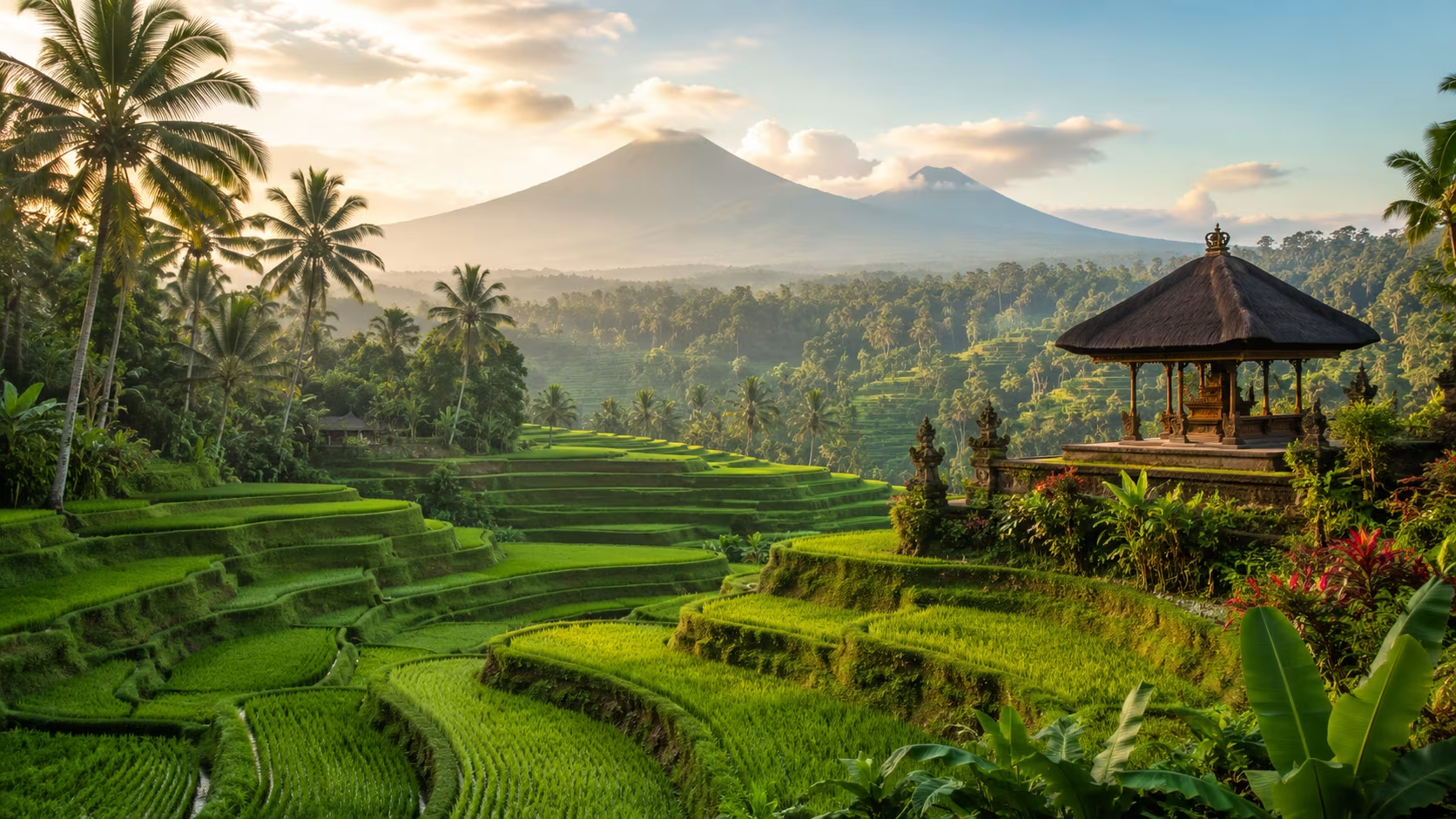
Bali is the island that Instagram built. The Hindu temples, the rice terraces, the surf breaks, the spiritual yoga retreats — all real, all photogenic, all wildly more crowded in 2026 than they were in 2018. The post-pandemic reopening + the explosion of digital nomadism + the introduction of Indonesia's E33G nomad visa in 2024 has made Bali more touristically dense than any island its size has historically been.
The trade-off is real. Canggu, the headline nomad-tourist village, has become traffic-jammed and over-developed. The famous bamboo-house yoga shalas are crowded with Instagram tour groups. The traditional Balinese culture — Hindu rituals, ceremonies, offerings to gods — continues underneath, but locals have raised serious concerns about water access, infrastructure strain, and cultural appropriation that the 2026 visitor will see signs of.
None of this means Bali isn't worth visiting. It means choosing where to stay carefully, when to go (the wet season is dramatically less crowded), and what to look for beneath the Instagram version.
This is a 5-day guide for first-time visitors who want both the postcard Bali and the spiritual island that exists beyond it.
Quick Facts
| Item | Detail |
|---|---|
| Country | Indonesia |
| Currency | Indonesian rupiah (IDR), ~16,000 IDR/USD in 2026 |
| Languages | Indonesian + Balinese; English universal in tourist areas |
| Time zone | WITA (UTC+8, no DST) |
| Tourist tax | $10 levy introduced February 2024 (paid online before arrival) |
| Best time | April–October (dry season) |
| Visa | Visa-on-arrival ($35) for 30 days; B211A and others for longer; E33G nomad visa for long stays |
| Trip length | 5–7 days for Bali alone |
When to Go
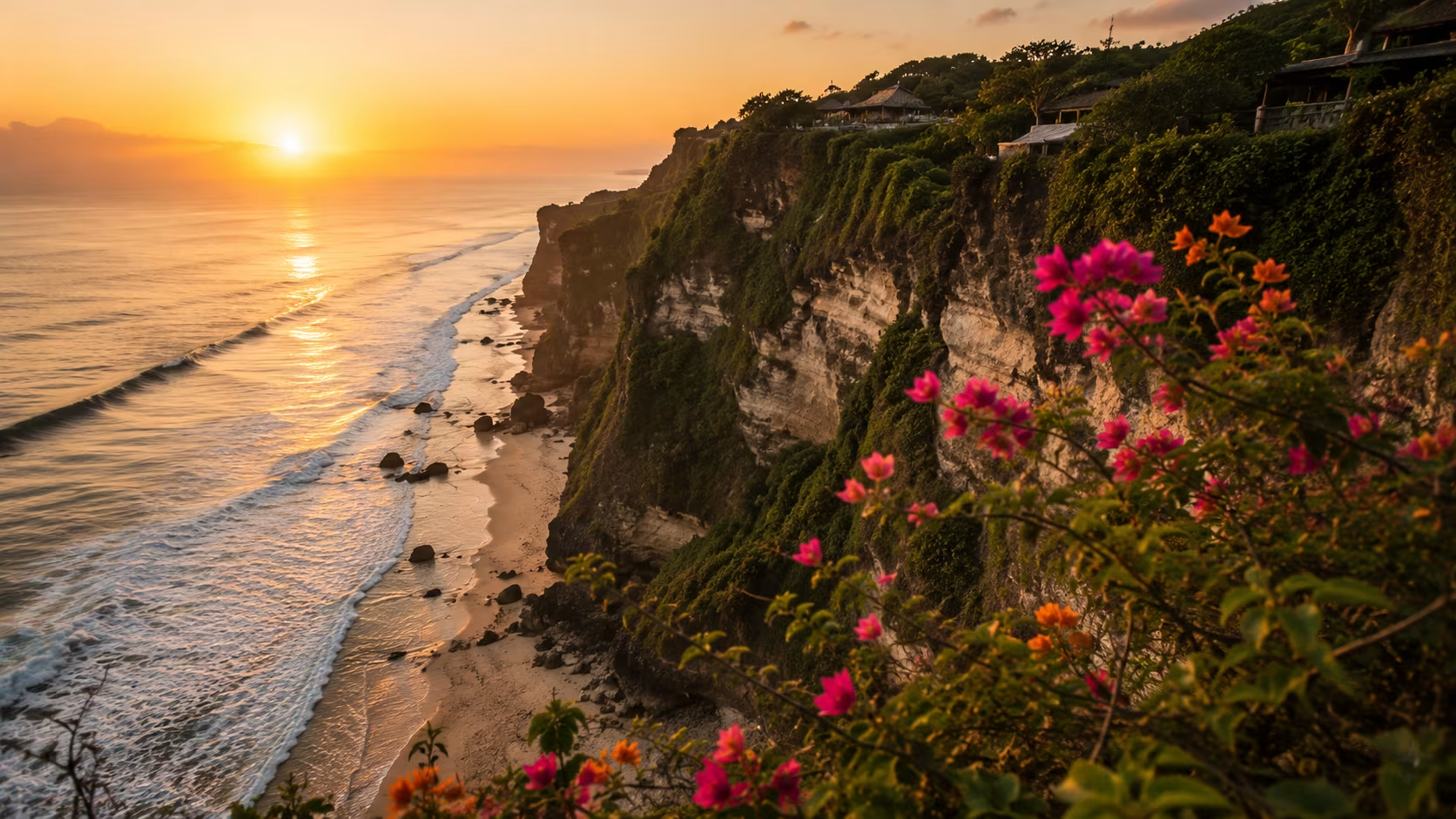
April to October (dry season). The traditional good window. Lower humidity, less rain, surf breaks reliable. July-August is the peak-season high; book months ahead. April-June and September-October are the sweet spot — same weather, fewer tourists.
November to March (wet season). Daily afternoon thunderstorms; mornings often clear. Tourist density at minimum (60-70% lower). Hotels 30-50% cheaper. Prices generally lower. Some surf spots not great in wet season; others (Kuta) are at peak.
Avoid:
- Nyepi (Day of Silence) — usually March. The entire island shuts down for 24 hours; airport closes; no flights; no traffic; no electricity in some hotels. Beautiful for those who experience it; obstructive for those who don't know it's coming.
- Galungan + Kuningan holidays (twice a year, 10 days apart, varying dates) — many businesses close.
- Christmas + New Year's for premium pricing + crowds.
- Late January when monsoon peaks for transportation friction.
Getting In
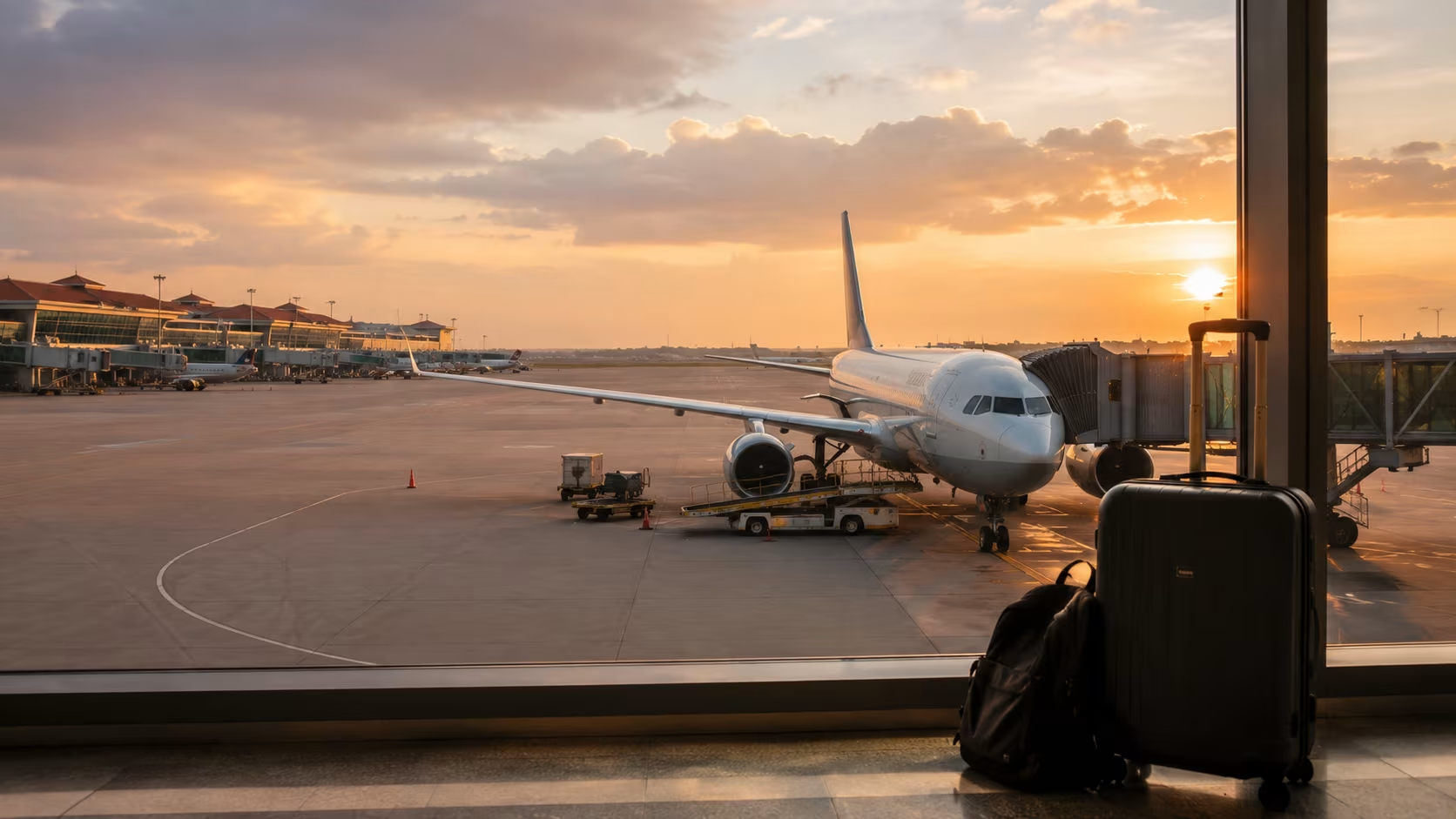
Ngurah Rai International Airport (DPS). 10 km south of Denpasar. The only international gateway.
From DPS:
- Taxi (Bluebird, the trusted brand): 200,000-400,000 IDR ($13-25) to most central destinations.
- Grab: 150,000-300,000 IDR. Reliable.
- Hotel transfer: 250,000-450,000 IDR.
- The new airport rail (planned but not operational through 2026).
Getting Around
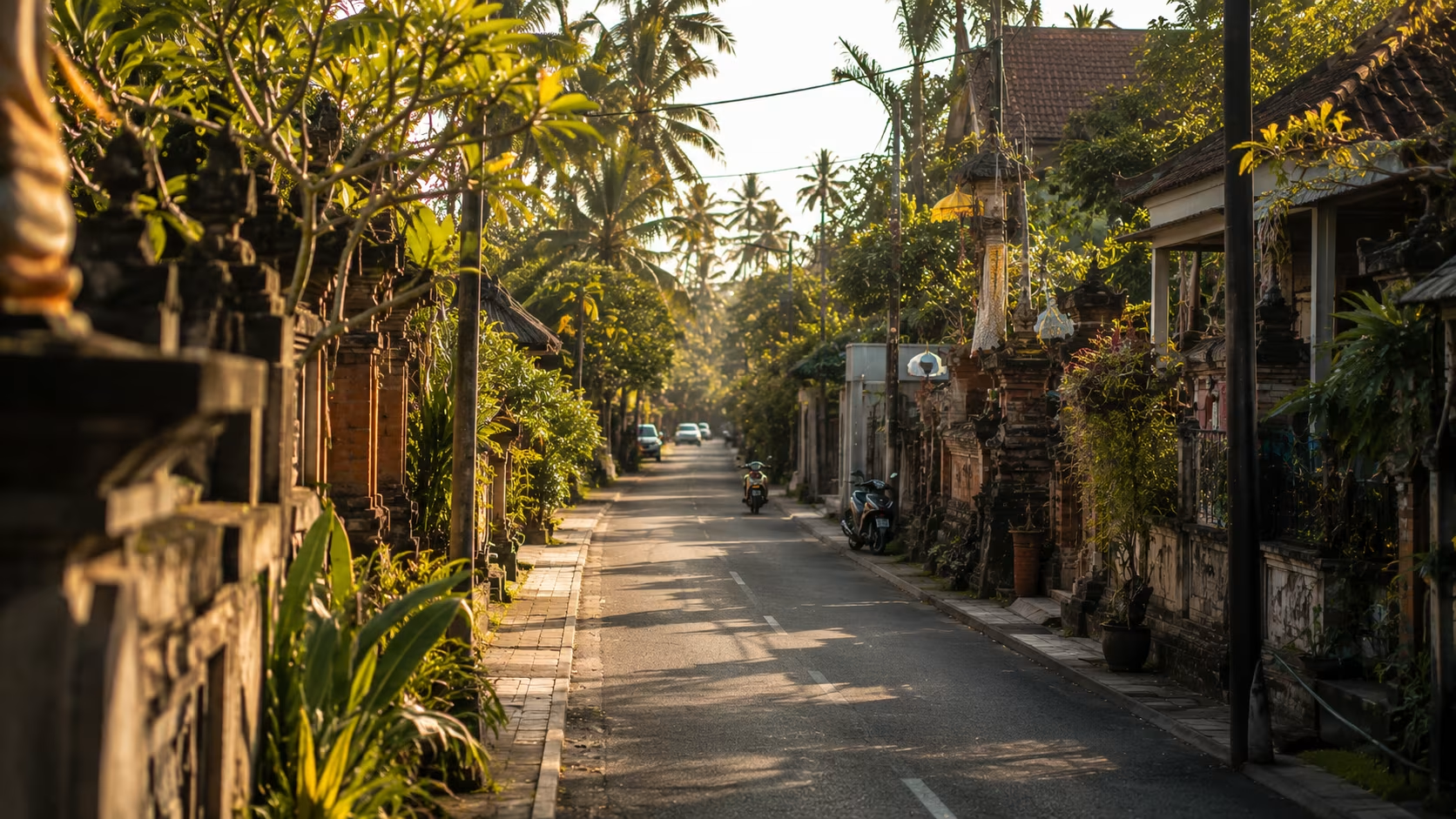
Bali is much larger than first-time visitors expect. The island is roughly 145 km × 80 km. Transit between regions takes time.
Scooter Rental
The traditional Bali tourism mode. 70,000-150,000 IDR/day. Real talk: Bali traffic is brutal; many tourists rent scooters without licenses; the result is significant tourist injury and death rates. Get an international driver's license + actual experience riding before considering. Helmets are mandatory but local enforcement varies.
Private Driver
The practical option for serious tourists. 700,000-1,200,000 IDR per day for a full-day driver with vehicle. Books day-before; many drivers have continuing relationships with hotels.
Grab + Gojek
Operational island-wide. Grab is more reliable in central tourist areas; Gojek is the local-market leader. Average central trip: 50,000-200,000 IDR.
Important: in some areas (especially Canggu, Ubud's outer villages), local taxi associations restrict Grab + Gojek pickups. Drivers may ask you to walk a few blocks for pickup.
Walking
Ubud's central area, parts of Sanur, Seminyak's main strip walkable internally. Between regions: not walkable.
Public Buses (Trans Sarbagita)
Minimal. Most tourists don't use these.
Where to Stay
Bali's regions feel completely different from each other. Pick one as a base, or split between two.
Ubud (Central Bali)
The spiritual + jungle-and-rice-terrace destination. Eat, Pray, Love popularized this. Yoga shalas, art galleries, the Sacred Monkey Forest, Tegallalang rice terraces. Quieter than southern beaches but increasingly crowded with nomads and tourists.
Canggu (Southwest Coast)
The most-developed nomad-tourist village. Surf, beach clubs, brunch culture, scooter traffic. The version that has degraded most since 2018. Mid-range to higher-end villas + boutique hotels.
Seminyak (Southwest Coast)
Upscale resort area. Beach clubs, premium hotels, Western-style restaurants. More polished than Canggu but less character. Family-friendly.
Uluwatu (Bukit Peninsula, far south)
Clifftop dramatic landscapes; the famous Uluwatu Temple; world-class surf breaks; quieter accommodation in luxury villas. Best for surf-focused or upscale-quiet stays.
Sanur (Southeast Coast)
The oldest tourist area. Calmer beach, family-friendly, more traditional Balinese-resort feel. Less Instagram. Older travelers prefer this.
Lovina (North Coast)
Quieter, less developed. Black sand beaches; dolphin watching at dawn; a gentler version of Bali. Multi-hour drive from southern airport.
Avoid as a base
- Kuta — historically party central; now mostly Australian tourist crowd + intense traffic; minimal local character.
- Denpasar (the capital) — utilitarian; not a tourist destination.
Realistic 2026 nightly prices (USD):
| Region | Mid-range | Higher-end |
|---|---|---|
| Ubud | $80-180 | $300-1,200 |
| Canggu | $90-200 | $400-1,500 |
| Seminyak | $100-220 | $400-2,000 |
| Uluwatu | $130-300 | $500-3,000 |
| Sanur | $80-160 | $250-700 |
| Lovina | $50-120 | $200-500 |
Villa rentals are common in Bali — full villas with private pool + cook + driver. For groups of 4+ or longer stays, often comparable to or cheaper than equivalent hotels.
What to Book in Advance
Mount Batur Sunrise Hike
The famous active volcano sunrise hike. 2-hour climb starting at 03:00. Tour packages with pickup: $50-100 per person. Books 1-3 days ahead.
Tirta Empul (Holy Water Temple)
The ancient water purification temple. 75,000 IDR + 100,000 IDR sarong rental. Walk-up.
Uluwatu Sunset Kecak Dance
The traditional fire-dance performance at Uluwatu Temple at sunset. 150,000 IDR. Book day-of online or via hotel.
Yoga Class
Yoga Barn in Ubud (multiple daily classes). Radiantly Alive (Ubud). Pranava Yoga (Canggu). 130,000-200,000 IDR per class.
Premium Restaurants
- Locavore (modern Indonesian, books months ahead).
- Mosaic (Sanur, fine dining).
- Mejekawi at Ku Dé Ta (Seminyak).
- Locavore NXT in Bali — modern.
- Selogen at Mandapa (Ubud).
Day 1 — Arrival + Ubud or Southern Beach
Most flights arrive afternoon or evening. Plan a slow first day.
Arrive at DPS. Driver pickup or Grab.
Drive to your base:
- Ubud: 90 minutes from airport.
- Canggu: 60 minutes from airport.
- Seminyak: 45 minutes from airport.
- Uluwatu: 75 minutes from airport.
Check into hotel; rest; light dinner.
Day 2 — Ubud Day (Even If Staying Elsewhere)
07:00. Coffee at hotel.
08:00. Driver to Ubud (if not already there).
09:30. Tegallalang Rice Terraces. The famous green-stepped landscape. Free entry; small tip for the entry-keeper. 30 minutes for photographs; longer if you walk through. Avoid the scenic-photo locations with paid swings — the prices have inflated and the setup is touristy.
11:00. Sacred Monkey Forest (Mandala Suci Wenara Wana). 80,000 IDR. The sanctuary with 1,200 wild long-tailed macaques. Don't bring food in your bag (they'll grab it); don't make eye contact with the alpha males; don't pet them. Allow 60 minutes.
12:30. Lunch in Ubud center. Locavore (modern Indonesian, book ahead). Sari Organik (organic farm-to-table). Warung Igelanca (working-class Balinese; cheap and authentic).
14:30. Ubud Palace + Saraswati Temple (in central Ubud). Free. 60 minutes.
15:30. Tirta Empul Holy Water Temple (1 hour from Ubud). The 962 AD ancient temple where you can do the traditional water purification ritual. 75,000 IDR. Allow 90 minutes including the bathing.
18:00. Drive back to your base.
19:30. Dinner. Bridges Bali (Ubud) for upscale. Naughty Nuri's Warung (Ubud institution since 1995). Folk Bali (Canggu/Seminyak modern).
Day 3 — Mountain Day
Path A — Mount Batur Sunrise Hike
02:00. Pickup from hotel.
03:30. Trailhead at Mount Batur. Hike up in dark with headlamps; reach summit (1,717m) by 06:00.
06:30. Sunrise from summit. Coffee + simple breakfast brewed by porters. Spectacular.
07:30. Hike down.
10:00. Coffee plantation visit (most tour packages include this) for the famous Luwak coffee — controversial; the civet animals' welfare is genuinely problematic.
12:30. Return to hotel for shower + rest.
Path B — Tirta Gangga Water Palace + Ubud's Outer Temples
For those skipping Mount Batur. Visit:
- Tirta Gangga Water Palace (the royal water palace with stepping-stone fountains).
- Lempuyang Temple (the famous "Gates of Heaven" — the Instagram view spot).
- Tegenungan Waterfall.
Path C — Coffee Plantations + Rice Terraces + Slow Day
For those preferring less hiking:
- Coffee plantations near Ubud.
- Multiple rice terrace viewpoints.
- Lunch at a Ubud farm-to-table restaurant.
Day 4 — Southern Beaches + Uluwatu
09:30. Coffee.
10:30. Uluwatu Temple. The 11th-century clifftop temple. The wild macaques here have been known to steal sunglasses + phones. 50,000 IDR. Allow 60 minutes.
12:00. Lunch in Uluwatu. The Cashew Tree for organic. Single Fin for the famous surf-bar lunch with cliff views.
13:30. Beach time. Choose:
- Padang Padang Beach (small + crowded; the famous Eat Pray Love beach).
- Bingin Beach (climb down a 200-step cliff path; quieter).
- Suluban Beach (cave entrance; surf-focused).
- Nyang Nyang Beach (the long quiet white-sand alternative; 20-min walk down).
16:00. Snack at a clifftop café.
17:30. Uluwatu Sunset Kecak Dance (150,000 IDR). The traditional fire-dance performance, 60 minutes, with the cliff and ocean as backdrop. Books online same-day.
19:30. Dinner. Single Fin (mentioned). El Kabron for Spanish-Mediterranean upscale. Cuca for casual modern.
Day 5 — Your Choice
Path A — Surfing Lesson
Beginner-friendly breaks at Kuta, Old Man's (Canggu), Padang Padang (small days). Lessons at multiple schools: Endless Summer Surf School, Pro Surf School, $40-70 per 90-min lesson.
Path B — Yoga + Spa Day
Morning yoga class at one of Ubud's serious shalas (Yoga Barn, Radiantly Alive).
Lunch at Sari Organik or another Ubud farm-to-table.
Afternoon spa. Traditional Balinese massage at one of Ubud's spas: $30-100 for 60-120 minutes.
Evening at the Ubud Sound + Light show or simply early bed.
Path C — Day Trip to Nusa Penida
The rocky island 30 minutes by speedboat from Bali's east coast. The famous T-Rex-shaped Kelingking Beach + Diamond Beach + Angel's Billabong tide pools.
Day tour packages: $40-80 per person. Note: the boat ride can be rough; some travelers are seasick. The island roads are bad; tour vehicles are jarring.
Path D — Day Trip to Lombok / Gili Islands
The smaller Gili Islands (Trawangan, Meno, Air) off Lombok. 90-minute fast boat. White sand + clear water. Day trips possible but tight; staying overnight is dramatically better.
What to Eat
Balinese cuisine is distinct from broader Indonesian. Hindu influences (Bali is the only Hindu-majority Indonesian island) shape the cuisine — pork is widely eaten (unlike Muslim-majority Indonesia).
Headline Dishes
| Dish | What it is |
|---|---|
| Babi guling | Whole roasted suckling pig. The Balinese signature dish. |
| Bebek betutu | Slow-roasted duck with rich spice paste. Ceremonial dish. |
| Nasi campur | Rice with multiple small dishes (vegetables, meats, sambals). |
| Mie goreng / Nasi goreng | Fried noodles or rice. Indonesian standards. |
| Sate | Skewers (chicken, lamb, pork). Peanut sauce. |
| Lawar | Traditional vegetable + meat + coconut salad. |
| Pepes ikan | Fish wrapped in banana leaf, grilled. |
| Gado-gado | Vegetables + tofu + tempeh + peanut sauce. Vegetarian classic. |
| Sambal | Chili paste varieties. Sambal matah is the Balinese specialty. |
| Kopi luwak | Coffee from beans passed through civets. Animal welfare concerns are real; many tourists skip. |
Where to Eat
Modern Indonesian / Balinese:
- Locavore (Ubud, multi-Michelin-recommended).
- Mejekawi at Ku Dé Ta (Seminyak).
- Mosaic (Sanur, fine dining).
- Bridges Bali (Ubud).
- Selogen at Mandapa (Ubud).
- Cuca (Uluwatu, modern small plates).
Traditional Balinese:
- Naughty Nuri's Warung (Ubud, the famous BBQ ribs).
- Babi Guling Ibu Oka (Ubud, the famous suckling pig institution).
- Warung Sopa (Ubud, working-class).
- Warung Igelanca (Ubud).
Western-Influenced:
- Crate Cafe (Canggu, brunch institution).
- Cafe Vida (Canggu, modern breakfast).
- Folk Bali (multiple locations, modern bistro).
- Sisterfields (Canggu/Seminyak, the famous brunch).
Costs and Budget
2026 daily budgets per person, excluding flights and hotel (USD):
| Style | Per day | Notes |
|---|---|---|
| Backpacker | $20-35 | Hostel, working-class warung meals, scooter |
| Mid-range | $50-90 | Mix of warung and proper restaurants, driver, attractions |
| Comfortable | $130-220 | Better restaurants, premium massage, full-day driver |
| Higher-end | $400+ | Tasting menus, premium villa, helicopter tour |
Bali is dramatically cheaper than other Asian beach destinations like Phuket. A working-class warung lunch: 35,000-65,000 IDR ($2-4). Mid-tier sit-down dinner: 200,000-450,000 IDR ($13-28). Premium tasting menu: 1,500,000-3,500,000 IDR ($95-220).
Practical Info
- Cards. Accepted at hotels and mid-tier+ restaurants. Cash for warungs, markets, smaller transactions. ATMs widely available; bank ATMs preferred over independent kiosks.
- Tipping. 5-10% appreciated at sit-down restaurants. Round up Grab. 30,000-50,000 IDR per day for hotel housekeeping.
- English. Universal in tourist areas.
- Sundays. Most restaurants and shops open. Hindu ceremonies sometimes occur; respect that they may briefly affect normal traffic + service.
- Crime. Low. Standard precautions.
- Heat / humidity. Real and constant. Schedule indoor breaks.
- Sun. UV intense; SPF 50+ mandatory.
- Mosquitoes / dengue. Real risk. Dengue cases have been increasing in Bali. Repellent + long sleeves at dawn/dusk.
- Scooter accidents. A real and persistent tourist problem. Verify your travel insurance covers scooter accidents (many policies exclude).
- Hindu ceremonies. Don't enter temples without proper sarong + sash. Don't walk in front of someone praying. Don't disrupt.
- Photography. Don't photograph women bathing in rivers (a privacy issue locals raise). Don't photograph at private ceremonies without permission.
- The pickle-trap photos. Many of the famous "Instagram swing" + "Gates of Heaven" photos use deceptive angles + reflective tricks. Bring expectations adjusted.
- Garbage problem. Bali has a real waste-management challenge. Some beaches have visible plastic. The local non-profits doing cleanup deserve support.
- Water access friction. Some areas have water-rationing during dry season. Hotels manage; locals struggle.
Common First-Timer Mistakes
- Trying to do everything in one trip. Bali deserves 7-10 days minimum to see different regions.
- Spending all 5 days in Canggu. It's the most-developed nomad-tourist village; missing the spiritual + cultural Bali entirely.
- Skipping Ubud thinking it's only for Eat-Pray-Love tourists. Ubud's rural temples and rice terraces are part of the actual Bali.
- Renting a scooter without experience. Tourist injuries are real and frequent.
- Eating only at Western brunch cafés. Bali's traditional cuisine is genuinely good and dramatically cheaper.
- Not booking premium restaurants in advance. Locavore, Mosaic, Mejekawi all book months ahead.
- Visiting during Nyepi without knowing. The 24-hour island shutdown disrupts plans.
- Drinking heavily at beach clubs. The combination + heat + dehydration is brutal.
- Photographing temples without proper dress. Sarong + sash mandatory; some temples deny entry without.
- Not knowing the Western-developed Canggu vs. traditional Ubud distinction. They're different Balis.
Final Notes
Five days is the minimum for a focused first Bali visit; 7-10 is better. Pick one base + one optional second base (e.g., 3 nights Ubud + 2 nights Uluwatu, or 3 nights Canggu + 2 nights Ubud).
The quietest piece of advice: skip one Instagram-famous spot for one quiet temple visit at sunrise. The 06:30 morning at a working temple — locals making offerings, the smell of incense, the rooster crowing, nothing curated for tourists — reveals more about Bali than any rice terrace photograph. The Bali that stays with you isn't the Gates of Heaven photo; it's the morning you watched the island wake up before the tourists got there.

0 Comments
No comments yet — start the conversation.