

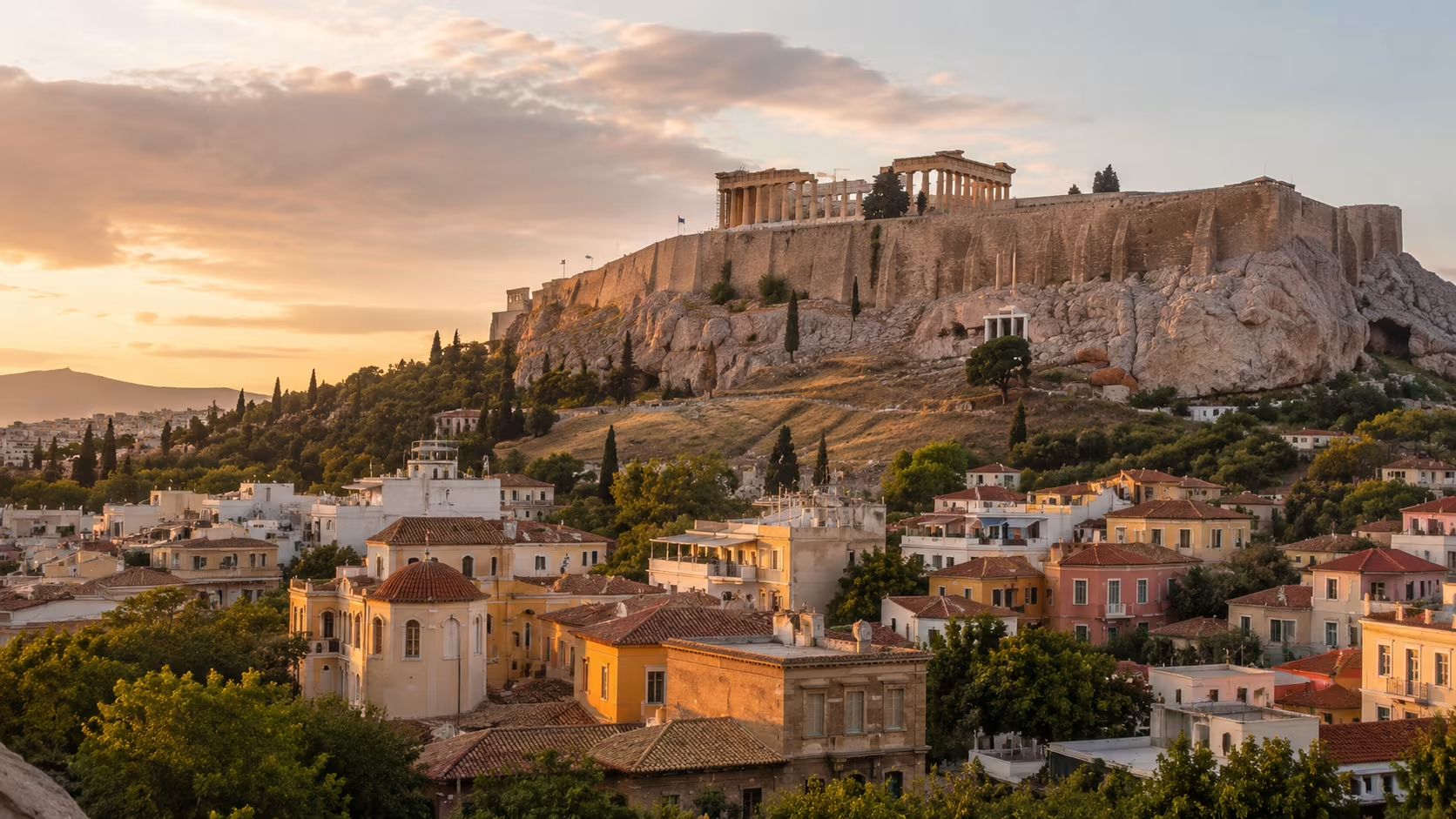
Athens is one of the oldest continuously inhabited cities in the world — settlements dating back 7,000+ years; the classical city that defined Western philosophy, drama, democracy, and architecture. The 2026 city sits on top of all of that. Modern apartment blocks abut 5th-century BC ruins; tavernas operate next to archaeological digs; the Athens Metro stations display artifacts unearthed during construction.
First-time visitors usually plan Athens as a stopover before heading to the islands. The city deserves 3 focused days — enough to see the headline ancient sites, eat well, and walk the modern neighborhoods that have rebuilt themselves since Greece's 2008-2018 financial crisis. The post-crisis transformation has been real: Athens now has its first Michelin-starred restaurants, a serious specialty coffee scene, the Stavros Niarchos Foundation Cultural Center, and a creative-class neighborhood revival in Exarchia and Pangrati.
This is a 4-day guide for first-time visitors who want both ancient Athens and modern Athens.
Quick Facts
| Item | Detail |
|---|---|
| Country | Greece |
| Currency | Euro (€) |
| Language | Greek; English in tourist areas |
| Time zone | EET (UTC+2) / EEST (UTC+3) |
| Tourist tax | €0.50–4 per night by hotel category (climate resilience tax since 2024) |
| Best time | April–early June, mid-September–October |
| Visa | Schengen, 90 days for most non-EU |
| Trip length | 3–4 days |
When to Go
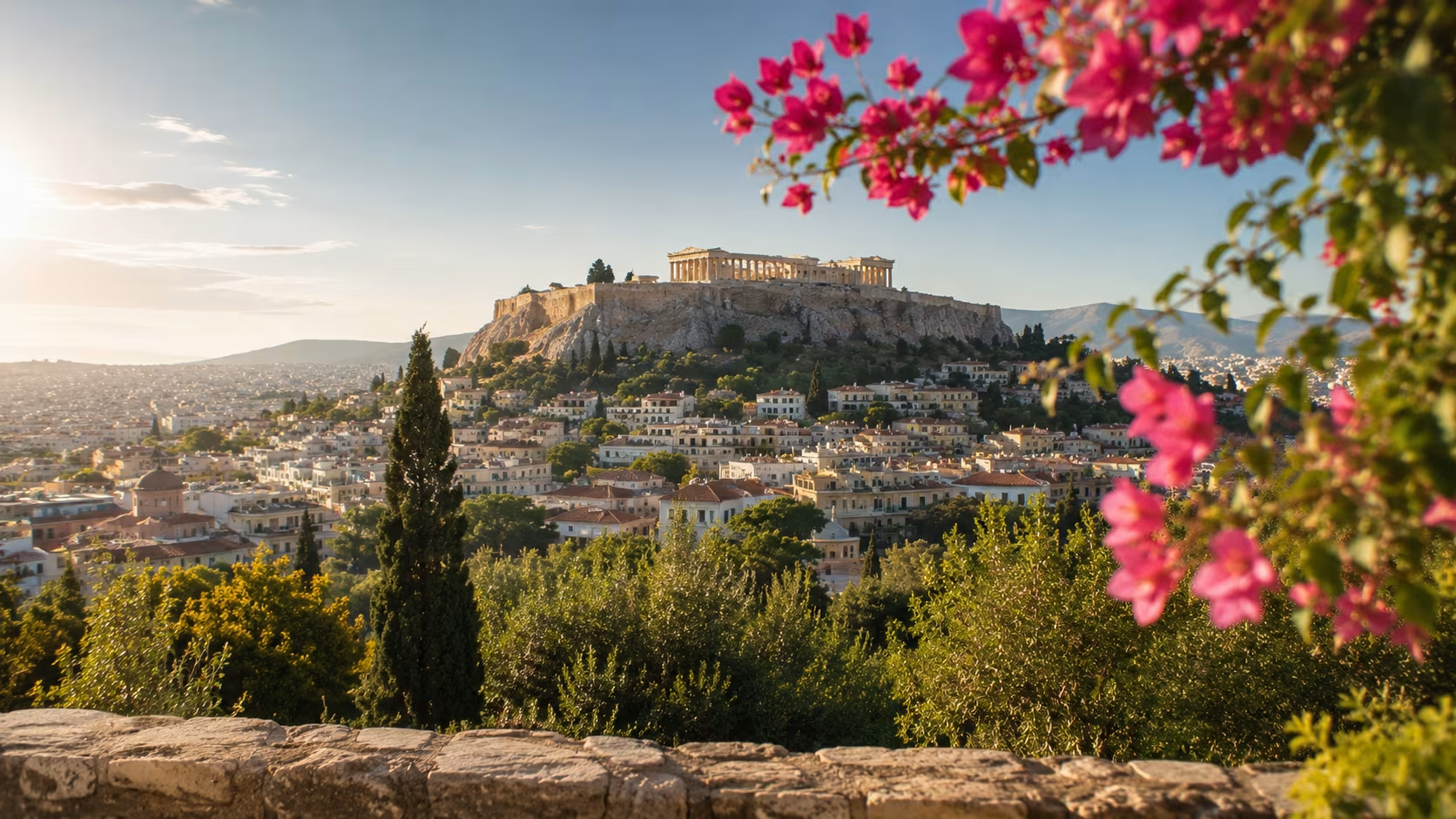
April to early June. The sweet spot. Highs 18–28°C, manageable tourist density, gardens flowering. May is the city's best photographic month.
Mid-September to October. The other prime window. Schools resumed, the islands quieter, autumn light excellent on ancient stones.
June to August. Hot — often 35–40°C+. The Acropolis closes the upper area at midday in extreme-heat days (over 39°C). Many Athenians leave for the islands or the country.
November to March. Cool to cold (5–15°C), occasional rain. The city looks beautiful in winter light. Crowds at major sites drop dramatically.
Avoid:
- Holy Week (around Greek Orthodox Easter, dates vary year-to-year — typically late April or May) — many things close; restaurants packed; transit reduced.
- Mid-July to mid-August for the heat-and-tourist combination.
- Major Greek holidays for closures.
Getting In
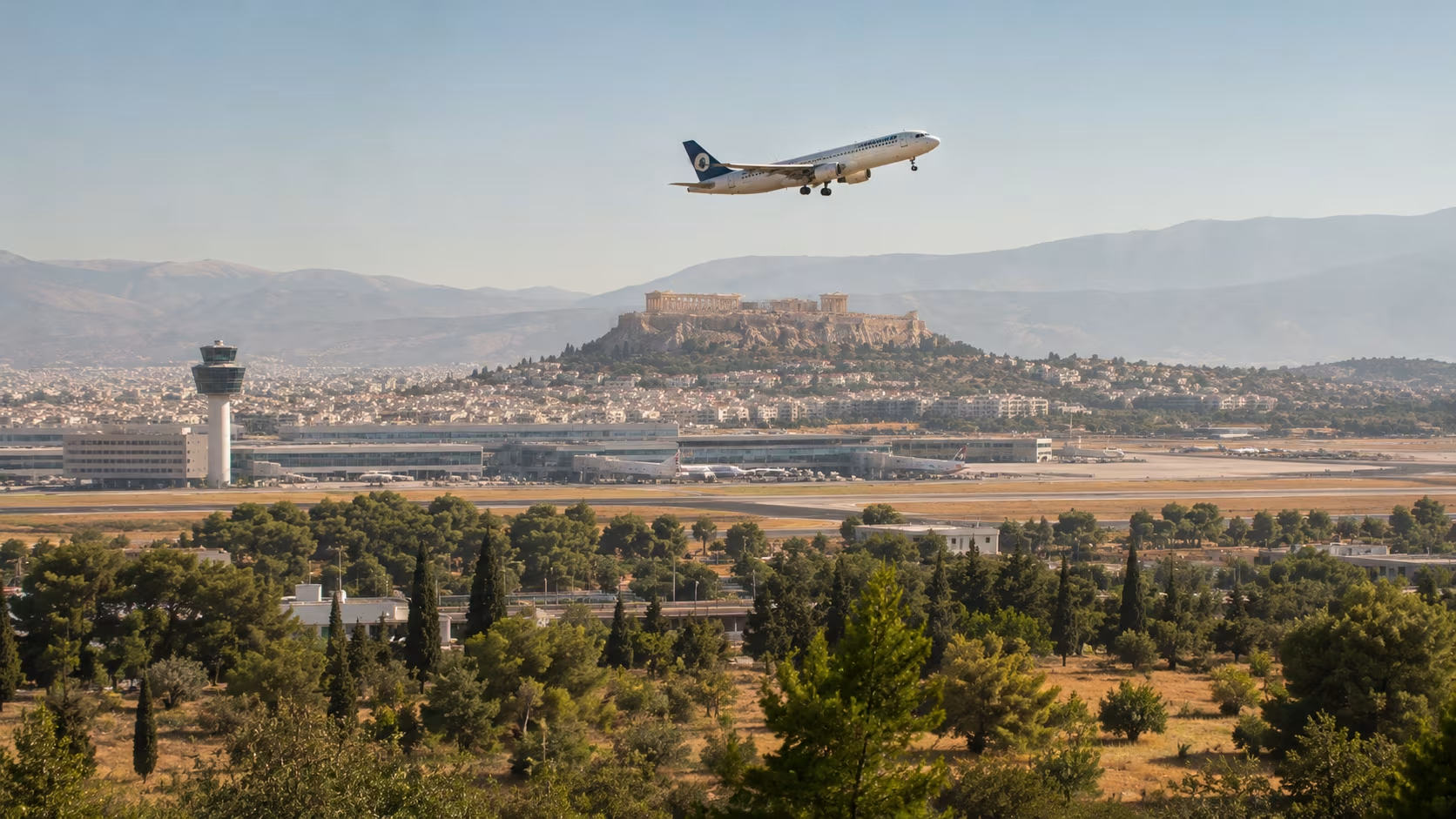
Athens International Airport (ATH). 33 km east of central Athens.
From ATH:
- Metro Line 3 (Blue): €9, 40 min to Syntagma. The default.
- Suburban rail: €9, 38 min to Larissa station.
- Bus X95 (express): €5.50, 60–90 min depending on traffic.
- Taxi: €40 day rate; €55 night rate (flat fare to central).
- Uber/Bolt: €30–45.
Athens is also a major rail hub. Trains to Thessaloniki: 4 hours by ICE. Most international train connections are slow; flights dominate for international travel.
Getting Around
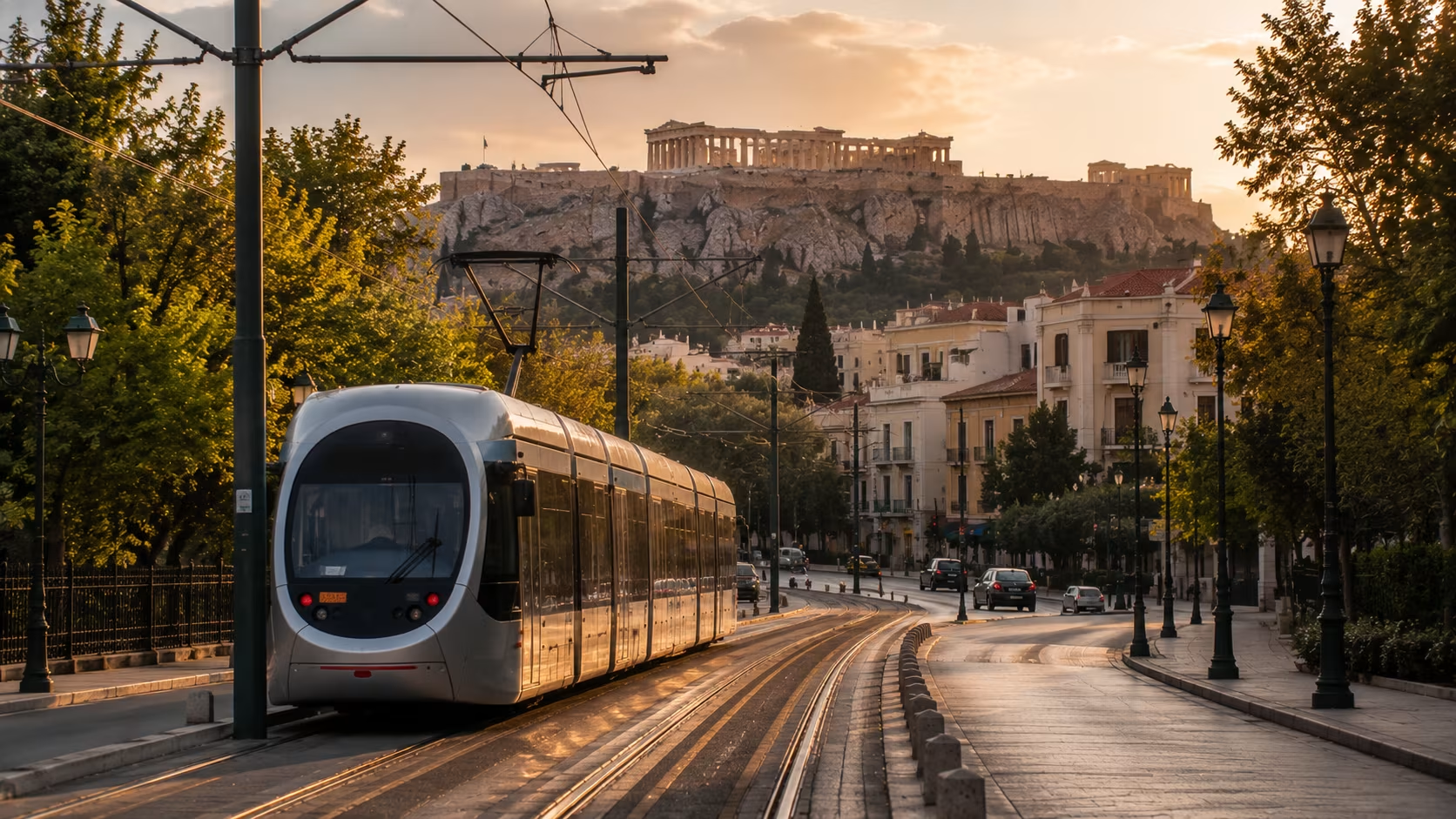
Metro
Three lines (1, 2, 3). Single ride €1.40. 24-hour pass €4.50. Apple Pay / Google Pay tap-in works on most lines as of 2024.
The metro stations themselves are partial museums — multiple stations (Acropolis, Monastiraki, Syntagma) display artifacts found during their construction.
Bus + Tram
Complements the metro. Same payment system. Bus 11 to Pangrati is useful.
Walking
The central archaeological zone (Acropolis, Plaka, Monastiraki, Syntagma) is fully walkable. Most major sights are within 1.5 km of each other.
Taxi / Beat / Uber
Beat (the Greek ride-hail) operates locally. Uber operates as Uber Black only (premium taxis). Standard taxis: €1.20/km. Average central trip: €5-12.
Where to Stay
Athens's neighborhoods feel different from each other.
Plaka
The historic central district. Walking distance to the Acropolis, the Roman Forum, the Ancient Agora. Tourist density at peak. Boutique hotels in restored buildings.
Monastiraki / Thissio
Central. Walking distance to everything ancient + modern. Mid-range hotels.
Syntagma
The political and shopping heart. Walking distance to the Parliament, Plaka, the National Garden. Premium hotels (Hotel Grande Bretagne, King George).
Koukaki
South of the Acropolis, residential. The most-loved neighborhood for slow stays. Walking distance to the Acropolis Museum + Acropolis. Boutique hotels.
Pangrati
East of central. Residential, café-and-restaurant rich, the Panathenaic Stadium area. Less tourist; more local.
Exarchia
The university and political district north of central. Bohemian, anarchist murals, cheap restaurants, boutique guesthouses.
Avoid as a base
- Around Omonia Square at night — the central transit hub; transitional area.
- Far suburbs (Glyfada is fine for beach but distant from sights).
- Piraeus — convenient for ferries but far from archaeology.
Realistic 2026 nightly prices (4-star, weekday, shoulder):
| Neighborhood | Mid-range | Higher-end |
|---|---|---|
| Plaka | €170–280 | €380–700 |
| Syntagma | €200–340 | €450–1,000 |
| Koukaki | €150–250 | €330–600 |
| Pangrati | €110–180 | €260–450 |
| Exarchia | €100–170 | €240–420 |
What to Book in Advance
Acropolis + Acropolis Museum Combined Ticket
Acropolis ticket: €20 (single site); €30 combo with all major Athens archaeological sites (5-day pass). Book the 08:00 first-entry slot online — by 10:00, the Acropolis is mobbed and parts close in extreme summer heat.
Acropolis Museum: €15. Walk-up usually fine; book online to skip queue. Allow 2.5 hours.
Ancient Agora + Roman Forum + Hadrian's Library
Included in Acropolis combo ticket. Walk-up.
National Archaeological Museum
€12. The most important museum in Greece for ancient Greek archaeology. Walk-up usually fine; book online for time slots.
Cape Sounion Sunset Tour
The Temple of Poseidon at the southern tip of Attica. Day tour with sunset: €40-80 per person.
Premium Restaurants
- Spondi (2-Michelin-star). Books 2-4 weeks ahead.
- Hytra (1-star).
- Aleria (1-star).
Sound and Light at the Acropolis
Seasonally available (May-September). 90-minute show. Book online.
Day 1 — The Acropolis Cluster
07:30. Coffee at a Plaka café. The Underdog for serious specialty. Dope Café for casual. Klepsydra for traditional Greek.
08:00. Acropolis (booked, first-entry slot). The 5th-century BC Athenian high city. The Parthenon (the Athena temple), the Propylaea, the Erechtheion, the Temple of Athena Nike, the Theater of Dionysus, and the Odeon of Herodes Atticus. Allow 2 hours.
10:00. Walk down to the Ancient Agora. The classical-era marketplace + civic center. The Stoa of Attalos (a 1953 Rockefeller-funded reconstruction housing the museum). Allow 90 minutes.
11:30. Roman Forum. The 1st-century BC Roman addition; the Tower of the Winds (the world's first weather station + sundial + clock). Allow 30 minutes.
12:00. Walk through Plaka + Anafiotika (the small Cycladic-style village within Athens, built by Aegean-island immigrants in the 19th century).
13:00. Lunch in Plaka or Monastiraki. Klepsydra for traditional. Diporto in the central market for working-class lunch (lentil soup, bean stew, retsina). Karamanlidika tou Fani for Anatolian-Greek.
14:30. Acropolis Museum (booked). The collection has been thoughtfully designed since the 2009 building opened. Allow 2.5 hours.
17:30. Areopagus Hill (free) — the rocky outcrop next to the Acropolis. Or Filopappou Hill (across from the Acropolis, free, the panoramic view).
19:00. Aperitivo. Couleur Locale rooftop. A for Athens in Monastiraki.
20:30. Dinner. Spondi (2-star, book ahead). Hytra (1-star). To Kati Allo for traditional Greek.
Day 2 — Modern Athens
09:00. Coffee in Pangrati or Koukaki.
10:00. National Archaeological Museum. €12. The world's most comprehensive collection of ancient Greek art. Allow 3 hours minimum.
13:00. Lunch near the museum. Café Asomaton. Atrapos for casual.
14:30. Walk Exarchia. The political-bohemian district. Anarchist murals on most walls; second-hand bookshops; the Polytechnic University; the cafés. Allow 90 minutes.
16:00. Lycabettus Hill. The 277m hill in central Athens. Funicular up (€10 round-trip) or hike up (45 min). Panoramic views.
18:00. Walk down through Kolonaki (the upscale shopping neighborhood).
19:30. Aperitivo. Brettos Bar in Plaka (since 1909 distillery + bar with the famous wall of bottles).
20:30. Dinner. Aleria (1-star). Mavro Provato in Pangrati for excellent meze + lamb. Karamanlidika for Greek-Anatolian.
Day 3 — Pangrati + Stavros Niarchos
09:30. Coffee in Pangrati. Tailor Made. Booze Cooperativa. The Coffee Lab.
10:30. Panathenaic Stadium. The 1896-renovated ancient stadium, site of the first modern Olympics + the 2004 Olympic torch relay finish. €10. 60 minutes.
11:30. Walk through Pangrati. Plateia Plastira (the central square), small streets with ouzeries.
12:30. Lunch. To Mavro Provato. Manimani (modern Greek). Spondi if you booked dinner there.
14:00. Stavros Niarchos Foundation Cultural Center (SNFCC). The 2016 Renzo Piano-designed building housing the Greek National Opera + National Library + 21-hectare park. Free entry to most facilities. The rooftop has panoramic views over Athens. Allow 2 hours.
17:00. Walk back through Athens or take the metro.
18:30. Sunset at Cape Sounion (booked). The Temple of Poseidon at the tip of Attica, 70 km from Athens. The sunset over the Aegean from this 5th-century BC temple is one of Greece's iconic experiences. 90-minute drive each way.
Or alternative: walk along Filopappou + Hill of the Nymphs for sunset over the Acropolis.
21:00. Late dinner.
Day 4 — Choose: Day Trip or Slow Day
Path A — Delphi Day Trip
180 km northwest. The classical sanctuary of Apollo. UNESCO. Day tour with bus pickup: €60-100 per person. Allow 12 hours total.
The oracle, the temple ruins, the museum, the dramatic mountain setting. Heavy and historically essential.
Path B — Aegina Island Day Trip
1 hour by ferry from Piraeus. Closest of the Saronic Gulf islands. Pistachio specialty, working-class fishing village atmosphere, the Temple of Aphaea on the island.
Path C — Hydra Island Day Trip
90 minutes from Piraeus. No cars on the island; boats + donkeys for transport. Atmospheric harbor village.
Path D — Slow Athens Day
Morning at the Benaki Museum (private collection of Greek art across all periods, €12).
Lunch in Plaka.
Afternoon at the Numismatic Museum (€8) or Goulandris Museum of Modern Art (€10).
Evening at Brettos in Plaka.
Path E — Beach Day
Glyfada beach (45 min by tram from central) or the trendy beach clubs at Astir or Lake Vouliagmeni. €30-80 entry to clubs.
What to Eat
Greek cuisine has been undersold globally. The Athenian version of Greek food has improved dramatically since the 2008 financial crisis (creative-class chefs returned + opened smaller, more interesting restaurants).
Headline Dishes
| Dish | What it is |
|---|---|
| Souvlaki | Grilled meat skewers, often wrapped in pita with tzatziki + tomatoes + onions. The working-class Greek classic. |
| Gyros | Spit-roasted meat (pork, chicken) shaved and wrapped in pita. Different from Turkish döner. |
| Moussaka | Layered eggplant + meat + béchamel. The casserole classic. |
| Pastitsio | Pasta + meat + béchamel. The lasagna-like classic. |
| Spanakopita | Spinach + feta in phyllo. |
| Tyropita | Cheese in phyllo. |
| Tiropita / Bougatsa | Sweet or savory phyllo pastry. Breakfast classic. |
| Soutzoukakia | Spiced meatballs in tomato sauce. |
| Yemista | Stuffed vegetables (peppers, tomatoes) with rice + herbs. |
| Fava | Yellow split pea purée. Aegean specialty. |
| Horta | Boiled wild greens with olive oil + lemon. Working-class side. |
| Choriatiki | Greek salad. Tomato, cucumber, onion, olives, feta — no lettuce. |
| Loukoumades | Honey-soaked fried dough. |
| Galaktoboureko | Custard in phyllo with syrup. |
| Ouzo | Anise-flavored spirit. |
| Tsipouro / Raki | Stronger anise-free spirit. |
| Frappé | Iced shaken instant coffee with foam. The summer Greek default. |
| Freddo Espresso / Freddo Cappuccino | Iced espresso variants; modern Greek favorite. |
| Greek wine | Assyrtiko (white from Santorini), Agiorgitiko (red), Xinomavro (red). Increasingly recognized internationally. |
Where to Eat
Modern Greek:
- Spondi (2-Michelin-star).
- Hytra (1-star).
- Aleria (1-star).
- Manimani (modern Greek bistro).
- Trito in Koukaki.
- Tasty Choices for casual modern.
Traditional Tavernas:
- To Mavro Provato (Pangrati, the most-respected lamb).
- Karamanlidika tou Fani (Greek-Anatolian).
- Diporto (working-class lunch institution near central market).
- Klepsydra (Plaka traditional).
- Café Avissinia (Monastiraki, traditional Greek with live music some evenings).
Working-Class:
- Bairaktaris (Monastiraki, since 1879, the famous souvlaki institution).
- Kostas for souvlaki + gyro.
- Lukumades for the famous fried-dough sweet.
- Diporto mentioned.
Ouzo Bars (Mezedopoleia):
- Brettos in Plaka (since 1909).
- Athinaikon (since 1932, central).
Costs and Budget
2026 daily budgets per person, excluding flights and hotel:
| Style | Per day | Notes |
|---|---|---|
| Backpacker | €50–80 | Hostel, souvlaki + tavernas, walking |
| Mid-range | €100–160 | Mix of casual and proper restaurants, museums, transit |
| Comfortable | €200–300 | Better restaurants, premium tour, taxis, cocktails |
| Higher-end | €450+ | Tasting menus, private guide, luxury hotel breakfasts |
Athens is genuinely cheaper than Western European capitals, though prices have risen since 2018. A souvlaki + drink: €4-7. A taverna sit-down dinner mid-range: €25-45 per person.
Practical Info
- Cards. Universal in tourism. Cash for some smaller tavernas + working-class stalls.
- Tipping. 5-10% standard at restaurants if no service charge. Round up taxis. Hotel housekeeping €1-2/day.
- English. Common in tourist areas. Less in residential and rural neighborhoods. Younger Greeks speak more English than older.
- Sundays. Most museums open. Many shops closed except in tourist zones. Restaurants generally open.
- Pickpocketing. Real around tourist sites + on Metro Line 1. Standard precautions.
- Heat. Summer is brutal. Schedule indoor breaks; many things close 14:00-17:00 in extreme heat.
- Ancient site closures. Some sites close in extreme heat (>39°C); check on the day.
- Smoking. Banned indoors at restaurants. Outdoor terraces sometimes allow.
- Crime. Generally low. Standard urban precautions.
- Strikes. Greek public sector workers strike periodically; check transit status.
Common First-Timer Mistakes
- Visiting the Acropolis at midday. Heat + crowds peak. Arrive at opening 08:00.
- Spending all day in Plaka. Tourist factories. Walk to Pangrati or Exarchia for real local atmosphere.
- Eating only at restaurants near major sights. Walk three blocks; quality jumps + prices drop.
- Trying to do an island day trip. Most islands are too far for a comfortable day trip; stay overnight if visiting.
- Booking hotels in summer without booking. Athens fills up.
- Underestimating walking distances. The central core is small but cobblestone-and-uphill.
- Skipping the Acropolis Museum. It contextualizes the actual Acropolis ruins.
- Visiting in mid-July expecting a normal city. Many Athenians have left for the islands; many restaurants close for August vacation.
- Drinking heavily during the day. Greek summer + ouzo is brutal.
- Not booking Spondi or Hytra in advance. Walk-ups don't exist for Michelin spots.
- Trying to combine Athens + Santorini + Mykonos + Crete in 7 days. Too compressed; pick one island.
Final Notes
Four days in Athens is the right length for a focused first visit. One Acropolis day, one modern Athens day, one Pangrati + Cape Sounion day, one excursion or slow day.
The quietest piece of advice: walk around the Acropolis at sunset. Free; the surrounding paths (Areopagus, Filopappou Hill) give you the same visual gift as the paid entry — minus the crowds. The Athens that stays with you isn't the photograph from inside the Parthenon; it's the way the marble glows in golden light from below, the way the city wraps around the rock, and the way 2,500 years of continuous civilization produces a city where the ancient and the modern coexist as a daily fact.
0 Comments
No comments yet — start the conversation.