

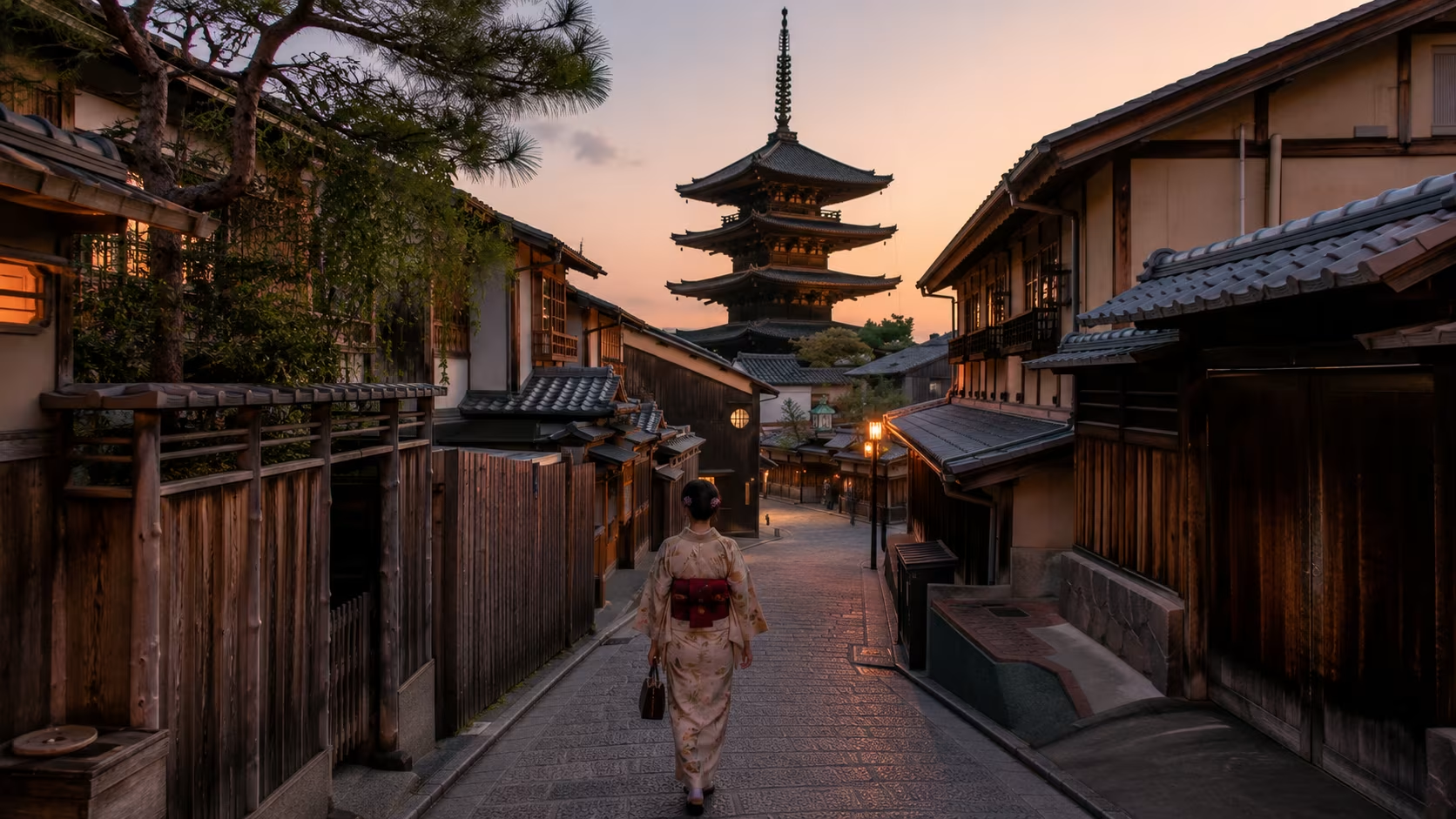
Ten days is the right length for a first Japan trip. Long enough to cover the headline cities and one slower-paced detour. Short enough that you commit to a focused route instead of trying to circle the country.
The usual mistake is splitting 10 days across five cities. The better split is 4 nights Tokyo, 4 nights Kyoto/Osaka, and a 1–2 night detour into the mountains, the smaller cities, or the coast, depending on the season and your interests.
This is a 2026 itinerary worked out at the daily level, with realistic costs, transit logistics, and the trade-offs at each decision point.
Quick Facts
| Item | Detail |
|---|---|
| Currency | Japanese yen (¥), ~¥150/USD in 2026 |
| Language | Japanese; English signage on transit and major attractions |
| Best time | Late March–early April (cherry blossoms), October–November (autumn) |
| Visa | Visa-free for US, UK, EU, Australia, Canada, etc. for 90 days |
| Tourist tax | ¥150–500/night per hotel |
| Time zone | JST (UTC+9, no DST) |
| Departure tax | ¥1,000 included in air ticket price |
When to Go
Late March to early April. Cherry blossom (sakura) season. Specific peak dates shift each year: Tokyo typically March 25–April 5, Kyoto April 1–10. Crowds peak with the blossoms; hotels at 2–3x normal prices. Spectacular.
October to mid-November. Autumn colors (koyo). Cooler, drier, less crowded than sakura season. Kyoto's temple gardens look their absolute best in mid-November.
May. Pleasant, after Golden Week (April 29–May 5; avoid this domestic-travel peak), greenery beautiful, fewer crowds.
June. Tsuyu (rainy season) until mid-July. Skip unless you specifically want hydrangea season.
July–August. Hot and humid. Festivals (Gion in Kyoto in July) are amazing, but you'll sweat through every shirt by 11 AM. Tokyo's Sumida fireworks late July is one of the great urban events.
Winter (December–February). Cold but dry. Tokyo in January is calm and clear. Hokkaido has world-class snow. Kyoto in light snow is achingly beautiful and uncrowded.
Getting in
Two main international gateways:
- Narita (NRT): 60 km east of Tokyo. Default for many international flights.
- Haneda (HND): closer to central Tokyo, ~30 minutes from Shinjuku. Increasingly popular as more international carriers shift here.
From Narita to central Tokyo:
- Narita Express (N'EX): ¥3,070 to Shinjuku, 80 min. Foreigner round-trip discount: ¥4,000.
- Skyliner: ¥2,470 to Ueno, 41 min.
- Limousine bus: ¥3,200, ~90 min, drops at major hotels.
- Taxi: ¥22,000+. Skip.
From Haneda to central Tokyo:
- Tokyo Monorail + JR: ¥520, 35 min to Shinjuku.
- Keikyu Line: ¥320 to Shinagawa, 11 min.
- Limousine bus: ¥1,200.
- Taxi: ¥7,000–9,000.
The JR Pass Question
The JR Pass (once the obvious recommendation) is no longer automatically worth it. October 2023 raised prices ~70%:
| Pass | Price | Was |
|---|---|---|
| 7-day | ¥50,000 | ¥29,650 |
| 14-day | ¥80,000 | ¥47,250 |
| 21-day | ¥100,000 | ¥60,450 |
Math. Round-trip Tokyo↔Kyoto Shinkansen costs ¥27,000. With one bonus side trip (Tokyo↔Hakone or Kyoto↔Hiroshima), point-to-point tickets typically run ¥35,000–45,000, less than the 7-day JR Pass.
The pass still wins if:
- You're doing 3+ shinkansen trips (Tokyo → Kyoto → Hiroshima → back, etc.)
- You're including Hokkaido or far-south Kyushu
- You're using JR for daily metro travel in Tokyo (it covers the Yamanote Line)
For a Tokyo + Kyoto + 1 side trip 10-day itinerary, point-to-point tickets win. Buy them at JR ticket offices, online via SmartEX (English app), or at Shinkansen platforms.
The 10-Day Itinerary
Days 1–4: Tokyo
Day 1 Arrival
- Arrive Narita/Haneda. Take the train to Shinjuku or Shibuya.
- Check in. Drop bags. Stay awake.
- Slow walk: Shinjuku Gyoen Garden (¥500), then Omoide Yokocho (yakitori alley) for casual dinner. Sleep early.
Day 2 Shibuya, Harajuku, Shinjuku
- Morning: Meiji Jingu shrine (free, opens sunrise). Walk through Yoyogi Park.
- Late morning: Harajuku, with Takeshita Street for the spectacle, Cat Street for the actual shopping, Aoyama for design boutiques.
- Lunch: Maisen tonkatsu in Aoyama (¥1,800–2,500).
- Afternoon: Shibuya Crossing, Shibuya Sky observation deck (¥3,000, book ahead, sunset slots sell out).
- Evening: Shinjuku, with Golden Gai for tiny bars (cover charge ¥500–1,000), Omoide Yokocho if not done, Kabukicho for the spectacle (avoid the touts).
Day 3 Ueno, Asakusa, Akihabara
- Morning: Senso-ji Temple in Asakusa (free, arrive before 09:00 for fewer crowds). Nakamise-dori for the souvenir gauntlet.
- Late morning: Tokyo National Museum in Ueno (¥1,000), the country's main museum, 4 hours' worth of art if you let it.
- Lunch: Ameyoko Market street food.
- Afternoon: Akihabara, electronics, anime, gaming. Even if not your interest, the visual density is worth an hour.
- Evening: Yanaka, the surviving old-Tokyo neighborhood. Quiet streets, traditional shops, the most photogenic cat-encounter walk in the city. Dinner at a small izakaya.
Day 4 Tsukiji, Ginza, Roppongi
- Early morning: Tsukiji Outer Market (the inner wholesale market moved to Toyosu in 2018, but the outer retail/restaurant market is still here). Sushi breakfast at Sushi Dai or Daiwa Sushi (queue 30–60 min).
- Late morning: Hama-rikyu Gardens (¥300), former Tokugawa shogun garden.
- Lunch: light, you ate sushi.
- Afternoon: Ginza for window shopping, Itoya stationery store (six floors of paper products), Tokyu Plaza Ginza rooftop garden for free views.
- Evening: Tokyo Tower or Tokyo Skytree at sunset. Then dinner in Roppongi or Azabu, wide range from cheap ramen to high-end omakase.
Day 5: Travel Day to Kyoto
- 09:00. Pack out of Tokyo hotel. Coin lockers at Tokyo Station handle bags.
- 11:00. Take the Tokaido Shinkansen Nozomi from Tokyo Station to Kyoto. ¥13,500 one-way. 2 hours 15 minutes.
- Reserved seats (¥800 extra) in peak season; non-reserved car (free seats) usually fine off-peak.
- Order an ekiben (station bento) at the platform, the bento culture is part of the experience. ¥1,000–1,800.
- 13:30. Arrive Kyoto. Check into hotel.
- Afternoon: Slow walk in your hotel neighborhood. Kyoto is dense; orient first.
- Dinner: Pontocho Alley (a narrow lantern-lit eating street along the Kamogawa River). Mid-range izakayas at ¥3,500–6,000 per person.
Days 6–8: Kyoto
Day 6: East Side, Higashiyama
- Early morning: Fushimi Inari Shrine (free, train from Kyoto Station). Arrive 07:00–07:30 to walk the famous red torii gates with almost no one. The full hike takes 2 hours; the iconic photo is in the first 200 meters.
- 10:30. Take train back to Kyoto Station, then to Kiyomizu-dera (¥400). Arrive 11:00, already crowded but tolerable.
- Lunch: Sannenzaka or Ninenzaka traditional pedestrian streets: many small udon, soba, kaiseki options.
- Afternoon: Walk down through Higashiyama to Yasaka Shrine, then Maruyama Park.
- Evening: Gion district. The geisha-spotting reality is that you'll see 1–2 maiko (apprentice geisha) walking briskly between teahouses around 18:00. Be respectful, don't block their path. Dinner kaiseki if your budget supports it (¥15,000+); izakaya otherwise.
Day 7: West Side, Arashiyama
- 08:30. Train to Saga-Arashiyama. ¥240, 17 minutes from Kyoto.
- 09:00. Arashiyama Bamboo Grove, arrive early, otherwise tourist-thick. The grove takes 15 minutes to walk. The grove + adjacent Tenryu-ji Temple (¥800) takes 90 minutes.
- 10:30. Iwatayama Monkey Park (¥600). 20-minute uphill hike, then wild macaques, panoramic Kyoto view.
- Lunch: Yudofu (boiled tofu, the area's specialty) at a riverside restaurant.
- Afternoon: Back to central Kyoto. Visit Nishiki Market (the food market alley, 400 m of stalls, the city's culinary spine).
- Evening: Dinner near Pontocho or the Higashiyama side.
Day 8: North & West Temples + Free Time
- Morning: Kinkaku-ji (Golden Pavilion), ¥500. Touristy but the photograph is real.
- Late morning: Ryoan-ji rock garden (¥500). 15 minutes.
- Lunch: Late, near Ryoan-ji.
- Afternoon: choose Nijo Castle, the Imperial Palace tour (free, register at the Imperial Household Agency), or a tea ceremony experience. Or just walk a neighborhood you haven't seen.
- Evening: One last Kyoto dinner. Yakitori, kaiseki, or sushi depending on budget.
Days 9–10: Side Trip
Three real choices for the back-end of your trip. Pick one based on the season and your interests.
Option A: Hakone (1 Night)
Mountain hot-springs region 90 minutes from Tokyo. Onsen (hot spring), traditional ryokan stay, view of Mount Fuji on clear days.
- Day 9 morning. Shinkansen Kyoto → Odawara (1h 50min, ¥12,000). Then Hakone Tozan train into the mountains.
- Day 9 afternoon. Open-Air Museum, then check into a ryokan with private onsen. Kaiseki dinner included. ¥25,000–60,000 per person depending on tier.
- Day 10 morning. Lake Ashi cruise + Owakudani (volcanic valley with sulfur vents). Cable car back. Train to Tokyo.
- Day 10 afternoon. Final Tokyo time before departure.
Best for: travelers who want the ryokan / onsen experience and a chance at a Fuji view. Skip in poor weather (no Fuji, much of the area is fog).
Option B: Hiroshima + Miyajima (2 Days)
- Day 9. Shinkansen Kyoto → Hiroshima (1h 40min, ¥11,000). Visit Peace Memorial Park, Atomic Bomb Dome, Hiroshima Peace Memorial Museum (¥200). Heavy and necessary. Hiroshima dinner: okonomiyaki at Okonomi-mura (the city's regional pancake variant).
- Day 10. Day trip to Miyajima Island (ferry from Miyajimaguchi, ¥180 + JR Sanyo line from Hiroshima). Itsukushima Shrine's floating torii gate, Mount Misen hike (or cable car). Back to Hiroshima for night, then shinkansen back to Tokyo Day 11. (This option requires 11 days, so adjust your itinerary or skip Day 8.)
Best for: travelers interested in WWII history and Japan's south.
Option C: Nara (day Trip from Kyoto, then Back to Tokyo)
The historic capital before Kyoto, 45 minutes from Kyoto by Kintetsu line (¥630). Allows you to keep your Kyoto hotel and add a half-day Nara excursion.
- Day 9 morning. Train to Nara. Visit Todai-ji (¥800, the giant bronze Buddha is one of the world's largest), feed the famous bowing deer in Nara Park. Walk to Kasuga-taisha shrine.
- Day 9 afternoon. Back to Kyoto. Final shopping or relaxed café time.
- Day 10. Shinkansen back to Tokyo, transfer to airport. Or fly out from Kansai (KIX) directly.
Best for: travelers who want simplicity and another temple-rich half-day.
Costs and Budget
2026 daily budgets per person, excluding flights:
| Style | Per day | Notes |
|---|---|---|
| Backpacker | ¥10,000–15,000 | Hostel, ramen and convenience-store meals, mostly walking |
| Mid-range | ¥18,000–28,000 | 3-star hotel, mid-range restaurants, JR transit |
| Comfortable | ¥35,000–55,000 | 4-star hotel, proper dinners, mix of taxi and rail |
| Higher-end | ¥80,000+ | 5-star or ryokan, kaiseki, private guide |
Specific anchors.
- Ramen: ¥800–1,500
- Sushi (mid-range): ¥4,000–10,000
- Kaiseki dinner: ¥15,000–40,000+
- Subway single ride: ¥180–250
- Taxi base: ¥500 (1 km)
- Coffee: ¥350–600
- 4-star Tokyo hotel: ¥25,000–45,000/night
Cash, Cards, and IC Cards
Japan is more cash-based than most developed economies, though tap-to-pay grew dramatically in 2024–2025. A reasonable plan:
- Carry ¥30,000 cash (~$200) at all times.
- Withdraw at 7-Eleven ATMs (24-hour, accept all foreign cards).
- Get an IC card (Suica or Pasmo) loaded with ¥3,000–5,000. Tap on/off all transit, also pays at convenience stores. Buy at any major station.
- Suica Mobile (Apple Wallet) works with iPhone but has been suspended for new sign-ups intermittently; physical Welcome Suica still available at airports.
- Major credit cards work at hotels and most restaurants over ¥3,000. Many small izakaya, ramen shops, and shrines are cash-only.
Practical Info
- Tipping is not done. Service charge usually included; offering tips can confuse staff.
- Tattoos still restricted at many onsen. Look for tattoo-friendly onsen if relevant; some ryokan provide adhesive cover patches.
- Trains stop running around 00:30. Last trains crowded; first trains around 05:00.
- Speak quietly on trains. Phone calls are not done; texts and quiet conversations are fine.
- Address system. Streets generally don't have names; addresses are by district/block/building number. Use Google Maps; trust the route.
- Language. "Sumimasen" (excuse me/sorry) opens almost any interaction. "Arigato gozaimasu" (thank you very much) closes it. English signage is good on transit and major sights, weaker in restaurants and small shops.
- Trash cans are scarce in public. Carry your trash to convenience stores or hotels.
- Wi-Fi. Hotel and convenience store Wi-Fi widely available. Pocket Wi-Fi rentals (¥600/day) or eSIM (Airalo, Ubigi, ~$15 for the trip) make navigation easy.
Common First-Timer Mistakes
- Buying the JR Pass automatically. Run the math first; usually point-to-point wins for 10-day Tokyo + Kyoto trips.
- Trying to fit a 5th city. Sapporo, Fukuoka, Okinawa: all worth trips, none worth a single night squeezed in.
- Ignoring temple opening times. Most temples close 16:30–17:00. Several open 06:00: early morning is the best temple time.
- Booking ryokan only for one night without dinner. The kaiseki dinner is half the experience.
- Eating at the famous Tsukiji sushi places. Long queues, high prices. Smaller neighborhood sushi-ya (under ¥6,000) often better quality.
- Skipping convenience store meals. Lawson, FamilyMart, 7-Eleven sell genuinely high-quality onigiri, sandwiches, and bento. Lunch under ¥800 done.
- Wearing shoes that lace. You'll remove them constantly at temples, ryokan, and traditional restaurants. Slip-ons save 5 minutes per stop.
- Booking sakura week without confirming the bloom prediction. Weather Service prediction (English available) updates weekly from January.
Final Notes
Ten days in Japan is the right length for the major cities. The mistake is to think that means seeing as many places as possible. The better trip slows down: full-day immersion in Tokyo's neighborhoods, real time in Kyoto's temples, one mountain or coastal detour, and one quiet final day to absorb what you saw.
The Japan that stays with you isn't the headline list. It's the early-morning shrine when no one's there, the convenience-store onigiri eaten on a bench, the empty subway car at 06:00, the way the city's silence at 04:00 in Yanaka feels older than the wood it's built from. Make room for those mornings.
0 Comments
No comments yet — start the conversation.