

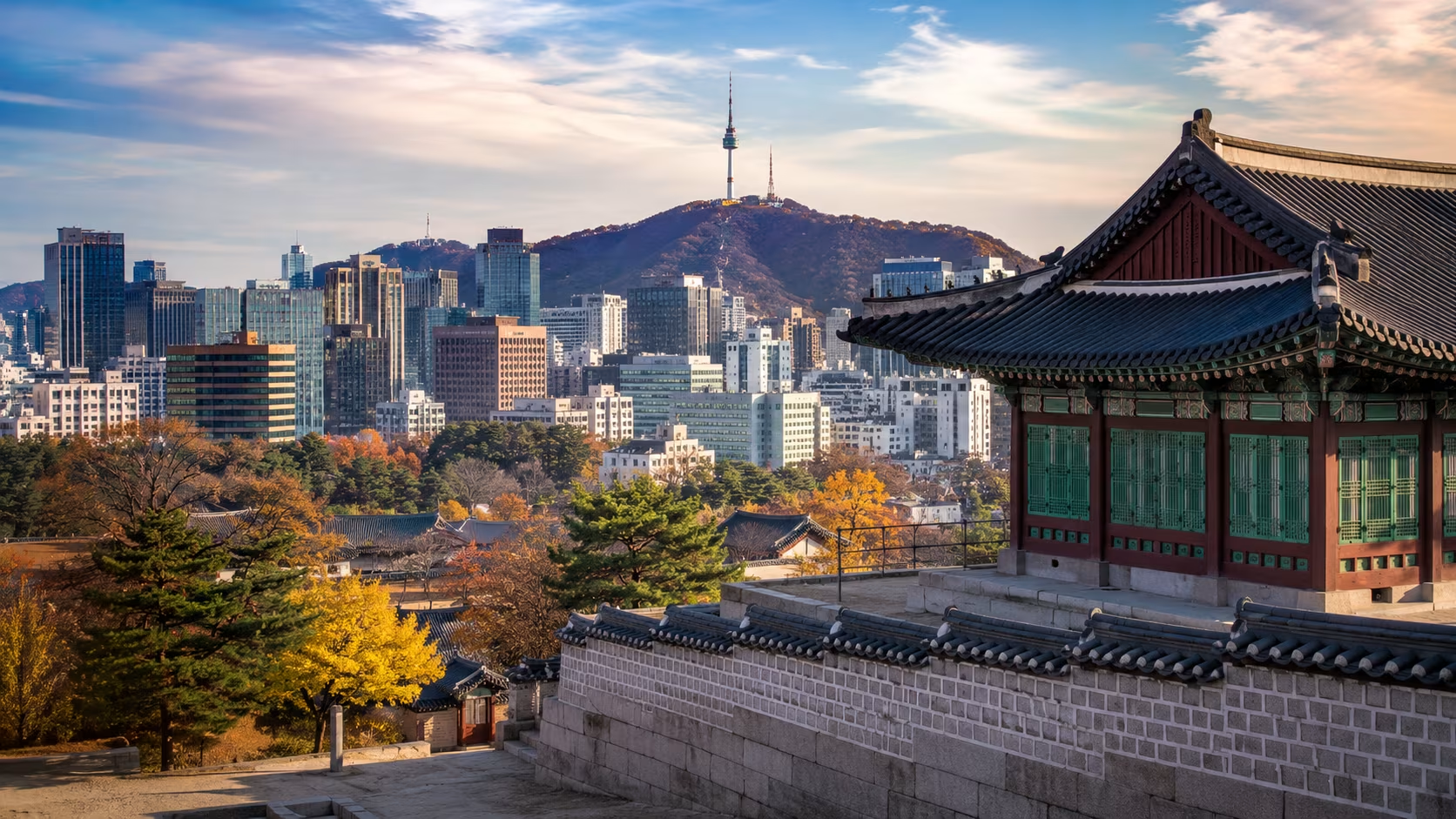
Seoul is the most dynamic East Asian capital and the most-changed city of the past 25 years. The 2000 city had palaces and traffic jams; the 2026 city has palaces, the world's fastest internet, more 24-hour street food than any city outside Bangkok, the global headquarters of K-pop and Korean cinema, and a coffee culture that has surpassed Tokyo for café density per square kilometer.
The usual mistake is to schedule Seoul as a 2-day stopover before going to Tokyo. Three to four days is the minimum for a city of 9.5 million people with five royal palaces, multiple distinct neighborhoods, and a 24-hour food culture that doesn't make sense to compress.
This is a 4-day guide for first-timers who want the headline cultural sites, real Korean food, and at least one Hongdae or Itaewon evening that doesn't get cut from the trip.
Quick Facts
| Item | Detail |
|---|---|
| Country | South Korea (Republic of Korea) |
| Currency | Korean won (₩), ~1,400 ₩/USD in 2026 |
| Language | Korean; English in tourist areas |
| Time zone | KST (UTC+9, no DST) |
| Tourist tax | None |
| Best time | April–May, September–October |
| Visa | Visa-free 30–90 days for most countries; K-ETA required for visa-waiver entries |
| Trip length | 3–5 days |
When to Go
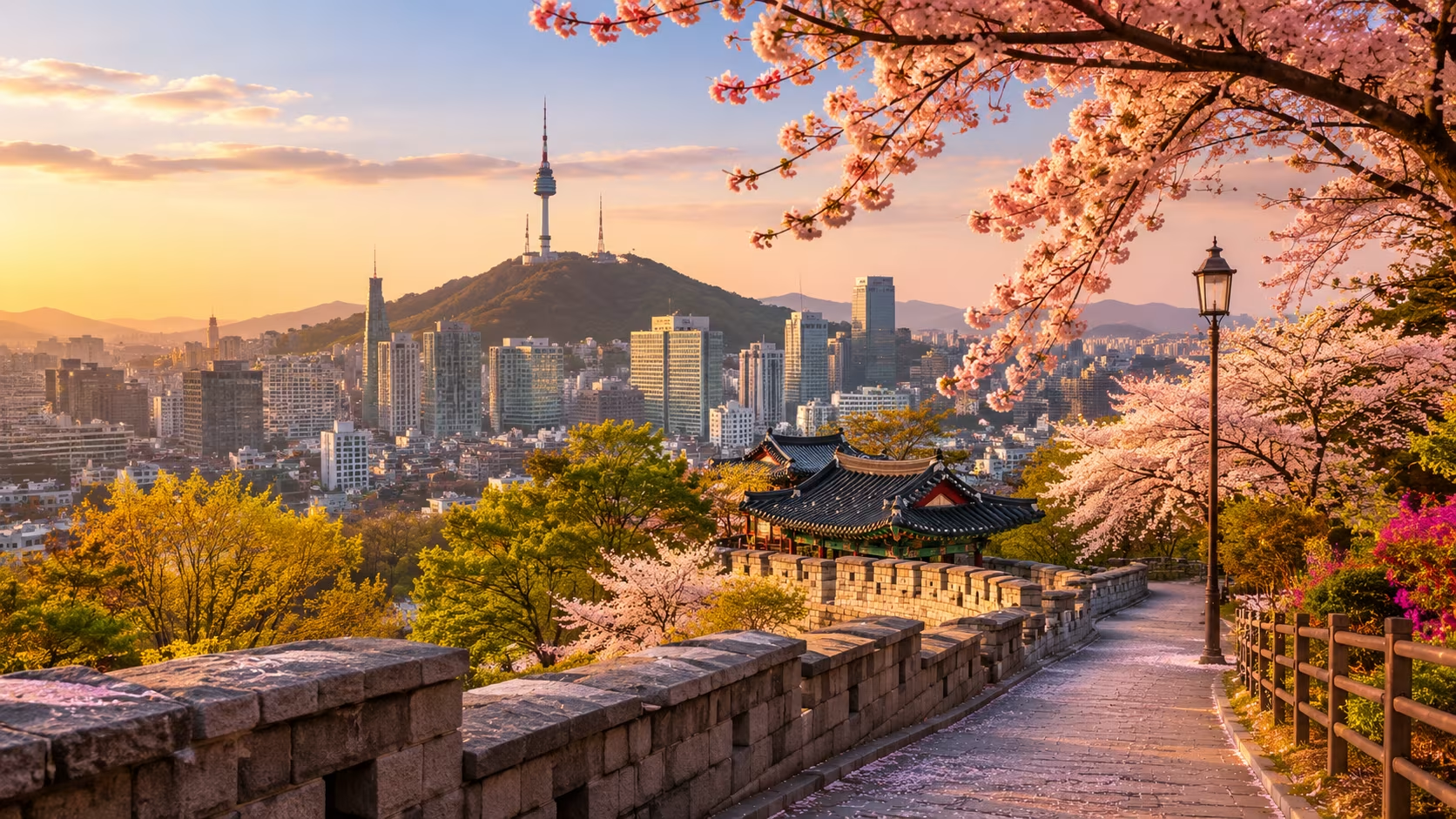
April to May
The sweet spot. Cherry blossoms peak early-to-mid April; daytime highs 13–22°C; air quality typically best in spring before yellow-dust season.
September to October
The other prime window. Autumn colors in Bukhansan and Namsan from late October to mid-November. Cool, dry, comfortable for walking.
June to August. Hot, humid (28–32°C+ with high humidity). July is monsoon season: heavy afternoon thunderstorms most days. The Han River pools and parks are in full operation; outdoor festivals peak.
November to March
Cold (-5 to 8°C). Heavy snow possible in late January and February. Hot pots and traditional Korean BBQ feel right; outdoor walking is brutal.
Avoid:
- Yellow-dust (Asian dust) season, mid-March to mid-May. Some days have particulate-matter levels in the unhealthy range. Check Air Quality Index before walking outside.
- Lunar New Year (Seollal): varies by year, late January or early February. Many restaurants closed; transit packed.
- Chuseok (Korean Thanksgiving): varies. Late September or October. Family-focused holiday; many restaurants close for several days.
- K-pop concert weeks: major K-pop concerts (BTS, BLACKPINK reunion tours) book hotels solid. Check before booking.
Getting in
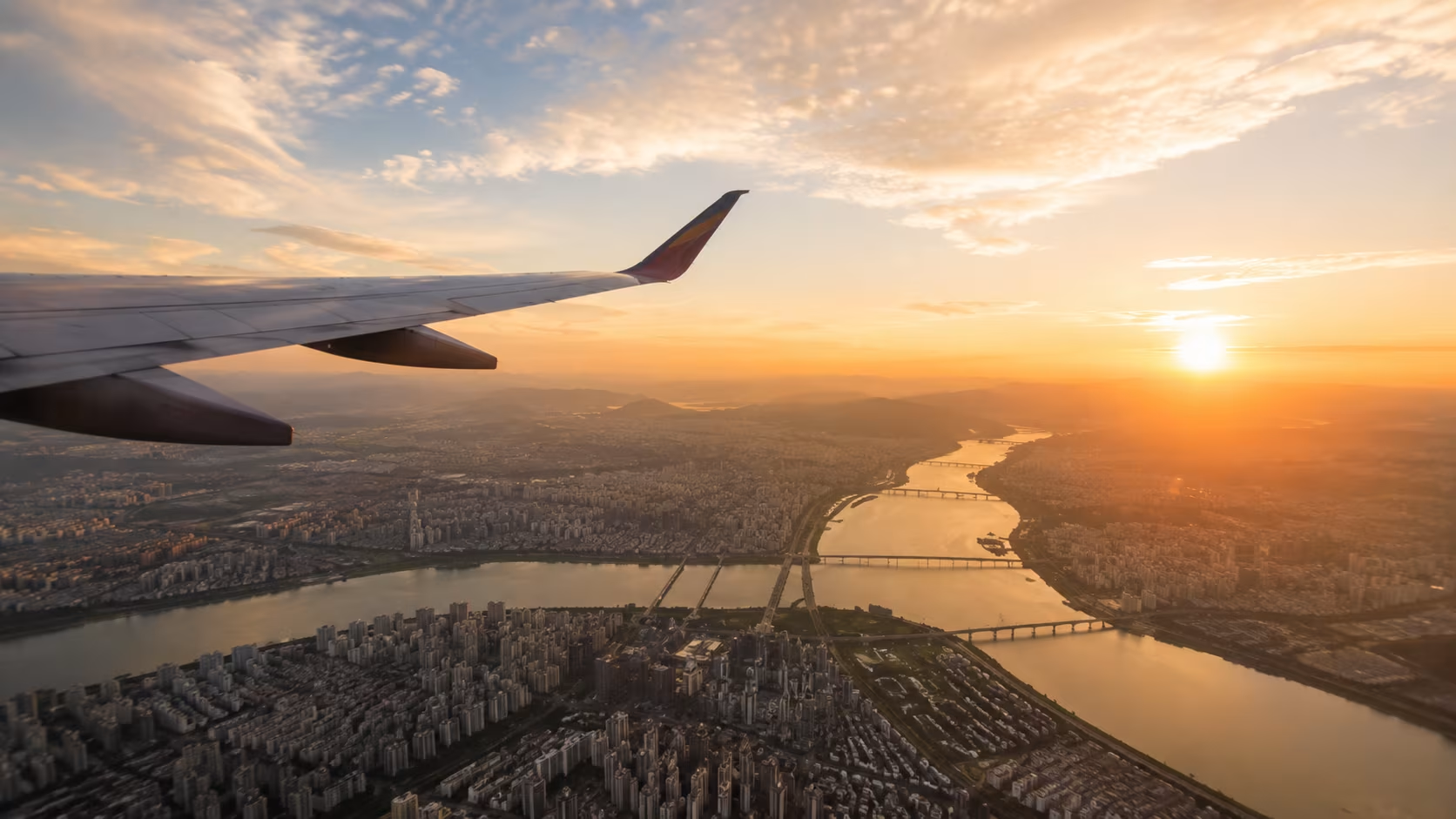
Incheon International Airport (ICN). 50 km west of Seoul. The major international gateway. Among the world's best airports.
From ICN:
- AREX (Airport Express): ₩9,000 to Seoul Station, 43 min direct (Express). Or ₩4,750, 60 min (All Stops).
- Limousine bus: ₩17,000 to most central Seoul stops, 60–90 min.
- Taxi: ₩70,000–95,000 to central Seoul, 60–90 min.
- KAL Limousine: ₩18,000 to most major hotels.
Gimpo Airport (GMP). 20 km west; mostly domestic + some Asian routes. Closer to central Seoul. Faster transfer if you arrive here.
Getting Around
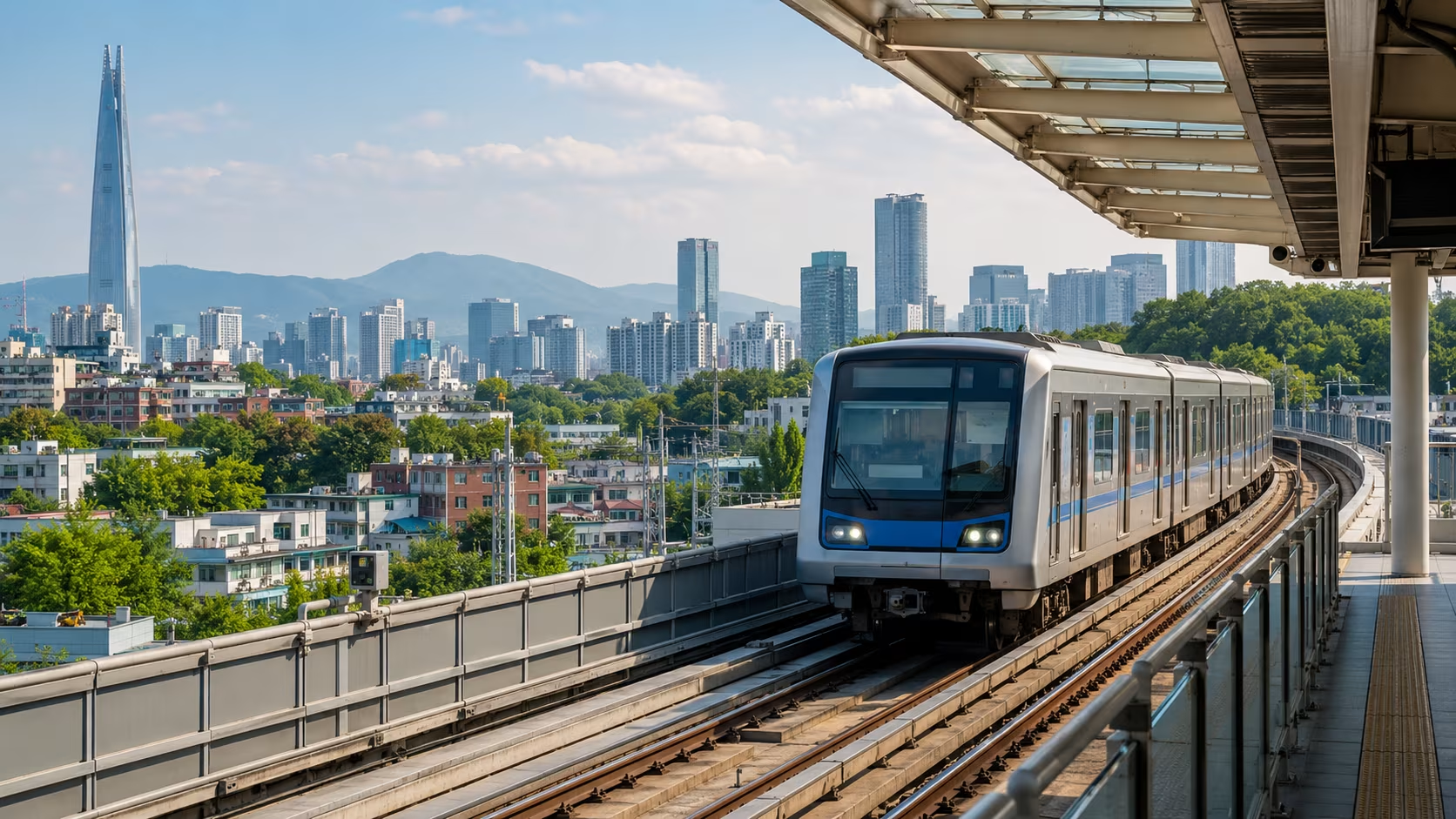
Seoul's transit is genuinely excellent. The metro and bus systems combined cover 99% of what visitors come to see.
Subway
23 lines (numbered + named). Single ride: ₩1,400–1,600. Tap any contactless card (T-Money or your phone with T-Money installed) at gates. T-Money card at any station, ₩2,500 + balance.
Tourist-useful lines:
- Line 2 (Green): circles central Seoul, hits Hongdae, Sinchon, Gangnam, City Hall.
- Line 3 (Orange): hits Gyeongbokgung, Myeongdong, Itaewon, Apgujeong.
- Line 1 (Blue): connects to KTX (high-speed rail), goes to Suwon and Cheonan.
- Line 4 (Light Blue): hits Myeongdong, Dongdaemun.
- Line 5 (Purple): hits Yongsan, runs east-west.
- Line 6 (Brown): hits Itaewon, Yongsan, Hapjeong.
- Line 9 (Gold): connects Gimpo to Gangnam quickly.
Bus
Green, Blue, Yellow, and Red buses serve different distance categories. Same payment system.
Taxi
Standard taxis (silver) and Black Taxi (Mobeom) premium service. Standard cost: ₩4,800 base + ₩100 per ~150m. Average central trips: ₩6,000–15,000. Kakao T (Korea's KakaoTalk app) is the dominant ride-hail; Uber operates but with smaller market share.
Walking
Myeongdong, Insadong, Hongdae, Itaewon are all walkable internally. Between districts is a 15–30-min subway ride.
Where to Stay
Seoul's neighborhoods (dong) feel different from each other.
Myeongdong
The central shopping district. Skin-care shops, food trucks, hotels of all tiers. Convenient for first-timers; touristy.
Insadong / Bukchon
Near the major palaces. Traditional Korean character. Insadong has art galleries and traditional teahouses; Bukchon has the famous hanok village.
Hongdae
University district, youth and creative scene. Best nightlife, indie clubs, street performers.
Itaewon
The foreigner-friendly district. International restaurants, expat bars, a more diverse atmosphere. Boutique hotels and serviced apartments.
Gangnam
Upscale southern district. Premium hotels, K-pop entertainment company headquarters, plastic surgery clinics, and shopping. Less character; more business-traveler feel.
Seongsu / Hannam-dong
Newer creative neighborhoods. Coffee shops, design boutiques, the Korean equivalent of Williamsburg or Roma Norte.
Avoid as a Base
- Far suburbs (Suwon, Bundang, Ilsan): convenient for residents, less so for tourists.
- Sinjeju, Mokdong: too far for sightseeing.
Realistic 2026 nightly prices (4-star, weekday, shoulder, USD):
| Neighborhood | Mid-range | Higher-end |
|---|---|---|
| Myeongdong | $130–220 | $300–500 |
| Insadong/Bukchon | $120–200 | $280–500 |
| Hongdae | $100–180 | $250–450 |
| Itaewon | $130–230 | $300–550 |
| Gangnam | $200–340 | $500–1,500 |
| Seongsu | $130–230 | $280–500 |
What to Book in Advance
Royal Palace Hanbok Rental
Wearing traditional hanbok grants free palace entry. Multiple rental shops near the main palaces; book online for skip-line. ₩15,000–35,000 for 4-hour rental. Selfies are the entire point.
Gyeongbokgung Changing of the Guard
Free, twice daily (10:00 and 14:00). Arrive 15 minutes early.
N Seoul Tower
Cable car or hike to the city's central observation tower on Namsan. Cable car ₩14,000 round-trip; hike free.
DMZ Tour
The Demilitarized Zone tour requires advance booking: most tours sell out 1–2 weeks ahead. Half-day tours $50–80 USD; full-day with JSA (Joint Security Area, the famous "step into North Korea" zone) $90–140. JSA tours close periodically due to political situations.
Korean BBQ Restaurant
For premium options (Mapo Galmaegi, Wagyu Yakiniku, etc.), book 1–2 weeks ahead.
K-pop Studio Tour
HYBE Insight (BTS company), SM Town (multiple group company tours), JYP Entertainment lobby visits. Some require booking; others walk-up.
Day 1 — Royal Palaces and Bukchon
08:30. Coffee in Insadong. Cafe Onion (multiple locations, Anguk branch is the original). 5 Brewing Co. for serious coffee.
09:30. Gyeongbokgung Palace. ₩3,000. The largest of Seoul's five royal palaces, built 1395, restored 1990s onward. Changing of the Guard at 10:00. Allow 2.5 hours total. Wearing hanbok grants free entry.
12:00. Walk through to Bukchon Hanok Village (free). 600+ traditional Korean wooden houses (hanok), many still inhabited by residents. The 8 famous photo spots are marked on tourist maps. Allow 90 minutes; respect that this is a residential area.
13:30. Lunch in Bukchon or Samcheongdong. Tosokchon Samgyetang (the famous ginseng chicken soup, near Gyeongbokgung). Café Sancheok (in a hanok house). Kang Lim Korean Restaurant for traditional Korean.
15:00. Changdeokgung Palace + Secret Garden (Huwon). ₩3,000 + ₩5,000 for Secret Garden, English-language tours at specific times only; book ahead. The garden is considered the city's most beautiful classical landscape.
17:30. Walk Insadong. Traditional shops, art galleries, calligraphy. The pedestrian street fills up in the evening.
19:30. Dinner in Insadong. Min's Club (premium Korean traditional). Sadong Myeonok (Korean noodle institution). Yongsusan for traditional banchan-rich Korean.
21:00. Walk to Cheonggyecheon Stream, the restored urban stream that runs through central Seoul. Lit at night.
Day 2 — Modern Seoul: Hongdae, Han River, Gangnam
09:00. Breakfast at a Korean-style café. Anthracite for serious coffee + minimal architecture. Knotted for cream-filled donuts (Seoul's signature dessert chain).
10:30. War Memorial of Korea (Yongsan). Free. The most comprehensive military history museum in Asia. Allow 2.5 hours.
13:00. Lunch in Yongsan or Itaewon. Wood and Brick (Itaewon, modern). Hashida Sushi Itaewon for upscale Japanese. Rocco Itaewon for Italian.
14:30. Han River park time. Multiple pools open in summer. Bicycles rentable. Banpo Bridge has the world's longest bridge fountain (Moonlight Rainbow Fountain) running on the hour from sunset.
16:30. Gangnam. Visit COEX Mall (the largest underground mall in Asia). The Starfield Library inside COEX is the famous 13-meter-tall bookshelf: major photo spot. Allow 90 minutes.
18:30. Walk Garosu-gil (the European-style boulevard in Sinsa-dong) or Apgujeong's flagship boutiques.
20:00. Dinner in Gangnam. Mingles (3-Michelin-star modern Korean). Born & Bred (Korean BBQ premium). Kwangjang Market if you want street food (Seoul's largest traditional market).
22:00 onward. Cocktails. Le Chamber (Gangnam, the world's most-respected Asian bar). Charles H at Four Seasons Seoul.
Day 3 — Hongdae, Markets, Korean Spa
09:30. Coffee in Hongdae or Hapjeong.
10:30. Hongdae Free Market (Saturdays only) at the Hongik University area. Indie artists, design crafts. The neighborhood is creative-class central.
12:00. Lunch in Hongdae. Misugaru (traditional Korean grain shake). Tongdak Pojangmacha for kimchi jjigae. Yeongchun Yeongyang Center for fried chicken (Korean fried chicken is its own genre).
14:00. Korean spa (jjimjilbang). Spend 3–4 hours; this is a serious cultural experience.
- Dragon Hill Spa (Yongsan, the most popular for tourists, multiple themed rooms).
- Spa Lei (Yeoksam, more upscale).
- Itaewon Land (small but accessible).
The ritual: bathe + soak in pools (separated by gender), then shared common areas (everyone wears robes), then sauna rooms with different temperatures and minerals (charcoal, salt, jade), then sleep area for those staying overnight (yes, you can stay).
18:30. Walk Hongdae after the spa. The street performances and food trucks peak at 19:00–22:00.
20:00. Dinner. Maple Tree House for upscale Korean BBQ. The Restaurant at Walkerhill Hotel for traditional. Yongsusan in Insadong if you skipped Day 1.
22:00 onward. Hongdae nightlife. Vurt for techno. Soap for deep house. NB2 for hip-hop. The street between the playground and the university is full of bars.
Day 4 — Choose: DMZ, Day Trip, or Slow City Day
Path A: DMZ Day Trip
The Demilitarized Zone separating North and South Korea. The most-visited international border.
07:30. Tour pickup from major hotels (most tours include hotel pickup).
09:00. Drive to DMZ. The first stop is usually Imjingak Park (war memorial, free).
10:30. Third Tunnel: one of four discovered North Korean infiltration tunnels. ₩30,000 entrance.
12:00. Dora Observatory: overlooks North Korea on a clear day.
13:00. Lunch.
14:00. JSA (Joint Security Area): for tours that include this. Stand on the actual border. Photograph the blue UN buildings where the negotiations happened. The tension is palpable; this is one of the most disputed borders in the world.
17:30. Return to Seoul.
Path B: Day Trip to Suwon
40 km south of Seoul. Hwaseong Fortress (UNESCO): the 18th-century walled city, largely intact. Walk the 5.7-km wall. Authentic medieval-feeling town. ~1 hour by subway.
Path C: Day Trip to Nami Island + Petite France
50 km northeast. The famous "Winter Sonata" filming location. Pretty island park, half-day excursion.
Path D: Slow City Day
Morning at a neighborhood you haven't visited (Seongsu for design-forward Seoul; Hannam-dong for boutique cafés). Afternoon at the National Museum of Korea (free, Korea's largest museum, 4 hours of art).
What to Eat
Korean cuisine is one of the world's great regional traditions. The headline pieces:
The Big Five
| Dish | What it is |
|---|---|
| Korean BBQ | Grilled meat at the table: short rib (galbi), pork belly (samgyeopsal), beef ribeye (deungsim). Wrapped in lettuce with garlic, ssamjang sauce, kimchi. |
| Bibimbap | Mixed rice bowl with vegetables, meat, fried egg, gochujang chili paste. Stir before eating. |
| Bulgogi | Marinated thin-sliced beef. Sweeter than BBQ, often served as a casserole. |
| Kimchi jjigae | Spicy kimchi stew with pork or tofu. The most-eaten Korean dish in Korea. |
| Bibim guksu | Cold noodles in spicy sauce. Summer staple. |
Other Anchors
- Korean fried chicken (KFC). A national obsession. Soy garlic + spicy sauce versions are the standards. BBQ Olive Chicken, Kyochon, BHC are the chains. Pair with beer (chimaek = chicken + maekju = beer).
- Tteokbokki. Spicy rice cakes. Working-class street snack.
- Kimbap. Korean rice rolls (different from Japanese sushi rolls). Standard lunch.
- Naengmyeon. Cold buckwheat noodles. Pyongyang-style (clear broth) or Hamhung-style (spicy mix).
- Samgyetang. Ginseng chicken soup. Traditional health food, especially summer.
- Soondae. Blood sausage. Working-class street food.
- Hotteok. Sweet pancake stuffed with brown sugar, walnuts, cinnamon. Winter street food.
- Bingsu. Shaved ice dessert. Multiple flavors; mango, red bean, melon, strawberry classic.
- Soju. Korean rice spirit (~17–24% ABV). Sold in green bottles. Cultural ritual: pour with two hands; receive with two hands.
- Makgeolli. Cloudy rice wine. Traditional, lower-alcohol, working-class.
Where to Eat
- Mingles (3-Michelin-star modern Korean).
- Mosu Seoul (3-Michelin-star, modern).
- Born & Bred (premium Korean BBQ).
- Maple Tree House (Korean BBQ, multiple locations).
- Tosokchon (samgyetang since 1983).
- Gwangjang Market for street food (the city's largest traditional market, must-visit for first-timers).
- Myeongdong Kyoja for kalguksu noodles.
- Jinmi Sikdang for Mapo galbi (pork ribs).
- Hadongkwan for seolleongtang (ox bone soup).
Costs and Budget
2026 daily budgets per person, excluding flights and hotel (USD):
| Style | Per day | Notes |
|---|---|---|
| Backpacker | $30–55 | Hostel, street food + market, walking, T-Money |
| Mid-range | $70–130 | Mix of casual and proper restaurants, museums, transit |
| Comfortable | $180–280 | Better restaurants, premium spa, occasional taxi |
| Higher-end | $400+ | Tasting menus, K-pop event, private guide |
Korea is mid-priced for Asia. A working-class lunch (kimbap + soup): ₩7,000–12,000. A mid-tier sit-down meal: ₩15,000–35,000. Premium BBQ dinner: ₩60,000–120,000 per person.
Practical Info
- Cards. Universal. Cash for some street stalls and traditional markets.
- Tipping. Not standard. Service charge included at hotels; not at most restaurants. Don't tip at restaurants.
- English. Common in tourist areas. Less in residential neighborhoods. Younger Koreans speak more English than older.
- K-pop and Korean wave. The country takes its cultural exports seriously. K-pop concerts, drama film locations, idol cafés, cosmetics shops are all part of the tourist experience for travelers interested.
- Drinking. Soju is cheap and plentiful. Korean drinking culture has rules: pour with two hands; receive with two hands; turn away when drinking with elders. Traveler-friendly version: relax these for casual tourist contexts.
- Smoking. Restricted to designated zones in central areas. Indoor smoking essentially banned.
- Crime. Very low. Standard precautions.
- Public restrooms. Universal and clean. Subway stations, parks, malls.
- Internet. The world's fastest residential broadband. Wi-Fi is universal in cafés, hotels, transit.
- K-ETA. Required for visa-waiver entries since 2021. Apply online ($10) at least 72 hours before flight.
Common First-Timer Mistakes
- Booking only Myeongdong restaurants. It's a tourist district; the food is fine but most of the city's best restaurants aren't there.
- Skipping the Korean spa. First-timers often feel awkward; the experience is the trip's most distinctively Korean cultural event.
- Not buying the T-Money card. Single rides are 30–50% more expensive without one.
- Trying to eat Korean BBQ alone. It's a group meal; some restaurants don't seat solo diners. Mok-mok chains do single-portion BBQ for solo diners.
- Underestimating subway distance. Lines are large; some transfers require 5+ minute walks.
- Visiting Gyeongbokgung on Tuesdays. Closed.
- Paying for cosmetics at Olive Young. Korean skin-care prices in Myeongdong duty-free shops are often dramatically lower than tourist-spot retail.
- Trying to pronounce Korean coffee orders in English. Pointing at the menu is universally fine.
- Spending nights only in Hongdae. It's the obvious nightlife district; the more interesting drinks are in Hannam-dong, Itaewon, or Gangnam premium bars.
- Skipping the night markets. Gwangjang and Namdaemun markets are dramatically different at night.
Final Notes
Four days in Seoul is the right length for a focused first trip. One palace day, one modern Seoul day (Han River + Gangnam), one neighborhood + spa day, one DMZ or slow city day. A fifth day buys you a Suwon or Busan day trip.
The quietest piece of advice: pick one neighborhood (Bukchon for traditional, Seongsu for modern, Hongdae for indie, Hannam-dong for design) and walk it slowly without a phone for 90 minutes. Stop at one café. Watch the foot traffic. Seoul reveals itself in pace, not in checklists. The city that stays with you isn't the palace photograph: it's the way the streets shift from quiet residential alley to neon commercial boulevard in 200 meters, and the way that shift happens 50 times a day across the city.
0 Comments
No comments yet — start the conversation.